
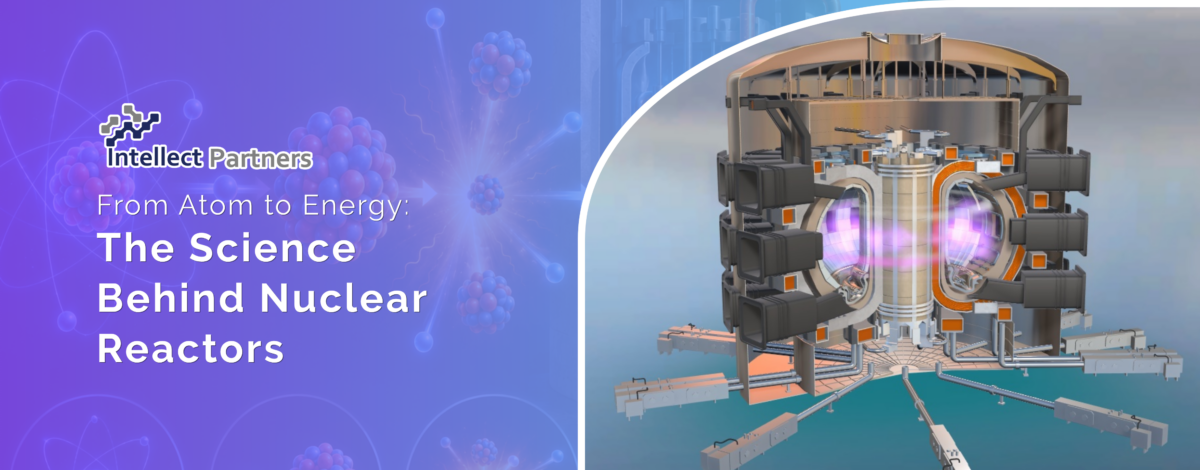
A nuclear reactor is a device that generates heat by controlling nuclear fission reactions. This heat is then used to produce steam, which drives turbines to generate electricity, similar to conventional thermal power plants but using nuclear fuel instead of coal or gas. At its core, a nuclear reactor harnesses the energy released when atoms split, a process known as nuclear fission.
About Nuclear Reactor
A nuclear reactor uses the energy that comes from controlled nuclear fission reactions in its core to work. The process starts when a neutron hits a fissile atom, like uranium-235 or plutonium-239. This makes the atom split into smaller nuclei and gives off a lot of heat and more neutrons. These new neutrons hit other fissile atoms, which starts a chain reaction that keeps going. To keep this reaction from getting out of hand, the reactor uses control rods made of materials that absorb neutrons, like boron or cadmium. Operators can control the number of free neutrons by adding or removing these rods. This lets them control the speed of the reaction and keep the reactor core stable.
The fission process makes a lot of heat, which is then passed to a coolant. Depending on the type of reactor, this coolant could be water, gas, or liquid metal. In most reactors, like pressurized water reactors, this heat is used to turn water into high-pressure steam, either directly in the reactor vessel or through a heat exchanger. The steam that is made then goes to a turbine, which makes it spin very quickly. A generator is connected to this turbine. It uses electromagnetic induction to turn mechanical energy into electrical energy. The steam goes through the turbine and then into a condenser, where it is cooled down, usually with the help of water from outside sources. It is then turned back into liquid form so it can be used again in the cycle.
During this process, several safety systems work together to make sure that everything works safely. These include emergency shutdown systems (often called SCRAM), structures that keep radiation from leaking out, and constant monitoring of temperature, pressure, and neutron flux. Overall, a nuclear reactor is a very well-designed system that carefully controls the chain reaction, heat transfer, and mechanical energy conversion to make reliable, large amounts of electricity with very little carbon emissions.
Detailed Working of a Nuclear Reactor
1. Nuclear Fission Reaction
- Fuel such as Uranium-235 or Plutonium-239 is placed in the reactor core.
- When a neutron hits a uranium atom, it splits into smaller atoms.
- This release:
Heat energy
More neutrons (which continue the chain reaction)
This is called a chain reaction, and it must be carefully controlled.
2. Control of Chain Reaction
- Control rods (made of cadmium, boron) absorb excess neutrons.
- Inserting rods slows down the reaction; removing them speeds it up.
- This ensures:
Stable power generation
Prevention of overheating or meltdown

3. Heat Generation and Coolant System
- The fission process produces immense heat.
- A coolant (water, liquid sodium, or gas) carries heat away from the core.
- Example:
Pressurized Water Reactor → uses high-pressure water
Fast Breeder Reactor → uses liquid sodium
4. Steam Generation & Turbine Operation
- Heat converts water into steam.
- Steam spins a turbine.
- The turbine drives a generator, producing electricity.

5. Cooling & Condensation
- After passing through the turbine:
Steam is cooled in cooling towers or condensers.
Converted back into water
Recycled into the system
Nuclear Chain Reaction

A nuclear chain reaction is a self-sustaining process in which the splitting of one atomic nucleus triggers the splitting of additional nuclei, releasing energy continuously. It begins when a neutron strikes a heavy atom such as uranium-235, causing it to undergo fission and split into smaller atoms. This process releases a large amount of heat energy along with two or three additional neutrons. These newly released neutrons then collide with other uranium atoms, causing them to split as well, and the cycle continues repeatedly. As more and more atoms undergo fission, the reaction grows exponentially unless it is controlled. In nuclear reactors, this chain reaction is carefully regulated using control rods that absorb excess neutrons, ensuring a steady and safe release of energy for power generation. Without such control, the reaction can accelerate rapidly, leading to an uncontrolled release of energy, as seen in nuclear weapons.
In a nuclear reactor, the nuclear chain reaction is used in a controlled manner to generate heat for electricity production. The process takes place inside the reactor core, where fuel rods containing uranium-235 undergo fission when struck by neutrons, initiating a chain reaction. This reaction is carefully regulated using control rods that absorb excess neutrons, ensuring that the reaction proceeds at a steady and safe rate rather than accelerating uncontrollably. The heat produced from this controlled chain reaction is transferred to a coolant, typically water, which carries the heat to a steam generator. The heat converts water into high-pressure steam, which then drives a turbine connected to a generator, ultimately producing electricity. By maintaining a balance in the chain reaction, nuclear reactors are able to continuously generate large amounts of energy efficiently and reliably without combustion, making them a powerful source of low-carbon electricity.
Latest News (2026): India’s Nuclear Breakthrough
India’s nuclear energy program has reached a major milestone recently with the successful completion of “first criticality” of its Prototype Fast Breeder Reactor (PFBR) in Kalpakkam, Tamil Nadu. This is a big step forward in the country’s long-term plan to improve energy security and move toward more environmentally friendly ways of making power. First criticality is the point at which a nuclear reactor can keep running on its own, without needing any outside neutron sources. This accomplishment shows that the reactor’s core systems, fuel loading, and safety features are all working as they should.
The PFBR is a 500 MWe fast breeder reactor, a special type of reactor that not only generates electricity but also produces more nuclear fuel than it consumes. It uses a combination of plutonium-based fuel and liquid sodium as a coolant, allowing it to operate efficiently with fast neutrons. This technology is particularly significant for India because it aligns with its three-stage nuclear program, which ultimately aims to utilize the country’s abundant thorium reserves for long-term energy production.
This milestone places India among a select group of nations with advanced breeder reactor capabilities, highlighting its growing expertise in nuclear technology. It is also expected to contribute significantly to reducing dependence on fossil fuels and lowering carbon emissions. With plans to scale up nuclear capacity in the coming decades, the success of the PFBR is seen as a stepping stone toward achieving large-scale, reliable, and clean energy generation. Overall, this development reflects India’s commitment to innovation and sustainability in the global energy landscape.
Source: https://www.aljazeera.com/news/2026/4/7/indias-nuclear-leap-why-its-fast-breeder-reactor-success-matters?utm_
Source: https://www.ndtv.com/india-news/india-achieves-nuclear-criticality-top-scientist-calls-it-akshay-patra-moment-prototype-fast-breeder-reactor-pfbr-at-kalpakkam-in-tamil-nadu-11336682?
Source: https://www.world-nuclear-news.org/articles/first-criticality-for-indian-fast-breeder-reactor
Patent Technical Landscape:
Patent Document Over Time
Top CPC Classification Codes:
Top Applicants: