Intellect-Partners

Categories
Computer Science Electronics

AMD Patent Proposes Teleportation to Make Quantum Computing More Efficient

A group of specialists with AMD have documented a patent application that looks toward a more effective and reliable quantum computing architecture, because of a conventional multi-SIMD (Single Instruction Multiple Data) approaches.

As indicated by the application, AMD is exploring a system that expects to utilize quantum teleportation to expand a quantum framework’s reliability, while at the same time reducing the number of qubits necessary for a given calculation. The point is to both alleviate scaling issues and calculation errors coming from framework instability.

There are two significant obstacles making progress toward quantum development and inevitable quantum supremacy: scalability and steadiness. Quantum states are a fickle matter, so sensitive that they can decohere at the smallest incitement – and a quantum framework’s sensitivity will in general increase with the presence of more qubits in a given framework.

The AMD patent, named “Look Ahead Teleportation for Reliable Computation in Multi-SIMD Quantum Processor,” intends to further develop quantum security, adaptability, and performance in novel, more proficient ways. It depicts a quantum engineering dependent on quantum processing regions: spaces of the chip that hold or can hold qubits, ready to pounce for their chance on the preparing pipeline. AMD’s methodology expects to enhance existing quantum models by really diminishing the number of qubits expected to perform complex estimations – through the sci-fi esque idea of quantum teleportation.

AMD’s design intends to transport qubits across districts, empowering workloads that would theoretically need all together execution to become equipped for being prepared in an out-of-order philosophy. As a quick refresher, all together execution highlights conditions between one guidance and the following, implying that responsibility must be prepared successively, with later advances reliant upon the past advance being completely handled and its outcome being known before the chip can push forward with the calculation.

As you might envision, there are chip assets (for this situation, qubits) that sit inactive until it’s their chance to play out the next computation step. Then again, Out-of-order execution analyzes a given workload, sorts out what portions of it are subject to past outcomes and which are not, and executes each step of the instruction that doesn’t need a past outcome, hence further developing execution through expanded parallelism.

AMD’s patent likewise incorporates a look-ahead processor inserted into the design, entrusted to analyze the input workload, anticipate what steps can be tackled in parallel (and those that can’t), and properly distribute the workload across qubits, utilizing a quantum teleporting technique to convey them to the necessary quantum processing, SIMD-based region.

How this quantum teleportation happens isn’t portrayed in the patent – it seems as though AMD is keeping its assets away from plain view on this one. However, it shows, without question and amaze nobody, that AMD is for sure working at quantum computing. That is by all accounts the following the next incredible computing race. And keeping in mind that AMD might be backing the right pony to ride toward an inevitable triumph it appears to be the organization intends to be a part of the race.

Categories
Electronics

Google Infringement On Patents Of Audio Tech Firm Sonos

A US judge has decided that Google encroached upon the
licenses of innovative speakers and sound innovation organization Sonos. As per
an underlying decision from a US International Trade Commission (ITC) judge,
Google encroached on five Sonos licenses.

“We are pleased the ITC has confirmed Google’s blatant
infringement of Sonos’ patented inventions. This decision re-affirms the
strength and breadth of our portfolio, marking a promising milestone in our
long-term pursuit to defend our innovation against misappropriation by Big Tech
monopolies,” According to Sonos’ Chief Legal Officer Eddie Lazarus.

In January last year, Sonos sued tech goliath Google for
purportedly replicating its wireless speaker design, asking the International
Trade Commission (ITC) to boycott Google items like laptops, phones, and
speakers. Sonos CEO Patrick Spence affirmed before the US House antitrust
committee that Google “blocked the company from enabling both Amazon’s
Alexa assistant and the Google Assistant from being active at the same
time”.

Google said in its countersuit that “while Google
rarely sues other companies for patent infringement, it must assert its
intellectual property rights here”. “We are disappointed that Sonos
has made false claims about our work together and technology,” Google
representative Jose Castaneda was cited as saying.

As per Sonos, beginning in 2016 not long after the primary
Google Home was launched, it started cautioning Google about patent
encroachment yet without any result. Sonos said it blamed Google for
encroaching on a sum of 100 licenses.

Google even countersued sound organization Sonos for patent
encroachment, alleging that the tech monster contributed “substantial
Google engineering resources” to help Sonos before. Google has
consistently kept up with that its innovation was grown autonomously and it was
not replicated from Sonos.

Categories
Computer Science Electronics

AlgoFace wins patent for text search technique with face images lacking tags

A mostly secret startup in Arizona has been conceded a U.S. patent for a neural organization equipped for looking through facial pictures on live video feeds, progressively, utilizing text inquiries and without data-labeling.

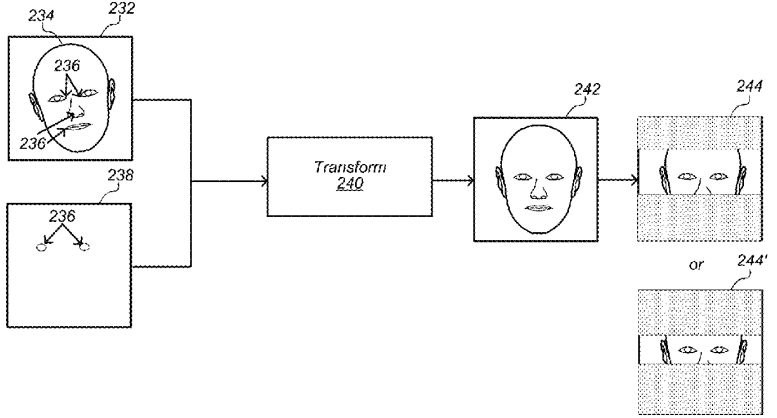
In its declaration of the patent, AlgoFace says its edge-based biometric facial analysis software empowers searches without identifying a subject utilizing still or video content from conventional color and near-infrared cameras.

The organization has expressed that its software is not a facial recognition tech and, indeed, it will “never enter any industry where a false positive or false negative from our artificial intelligence technologies can be used to rob a person of their human rights.”

In a responsibility just great as long as AlgoFace possesses the licensed tech or stays an independent business, the firm says it “will never enter the facial recognition industry.”

Other programming organizations as of now are in the facial recognition search engine field, including Baidu, which was testing algorithms in 2012. Among the proposed applications for the procedure, as indicated by the organization, are useful face web search tools and programmatic promoting.

As will virtually all advancements related to face biometrics, AlgoFace promises better, “unbiased” searches for lost or abducted children caught on live video. In this case, it would require typing “a basic description.”

As will all headways identified with face biometrics, AlgoFace guarantees better, “unbiased” searches for lost or kidnapped youngsters caught on live video. For this situation, it would require composing “a basic description.”

The product can identify and follow 209 facial landmarks, including foreheads and inner cheeks, as per the organization. Each eye allegedly is allowed 50 landmarks. Precision is allegedly not influenced by masks.