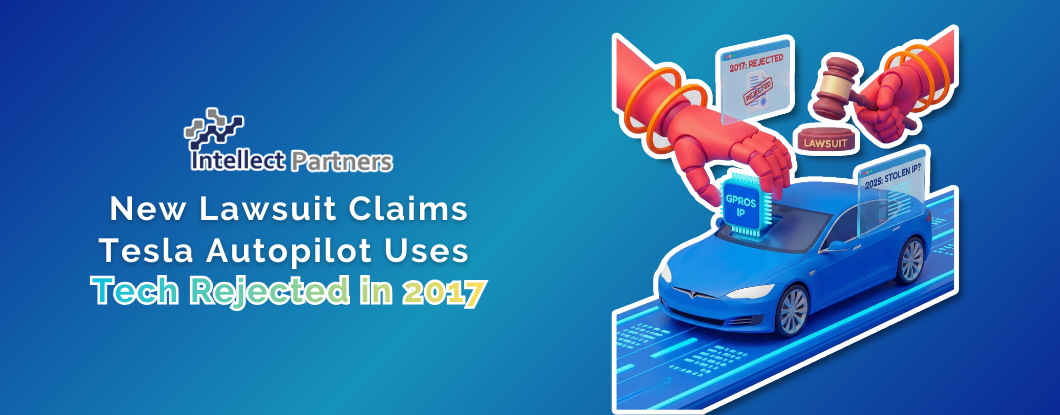
Tesla (TSLA) is heading back to federal court.
The EV giant is facing a fresh intellectual property lawsuit from Perrone Robotics, a Virginia-based software company that alleges Tesla’s Autopilot and Full Self-Driving (FSD) systems are built on stolen technology.
Filed on November 24, 2025, in the U.S. District Court for the Eastern District of Virginia (Case No. 1:25-cv-02156), the complaint accuses Tesla of knowingly infringing on five specific patents related to a “General Purpose Operating System for Robotics” (GPROS).
The Core Allegation Claims Technology Was Offered in 2017
At the heart of the dispute is Paul Perrone, a pioneer in the robotics space who developed GPROS—a universal platform designed to manage complex tasks like route planning, obstacle avoidance, and sensor fusion for autonomous robots.
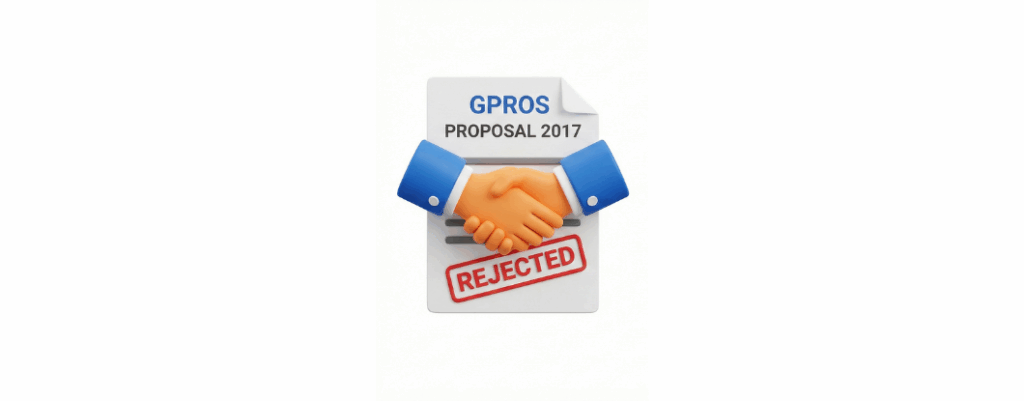
The lawsuit drops a bombshell regarding willful infringement where Perrone claims his company explicitly offered to license its technology to Tesla executives back in 2017.
According to the filing, Tesla rejected the offer at the time. However, Perrone argues that despite saying “no,” Tesla proceeded to integrate those exact methods into the software architecture that powers every Autopilot-enabled vehicle produced over the last six years.

Details on the Disputed Technology
The lawsuit specifically highlights U.S. Patent No. 10,331,136, among others. This patent covers methods for real-time navigational decision-making—essential logic for any self-driving car. Perrone Robotics is seeking unspecified damages and a permanent injunction to stop Tesla from using the disputed code.
A Growing List of Legal Battles for Tesla
This isn’t an isolated incident. Tesla is currently navigating a minefield of IP litigation in 2025.
- Perceptive Automata vs Tesla In July 2025, AI startup Perceptive Automata sued Tesla (Case No. 2:25-cv-00742 in Texas), claiming the automaker stole its “human intuition” AI models. These models help cars predict the behavior of pedestrians and cyclists. Tesla attempted to have the case dismissed, but a judge recently denied part of that motion, allowing the case to move forward.
- Arsus LLC vs Tesla On a brighter note for Elon Musk’s legal team, Tesla recently secured a win against Arsus LLC. The startup had claimed Autopilot violated patents regarding rollover prevention and electronic stability. Tesla successfully invalidated the patents, a victory affirmed by the Federal Circuit Court of Appeals in July 2025.

Tesla and the Patent Troll Defense Strategy
Tesla’s legal playbook for these cases is consistent in that they attack the patent rather than the infringement claim.
Many of these lawsuits come from “Non-Practicing Entities” (NPEs) or smaller firms that hold broad patents but don’t manufacture vehicles at scale. Tesla often argues these patents are too vague or invalid due to “prior art.”
The strategy works. Tesla has successfully defended itself in about 70% of autonomous vehicle patent cases since 2020. However, even when Tesla has a strong hand, they often settle out of court to avoid the discovery phase, where sensitive proprietary code might be exposed.
Wall Street Remains Cautious on TSLA Stock Outlook
While legal headaches are routine for Tesla, investors are currently hesitant.
Analysts have assigned a Hold consensus on TSLA stock. The sentiment on Wall Street is split, with recent activity showing a mix of 14 Buys, 10 Holds, and 10 Sells.
- Current Consensus Hold
- Average Price Target $383.04
- Implied Movement ~9% downside risk