

Intellect-Partners

Categories
Computer Science Electronics

Walt Disney World faces patent infringement lawsuit over Genie, Genie Plus

A California organization has recorded a claim in Florida against The Walt Disney Organization and Walt Disney Parks and Resort alleging patent encroachment over Disney’s Genie and Genie+ services, which can make a customized itinerary for visitors visiting their amusement parks.

The claim was documented on Dec. 2, 2022, in the US. District Court, Middle District of Florida’s Fort Myers Division, on behalf of Agile Journeys, claims Disney’s Genie+ service infringes on one of its licenses – ‘983 Patent, known as “Method and Apparatus for Providing Visitors with a Personalized Itinerary and Managed Access to Attractions.”

As indicated by the claim, the patent’s inventors – William Gibbens Redmann and Michael Anthony Eaton, who both supposedly worked for Disney – looked to build “a system and method for creating a personalized itinerary for visitors to a facility, such as a zoo, theme park, historic area, or shopping district.”

The claim guarantees that Disney knew about the patent, infringed on it, and included a portion of the innovation for its Genie and Genie+ services, which has allegedly harmed Agile Journeys, LLC.

The claim doesn’t specify a particular damages amount, however, looks for a judgment that Disney encroached on the ‘983 patent, that Disney pays for “past and future damages,” and that Disney pays for enhanced damages, royalties, and attorney fees.

The most recent claim has been documented against The Walt Disney Organization A claim was documented in California against Disneyland Resort on behalf of some yearly pass holders alleging its Coronavirus period reservation system restricted their capacity to visit the amusement parks despite their passes not having lockout dates. A similar claim was documented against Walt Disney World Hotel.
Categories
Computer Science Electronics

Sony New Patent Suggests Blockchain And NFT Tech For Tracking In-Game Assets In Video Games.

The patent, detailed by Eurogamer, is called Tracking Unique In-Game Digital Assets Utilizing Tokens on a Distributed Record, and the included diagram spreads out mechanics for tracking changes in possession, visual appearance, or metadata of digital assets. The patent says the digital assets could go from gameplay moments to in-game items or characters.

Sony’s patent portrays innovation that could follow the historical backdrop of an in-game item as it’s passed from one player to another, which is one of the core ideas behind NFTs. According to the Sony patent, “there is no way to differentiate a specific instance of an in-game item that a famous player of the video game used to win a famous tournament from any other instance of the in-game item.”

The patent portrayal additionally says individuals find it “meaningful” to possess or utilize unique items related to respected celebrities or activities. It’s worth bringing up that PlayStation documented this patent in July of 2021 before the greater controversy encompassing NFTs came to the very front.

PlayStation recently dunked its toe into the universe of NFTs at EVO 2022. In a player survey, PlayStation asked fans what sorts of NFTs they would be keen on purchase. The potential responses recorded included NFTs based on Evo, music artists, esports, PlayStation items, and most loved game characters.

Sony’s new PlayStation Stars rewards program includes a form of digital collectibles, however, the organization said the prizes are “definitely not NFTs” because “you can’t trade them or sell them.”

NFT speculation has been a major piece of the video game news cycle in 2022 other than just PlayStation. GameStop presented a crypto/NFT wallet and EA keeps on assessing the innovation. Numerous studios have stood in opposition to NFTs, with numerous developers marking an enemy of NFT pledge and Minecraft trying not to implement NFTs or blockchain innovation.

Categories
Computer Science Electronics

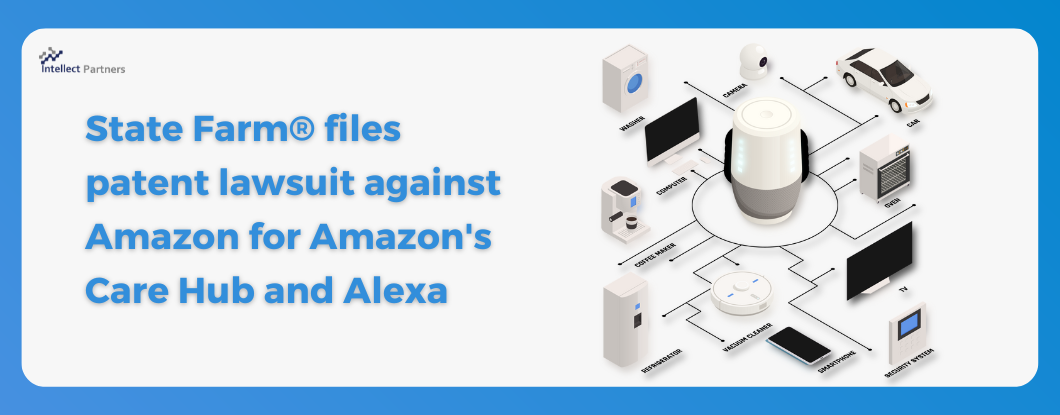
State Farm® files patent lawsuit against Amazon for Amazon’s Care Hub and Alexa

Amazon persistently infringed on State Farm’s patented innovation on the heart of Elder Care Technology to launch a competing product.

State Farm, the biggest insurance provider of vehicles and homes in the U.S., has recorded a claim against Amazon.com and subsidiary organizations for headstrong patent infringement. The case includes technological advancements in elder care known as Sundial®. State Farm doesn’t trifle with the suit, and this is the organization’s first time documenting a patent infringement claim.

The complaint alleges Amazon duplicated State Farm-protected innovation to launch its own contending products to its great many clients. State Farm accepts Amazon’s Care Hub and Alexa adamantly infringe six State Farm licenses issued somewhere in the range of 2021 and 2022.

Consistent with its longstanding obligation to research and development, State Farm contributed several years of research and development work in innovation to help older adults live independently and stay in their homes longer.

Initially, a partnership to present State Farm developments for use with Amazon’s Alexa-empowered gadgets, Amazon noticed State Farm specialists and senior product personnel adapt licensed innovation to work at Amazon’s Alexa platform. State Farm delivered Sundial® in June 2020 while Amazon launched its contending Alexa Care Hub point item in November of that very year.

State Farm informed Amazon that their Care Hub infringes on State Farm licenses, however Amazon was undeterred, and in December 2021, notwithstanding full notice of its infringement of licenses of State Farm, Amazon launched another competing product, Alexa Together, in obtrusive dismissal of State Farm intellectual property rights.

As gone ahead in the complaint documented, Amazon’s conduct in replicating and benefitting from State Farm innovation is stubborn patent infringement. Through its grievance, State Farm tries to stop Amazon’s inappropriate utilization of State Farm patented tech.

State Farm has kept on creating innovative advances since its founding and Sundial is simply one more illustration of how, all through its 100-year history, State Farm has reliably put resources into development to assist with serving its clients. State Farm, alongside its specialized auxiliary BlueOwl, has been granted more than 1,500 U.S. licenses for key specialized developments to date.