
Intellect-Partners

Categories
Computer Science

Artificial Intelligence-Based Software Engineering Metrics Defect Identification

Nowadays we see the use of Artificial Intelligence (AI) in every field of study, even in image processing, data analytics, text processing, robotics, industries, software technologies, etc. Day by day increasing the use of AI helps users to perform automated tasks without involving the human physically present. The work can be completed automatically within the specified time as per the requirement. Even in the field of Software Engineering, the use of AI is growing day by day to perform automated tasks without causing errors. AI in software engineering provides automated non-error calculations, in the field of software engineering it provides the automated testing of software, automatic debugging of software, etc. to provide high quality (quality assurance), and efficiency of software applications within the budget.

Software Engineering is the method of developing, testing, and deploying computer software to solve problems and issues in the real world by utilizing software principles and best practices. It provides an organized and professional approach from developing the software to the deployment of the software. In the field of software engineering software metrics play a very important role. The software metrics are used to evaluate the reusability, quality, portability, functionality, and understandability. The AI-based software metrics are error-free and automated, they will used to identify or predict the defects in the software and efficient solutions in the real world scenario without involving humans.

Background

Many researchers describe different software metrics and provide efficient solutions for the software metrics. Some research also describes automated solutions using deep learning techniques to improve the software metrics. Without using Artificial intelligence, some chances degrade the quality of the final software products. It may also include a lack of functionality and require more human interactions due to which it increases the cost of the software. Some researchers describe deep learning-based techniques to solve software metrics problems and provide efficient results. However, the can be a lack in using the dataset and training of the data. Using the correct dataset may cause erroneous training of data and provide the wrong results. The wrong results may cause issues and degrade the quality of the software metrics. Therefore, this blog provides the proposed solution that aims to solve the problem of software metrics using Artificial Intelligence.

Basic Concept

According to the authors, there are several studies considered and provided many definitions. Therefore, before discussing the proposed approach let us discuss some basics about the software metrics as discussed.

As discussed above the software metrics are used to evaluate the reusability, quality, portability, functionality, and understandability of the software to achieve high-quality software. The software, metrics are of two types: the system-level metrics and component-level metrics as described in Figure 1.

Software Metrics Categories

Figure 1: Software Metrics Categories

  1. System Level Metrics: The system level metrics are further divided into three types that is Complexity, Metrics Suite, and System Complexity.
  2. Component level Metrics: The component level metrics are further divided into four types that are Customization, component complexity, reusability, and coupling and cohesion metrics.
  • Complexity Metrics: The complexity metrics are the type of system-level metrics. There are many definitions given by many authors. According to IEEE, complexity is defined as the quality where the component or any system design and implementation is complex to understand and authenticate.
  • Metric Suite: It provides the requirements and functionality of the software that is needed by the users. It ensures to provide users a high quality, satisfactory fault-free software products.
  • System Complexity Metric: It is defined as the component metric having a set of components in the system.
  • Customization: The customization metric identifies whether the component can be customized according to the user’s needs or not.
  • Component Complexity Metrics: The Component Complexity Metrics have component plain complexity (CPC), Component Static Complexity (CSC), and Component Dynamic Complexity (CDC).
  • Component Reusability Metric: This type of metric is the ratio of the sum of interface methods that provides common reuse component features used in a feature.
  • Coupling & Cohesion metrics: It is the degree or power with which software components are related to each other.

Proposed Approach

The proposed approach describes the AI-based method to identify as well as predict the defects in the software metrics. In this proposed approach, first, the real-time software metrics dataset is collected from multiple sources. The software metrics dataset may include the data regarding the identified software metrics with labels. The Figure 2 describes the architecture of the proposed approach and systematic details process of this approach.

Figure 2: Proposed Approach

  1. Obtaining data: This step is very essential and very important step of the approach. Correct data means high performance with minimum defects and results in high-quality software. Therefore, in this step, the labeled dataset of the software metrics will be collected. The dataset will include above 50K software modules and the number of defects predicted in the software module. The predicted defects can be binary values in the form of zero and one.
  2. Data Pre-Processing: After data, collection data pre-processing is an essential step of this proposed approach. After data collection, the data must be cleaned and normalized properly to make the analysis simpler and more efficient. In this step, the data is cleaned by removing empty rows, duplicate values, indexing of data, etc.
  3. Artificial Intelligence Model: After data, cleaning the Artificial Intelligence Model will be applied that analyzes the data such as determining the combinations, and automating the detection procedure without human interaction. AI model can be any algorithm applied such as Linear Regression, Logistic Regression, Naïve Bayes, Support Vector Machine, etc. These algorithms will analyze the data and determine the combinations. In this step, the data can also be converted into some kind of vectors also known as numbers based on the software metrics given in the dataset. The AI model is also known as the machine-learning model.
  4. Training and Testing: After the AI model is applied, the data will be split into train sets and test sets that are different from each other. 75% data is given for the train set and the remaining 25% of the data is given for the test set. Then the model is trained on the train set that will train the model based on the combinations and the test set will be used for our model that does not contain any labels, the machine will identify the faults automatically based on the training of the model.
  5. Results: After applying the AI or ML model on the test set the results are obtained on the test set that will determine how best the model works. The results will be determined in terms of accuracy, the area under the curve, f1-score, confusion matrix, etc. The expected accuracy will achieve 98% by applying logistic regression on the test set.

This blog is inspired and in contributed with Dr. Kiran Narang, Department of Computer Science Engineering, SRM University

REFERENCES

[1]. https://www.techtarget.com/whatis/definition/software-engineering
[2]. https://ieeexplore.ieee.org/document/8443016
[3]. https://en.wikipedia.org/wiki/Software_metric
[4]. https://www.sciencedirect.com/science/article/abs/pii/S0925231219316698
[5]. https://www.mdpi.com/2227-7390/10/17/3120
[6]. https://www.sciencedirect.com/science/article/pii/S0164121222002138
[7]. https://viso.ai/deep-learning/ml-ai-models/

Categories
Computer Science

Inside LPDDR5: Driving Forces of 5G and AI Revolution

Understanding LPDDR5: Powering the 5G and AI Revolution:

In the ever-evolving landscape of innovation, the combination of 5G and artificial intelligence (AI) has emerged as a transformative force, reshaping enterprises and empowering developments that were previously unimaginable. Vital to this combination is the role of LPDDR5 (Low Power Double Data Rate 5) memory, a state-of-the-art memory innovation that assumes an essential part in supporting the high-performance demands of 5G and artificial intelligence applications. This blog entry dives into the meaning of LPDDR5 in these spaces, investigates its future patterns, and analyzes the most recent improvements in its intellectual property (IP).

LPDDR5 Overview

LPDDR5 is the fifth generation of low-power, high-performance memory planned essentially for smartphones. It is a development of its ancestor, LPDDR4x, with critical enhancements as far as information rate, power effectiveness, and generally execution. LPDDR5 offers quicker information move rates, lower power utilization, and larger memory capacities compared to its predecessors, settling on it an ideal decision for applications requesting high data transfer capacity and low latency.

Role in 5G

The rollout of 5G networks has introduced another time of availability, empowering lightning-quick information move rates and super low inactivity. To completely tackle the capability of 5G, memory devices should be equipped with memory advances fit for taking care of the expanded data loads and rapid communication among memory devices and edge servers. LPDDR5, with its upgraded information rates and further developed energy proficiency, addresses these requests by giving the important memory data transfer capacity and responsiveness for 5G-empowered gadgets.

Enabling AI Applications

Artificial intelligence applications, including AI and neural networks, require enormous measures of data processing and storage capabilities. LPDDR5’s high information move rates and bigger memory limits add to accelerating AI tasks by giving the fundamental memory resources to putting away and controlling information during preparation and inference processes. This is critical for AI-driven functionalities-driven functionalities in gadgets, for example, smartphones, smart cameras, and IoT gadgets.

Future Trends in LPDDR5 Technology

Data Rate Advancements

The journey for higher data rates proceeds, as innovation organizations endeavor to push the limits of memory execution. LPDDR5 is supposed to see further iterations that proposition considerably quicker information move rates, empowering consistent 5G network and improved AI performance.

Energy Efficiency

While LPDDR5 as of now offers amazing energy, effectiveness contrasted with its predecessors, progressing research and development efforts aim to diminish power utilization considerably further. This is especially significant for broadening the battery duration of gadgets, particularly with regards to power-hungry 5G and AI workloads.

Integration with On-Device AI

As AI capabilities are coordinated straightforwardly into devices, LPDDR5 will assume a critical part in supporting on-gadget artificial intelligence errands. This includes not just giving the memory resources to AI operations but also improving memory access examples to upgrade general artificial intelligence execution.

LPDDR5 IP Developments and Legal Considerations  

WCK Clocking in LPDDR5

LPDDR5 uses a DDR data interface. The data interface uses two differential forwarded clocks (WCK_t/WCK_c) that are source synchronous to the DQs. DDR means that the data is registered at every rising edge of WCK_t and rising edge of WCK_c. WCK_t and WCK_c operate at twice or quadruple the frequency of the command/address clock (CK_t/CK_c).

Low Power Double Data Rate
(LPDDR) 5/5X
https://www.jedec.org/sites/default/files/docs/JESD209-5C.pdf

IP Landscape of LPDDR5

The intellectual property landscape for LPDDR5 innovation is dynamic and advancing. Organizations in the semiconductor industry are continuously creating and licensing developments connected with LPDDR5 memory configuration, fabricating processes, and related advancements. Licensing agreements and cross-licensing arrangements assume a vital part in permitting organizations to get to and use these IP resources.

Patent Challenges and Litigations  

With the rising competitive nature of the innovation business, patent disputes and litigations can emerge. Organizations should be cautious in surveying the potential infringement risks related to LPDDR5-related technologies and ought to participate in due diligence before creating items to stay away from legal complications.

Licensing Strategies  

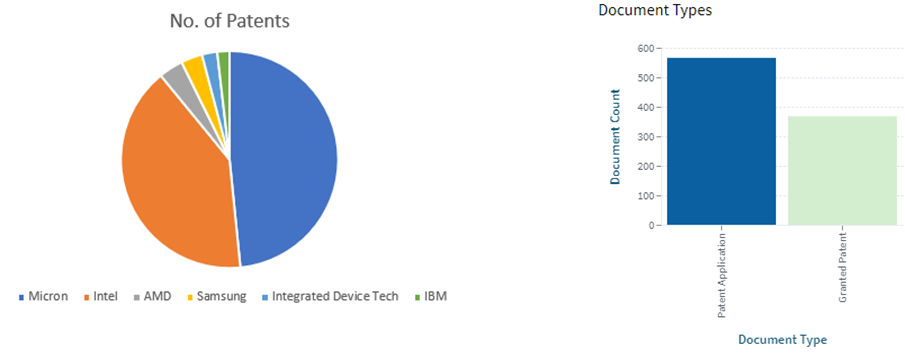
Licensing LPDDR5-related IP is a typical methodology for organizations to get to the innovation without wasting time. Licensing arrangements frame the terms under which an organization can utilize licensed innovations, and they might include royalty payments or other monetary considerations. Developing a sound licensing procedure is fundamental to guarantee that organizations can use LPDDR5 innovation while regarding IP rights. Intel Corp. holds a maximum number of patents followed by Samsung and Micron.

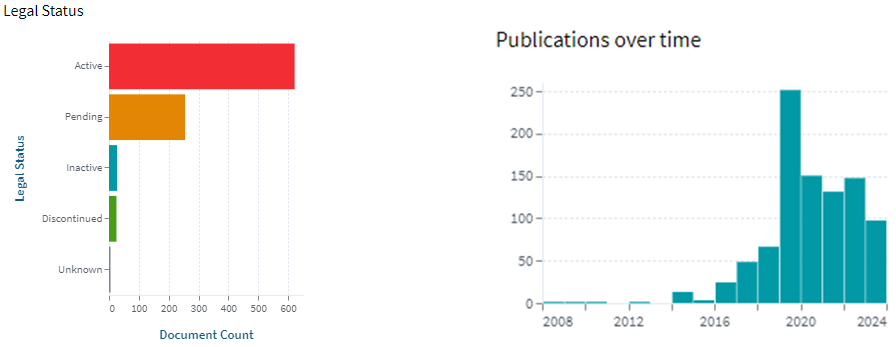
Patent legal status over time

Conclusion

The integration of 5G and AI is revolutionizing businesses and changing the manner in which we connect with technology. LPDDR5 memory technology remains as a basic empowering influence of this change, giving the high-performance memory capabilities expected to help the requests of 5G network and AI applications. As LPDDR5 innovation keeps on developing, with headways in information rates and energy productivity, it will be interesting to observe how it shapes the future of mobile devices, IoT, and other AI-driven advancements. Organizations should likewise explore the complex landscape of LPDDR5-related intellectual property, going with informed choices to cultivate advancement while mitigating legal risks. The journey ahead guarantees invigorating improvements at the crossing point of LPDDR5, 5G, and artificial intelligence, with profound implications for innovation and society alike.

Categories
Computer Science

Understanding UFS WriteBooster: The Power Behind Enhanced Memory Performance

SIGNIFICANCE OF WRITEBOOSTER IN UFS

A flash storage specification for digital cameras, cell phones, and other consumer electronics is called Universal Flash Storage (UFS). The 8-lane parallel and half-duplex LVDS interface of eMMCs cannot scale to larger bandwidths as well as the full-duplex serial LVDS interface implemented by UFS. The UFS standard was updated to version 3.1 by JEDEC in January 2020, adding features including Write Booster, Deep Sleep, Performance Throttling Notification, and Host Performance Booster. The significance of WriteBooster mode in UFS and its application to enhancing memory performance will be covered in this essay.

What is WriteBooster mode?

This feature enables UFS storage devices to use a portion of the flash as a pseudo-SLC cache to increase writing performance. This feature enhances the write performance of UFS storage devices, making them faster and more effective, while creating a reserve memory in the flash storage that is easily and frequently accessible. It uses very little space (only 1 bit of data in each cell). Additionally, WriteBooster is a more affordable option that offers comparable performance advantages.

Operation process of WriteBooster mode

The WriteBooster mode in UFS devices operates as follows:

Pseudo SLC Cache

When using WriteBooster mode, flash storage is created with a reserve memory that serves as a pseudo-SLC cache. In the flash storage, this cache is designed to serve as a frequently accessible reserve memory. Just 1 bit of data is stored in each cell, taking up extremely little space while improving write performance.

Write Acceleration

Data is first written to the WriteBooster mode-created pseudo-SLC cache before being written to the UFS storage device. As opposed to writing directly to the flash memory, writing to this cache is quicker. The device can swiftly complete write operations and move on to other activities thanks to the cache’s function as a buffer.

Background Flushing

In the background, the information kept in the pseudo-SLC cache is periodically flushed to the flash memory. By doing this, you may retain the device’s rapid write rates for following operations while also making sure the data is permanently recorded in the flash memory.

Benefits for Performance

WriteBooster mode enhances the write performance of UFS devices by utilizing the pseudo-SLC cache. As a result, write speeds increase, which can speed up application launch, cache loading, browsing performance, and encoding times. Additionally, the feature enhances the responsiveness and general performance of the system.   

NOTE: It’s important to keep in mind that the exact UFS device and how it’s implemented may affect whether WriteBooster mode can be enabled or disabled. Disabling WriteBooster mode would result in write operations proceeding as normal writes, without utilizing the pseudo-SLC cache.  

Benefits of WriteBooster mode

There are a number of advantages to WriteBooster mode being used with UFS:

Faster Write Speeds

Using a pseudo-SLC cache, WriteBooster mode on UFS devices increases write speeds. Because of the cache, write operations can be completed more quickly, which decreases the amount of time the device needs to be active. The device can reach low-power modes as a result more quickly, increasing power efficiency.

Better Memory Management

By using a piece of the flash as a fictitious SLC cache, WriteBooster mode in UFS improves memory management. Because of the cache, write operations can be completed more quickly, which decreases the amount of time the device needs to be active. The device can reach low-power modes as a result more quickly, increasing power efficiency.

Affordable Alternative

WriteBooster mode in UFS offers comparable performance advantages to pSLC Write Buffer at a lesser price. As a result, it offers a viable option for enhancing memory performance in UFS devices.

Impact of WriteBooster mode on UFS’s power usage

The following ways that WriteBooster mode in UFS affects power usage:

Power Efficiency

By streamlining the writing process, UFS’ Write Booster mode helps to increase power efficiency. The device can write data more quickly and cut down on the time needed for write operations by using a pseudo-SLC cache. As a result, write operations consume less power since the device can perform them more rapidly and effectively.

Deep Sleep Mode

In addition to WriteBooster mode, UFS 3.1 also introduces the Deep Sleep feature. By using voltage regulators for storage and other purposes in addition to power reduction, deep sleep mode reduces energy usage. This improves overall power efficiency by enabling the device to use less power when it is idle or in low-power modes.   

Effective Memory Management

Using a piece of the flash as a fictitious SLC cache, WriteBooster mode in UFS improves memory management. Because of the cache, write operations can be completed more quickly, which decreases the amount of time the device needs to be active. The device can reach low-power modes as a result more quickly, increasing power efficiency.

Overall, WriteBooster mode in UFS reduces power usage through write process optimization, the use of a pseudo-SLC cache, and the addition of features like Deep Sleep mode. Through these improvements, devices can write operations more quickly and use less power whether they are idle or in low-power states.

Intellectual property trends for WriteBooster mode in UFS

WriteBooster mode in UFS is witnessing rapid growth in patent filing trends across the globe. Over the past few years, the number of patent applications almost doubled every two years.    

MICRON is a dominant player in the market with ~3282 patents. So far, it has 2 times more patents than Samsung.

Other key players who have filed for patents in UFS technology with SLC NAND are Sk Hynix, Sandisk, Western Digital etc.  

Following are the trends of publication and their legal status over time:

trends of publication and their legal status over time

These Top 10 companies own around 60% of total patents related to UFS. The below diagram shows these companies have built strong IPMoats in US jurisdiction.  

Conclusion

In conclusion, WriteBooster mode is a crucial component of UFS that boosts write speeds to enhance memory performance. Faster write rates, a pseudo-SLC cache that is easily and repeatedly accessible reserve memory in the flash storage, and a cost-effective solution that offers comparable performance benefits as pSLC Write Buffer are only a few advantages of the implementation of WriteBooster mode in UFS. The significance of UFS’ WriteBooster mode will only increase as mobile devices become more potent and feature-rich. Although Write Booster mode’s effectiveness on UFS devices may vary depending on the specific device, the function is intended to increase write speeds and memory performance, which leads to quicker app startup times, quicker file transfers, and greater system responsiveness.