Generative AI is having a moment. If you have asked a curious question into the digital ether, whether you are plugged into tech, a business owner, a student, or just someone navigating the worldwide web, you have probably encountered generative AI tools such as OpenAI’s ChatGPT, Google’s Gemini, Meta’s LLaMA, or Microsoft’s Copilot. These systems can write essays, create images, write emails, help with coding, and even write legal documents. The enthusiasm around these services is dizzying—imagining infinite creativity and productivity, as well as having every bit of human knowledge at your fingertips.
However, amidst the digital gold rush, cracks are starting to appear. These tools, often remarkable, still cannot be trusted. They hallucinate facts, misunderstand questions, misinterpret context, occasionally deliver answers that are completely incorrect, and sometimes, even downright dangerous. Additionally, as more websites, applications, and platforms begin to rely on generative AI for everyday features, it feels like we are slowly staging the entire internet into beta again. We’ve entered a wild west of unpredictability and experimentation (not everything works as we think it should).
What Exactly Are the Reliability Issues?
To identify the source of the problems, we have to understand a little about how generative AI operates. These models are trained on extensive databases, essentially the public stretch of the entire internet, through something called ‘unsupervised learning,’ with the aim of predicting the next word in a sequence. That’s it. There is no real understanding, logic, or knowledge of facts behind their answers.
This means even the best of systems can produce errors such as:
Hallucinations: Confidently stating something as fact when it is false.
Bias and offensive material: Reflecting harmful stereotypes contained in training data.
Inconsistency: Providing different answers to the same question based on how the question is posed.
Context fade: Losing track of long conversations and understanding of subtle changes in context.
Overconfidence: Presenting guesses in an authoritative tone, which leads users to trust incorrect information.
In the case of a user asking a chatbot for legal advice, they may receive fabricated case law. A student using AI for historical facts could be misled by fictitious quotes (i.e., the user takes the output as fact). Even a technologically savvy user may fall victim to errors if they do not fact-check the outcomes.
Real-World Examples of AI Misfires
The news just keeps rolling:
Google’s AI Overviews, which were supposed to enhance search, suggested that users eat rocks and put glue in their pizza sauce, were predicated on misunderstood or satirical sources.
Air Canada’s chatbot advertised a non-existent refund policy, and the company was forced to abide by it when challenged in court.
A New York lawyer had ChatGPT draft a legal brief that cited total fabrication of court cases, which eventually made it to a hearing, and the judge sanctioned him, and the story went viral.
Bing’s chatbot (early version) was reported to be aggressive or emotionally manipulating users in long conversations.
These are not just bugs; these are symptoms of a substantial reliability problem in the generative AI architecture.
Why Is This Happening?
Generative AI is founded on the notion that it doesn’t “know” anything. It neither checks facts, discovers truths, consults other sources, nor even questions its outputs. It simply generates output based on mathematical data patterns. This causes a few critical issues:
1. No Ground Truth
AI systems don’t “know” what a fact is. They only generate plausible text outputs, not facts. Even if training data was rigid facts, it could erase that information, or cross data facts together, especially if the user inputs a narrow, specialty, or complex request/input.
2. Training Data Has Errors
If you give an AI a set of training data from the internet, it includes all of the errors, biases, and nonsensical knowledge. Satire, misinformation, tiny errors, etc., are all equal verbal inputs.
3. Models Don’t Know Anything About Current Knowledge
Most models won’t provide feedback on current knowledge after their training, and therefore don’t know what is currently happening in the world. Some like ChatGPT even augment knowledge with a live search, but most do not. Most likely, if the AI’s output left knowledge before it collected knowledge, then basic current event questions can turn badly.
4. Models Have No Accountability
An AI system will not say, “I’m wrong” unless you make it. The system will not tell you, “I’m guessing.” The next output will always be a flat, confident, polished output, which is potentially dangerous and misleading.
Can Reliability Be Improved?
Yes—but it will take more than simply data and computing power. This is what companies and researchers are doing:
1. RAG (Retrieval-Augmented Generation)
Rather than relying solely on the AI’s knowledge from its training database, RAG systems create systems that go out to external databases or the web to retrieve information in real time before generating the answer based on the previous relevant information. This can help to eliminate some hallucinations and give a level of confidence around facts.
2. Model Alignment and Guardrails
Many companies such as OpenAI, Anthropic, and Google are putting massive resources into making AI outputs safer and more reliable by applying alignment approaches, reinforcement learning from human feedback (RLHF), and built-in moderation systems.
3. Domain-Specific Models
General all-purpose AI may never be fully competent across entire domains. However, focused AIs trained on specific fields such as law, medicine, or engineering can deliver output with much higher reliability.
4. Fact-Checking Layers
Some startups and research organizations are developing AI layers that double-check the output of another model—think an “AI proofreader” that seeks to validate claims, citations, and logical soundness.
What Can Users Do Right Now?
Users must be cautious and skeptical when using generative tools, such as AI, until AI becomes fully reliable.
Here are some best practices:
Always validate AI-generated content, especially in sensitive situations (e.g., health care, finance, or law).
Ask follow-up questions to clarify the AI’s reasoning or solicit its citations.
Work with trusted platforms that offer transparency, disclaimers, or access to source links.
Think of AI as a collaborator, not an authority. AI is an effective tool, but it is not an expert replacement.
Why This Affects the Whole Internet
Generative AI is rapidly becoming the infrastructure of digital experiences—be it in search engines or help desks, creative tools or education platforms. Companies are hurrying to integrate AI capabilities, often the model is often not production-ready when it is deployed.
This creates a paradox; the more we lean into AI, the more we expose our user/users to its shortcomings. And if these issues are never addressed, it can lead to:
A decrease in public trust in digital platforms.
Misinformation at scale.
Legal liabilities and regulatory push-back.
Furthering the knowledge gap for the less-savvy user who assumes that whatever is generated is always accurate.
Conclusion
Generative AI is not broken; it’s simply not fully baked. The tech sector is still figuring out how to augment generative models in ways that are trustworthy, transparent, and safe. These are necessary growing pains in what is potentially one of the most significant technological shifts of modern times. It is time for users, creators, and organizations to come to terms with the fact that it is not a mature technology yet. The shine of AI-generated content glosses over the brittleness behind the curtain.
Until generative AI systems can reliably distinguish fact from fiction, we’re all in a beta version of the future—and it’s on all of us to proceed cautiously, ask questions, and demand better.
Patent Landscape and Graphical Exploration

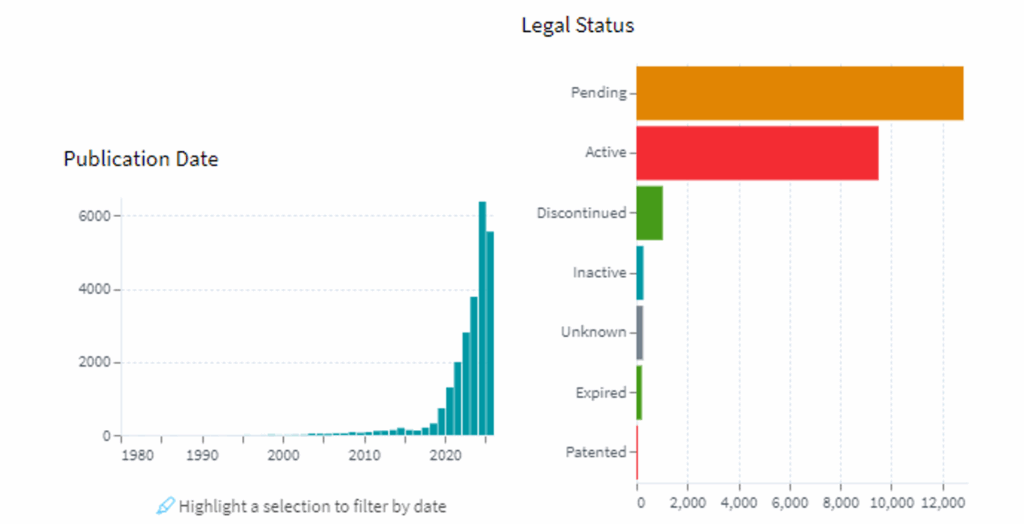
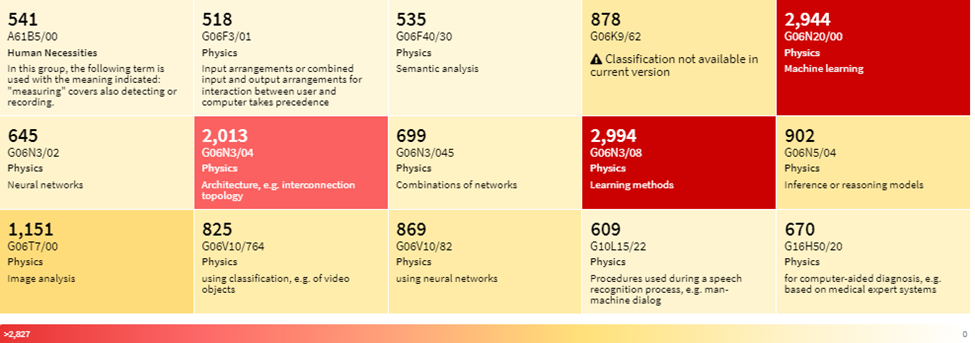
Top CPC classification codes
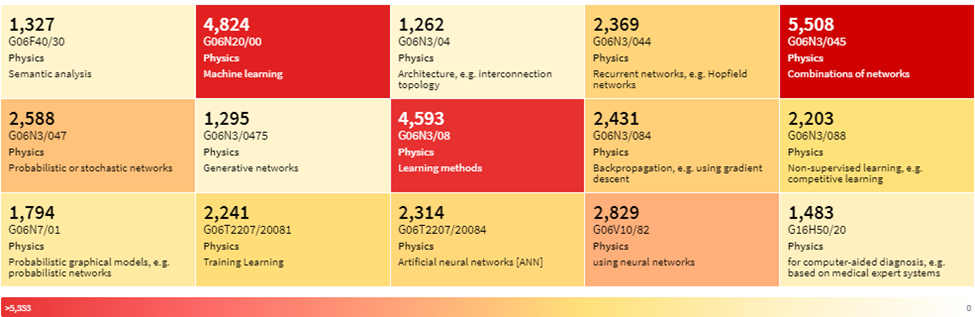
Top IPCR classification codes
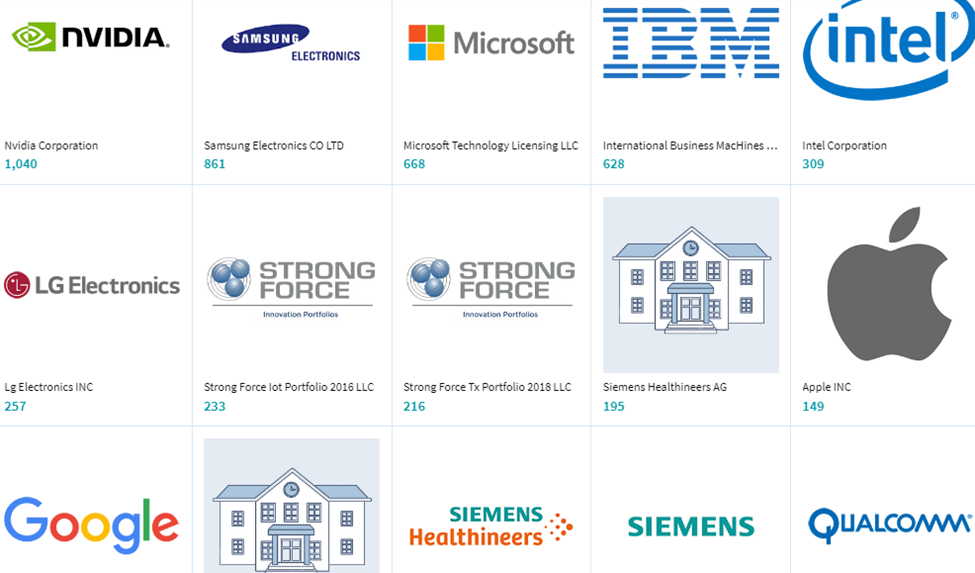
Top Owners
Patent documents by jurisdiction
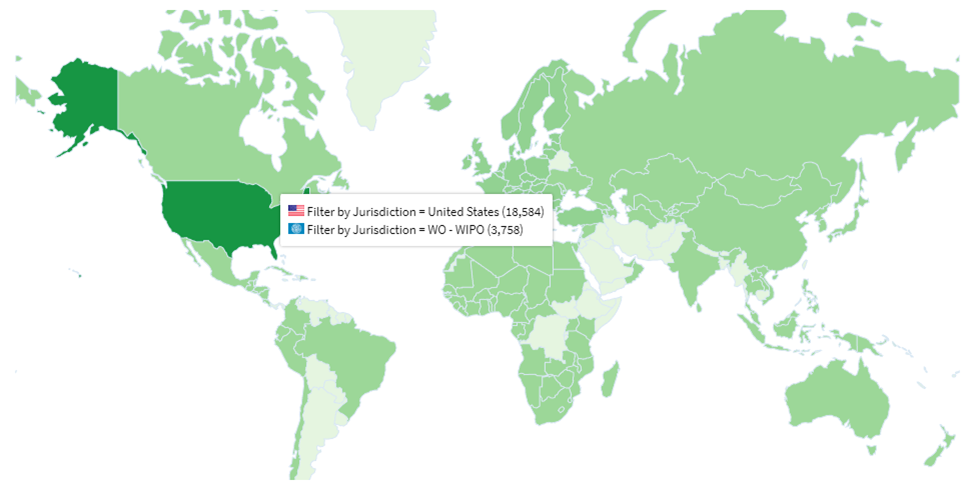
(Source: lens.org)