Intellect-Partners

Categories
Electronics

Apple Hit with Landmark Lawsuit Over Camo App and Continuity Camera

The tech industry is currently witnessing a massive legal collision where innovation, intellectual property, and platform dominance meet. Two major legal battles are defining the landscape in 2026: Nokia’s global pursuit of Warner Bros. Discovery and Reincubate’s David vs. Goliath antitrust and patent suit against Apple.

These cases are not just about money; they are about who owns the fundamental “pipes” and “code” that make modern digital life possible.
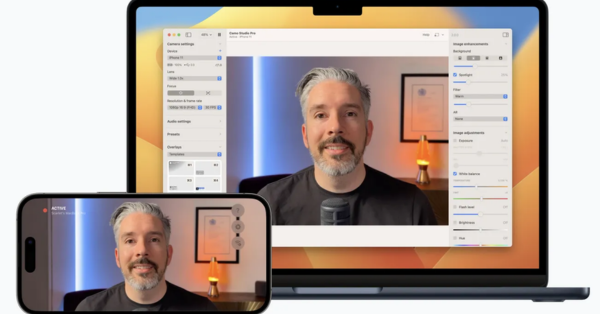
The Reincubate Takes on Apple over Continuity Camera

On January 27, 2026, London-based software developer Reincubate Ltd filed a blockbuster federal lawsuit against Apple Inc. in the U.S. District Court for the District of New Jersey (Case No. 2:26-cv-00828). The suit accuses the tech giant of stealing the technology behind its popular app, Camo, and using its platform dominance to crush competition.

The Technical Front Two Patents and a High-Stakes Claim

Reincubate is not just crying foul over a lost business opportunity; they are armed with specific intellectual property. The lawsuit asserts that Apple’s Continuity Camera and the newer Final Cut Camera with Live Multicam willfully infringe on two key U.S. patents:

  • U.S. Patent No. 12,335,323
  • U.S. Patent No. 11,924,258

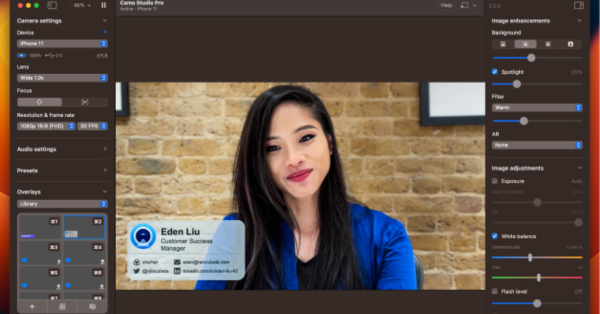
Both patents, titled “Devices, systems, and methods for video processing,” describe a specialized architecture where a capture device (iPhone) and a control device (Mac) cooperate to process video. Reincubate alleges that Apple copied their method of splitting processing tasks between devices to achieve high-quality, low-latency video—a breakthrough that Camo brought to market in 2020 during the peak of the remote-work era.
Allegations of Corporate Deceit

The narrative provided by Reincubate CEO Aidan Fitzpatrick is a cautionary tale for any developer in the Apple ecosystem. Fitzpatrick alleges that Apple acted as a “wolf in sheep’s clothing”:

  1. Beta Access: Thousands of Apple employees allegedly used Camo internally for years, providing the company with deep telemetry and usage data.
  2. The “Innovation” Bait: Apple praised the app and even nominated it for awards, encouraging Reincubate to “go all-in” on the platform.
  3. The WWDC Reveal: In 2022, Apple rendered the app obsolete by announcing Continuity Camera, using many of the same engineers who had previously praised Camo in private messages to Fitzpatrick.

Antitrust and the “Platform Obstacle”

Reincubate’s case goes beyond patents into Sherman Act Section 2 violations. They argue that Apple didn’t just compete; they cheated. Specifically:

  • API Blocking: Apple allegedly used its control over the Continuity framework to prevent Camo from offering the same low-latency wireless features that Apple’s native solution enjoys.
  • App Hijacking: When a user tries to use Camo, Apple’s OS often triggers Continuity Camera automatically, effectively suspending the third-party app and blocking its connection—a technical hurdle Reincubate claims is impossible to bypass without Apple’s cooperation.
Categories
Automotive Mechanical

The Rise of Controller-less Hand Tracking in VR

Handheld controllers have long defined virtual reality. However, the industry is set to enter a new era in 2025, where the most natural interface will be your hands. For navigating digital environments, controller-less hand tracking is rapidly becoming the norm rather than the exception. The question now is not if it will replace controllers, but how quickly the shift will happen.

How Hand Tracking Works

To map a user’s hand position and movement in three dimensions, controller-less hand tracking combines computer vision, depth sensing, and machine learning. High-speed images of the user’s hands are captured from various angles by arrays of cameras and infrared sensors found in contemporary VR headsets like the Apple Vision Pro and Meta Quest.

Neural networks trained to identify hand shapes, joint locations, and subtle finger movements process these visual inputs. The system then generates a real-time skeletal model of the hand, allowing it to track both small gestures like pinching or tapping and larger motions like grabbing or waving.

Advanced methods such as predictive modelling help reduce latency, ensuring that the virtual hand responds smoothly even if tracking data temporarily drops. Companies like Meta are also integrating wrist-worn electromyography (EMG) sensors, which detect electrical signals from muscle contractions before movement is visible, opening the door to near-instant “thought-driven” control.

Together, these advancements are enabling an accurate, realistic, and immersive interface that mirrors the dexterity of physical touch.

Why It Matters

The significance of hand tracking goes beyond convenience. It improves VR accessibility, especially for beginners who may find conventional controllers intimidating.

Platforms such as Class VR are exploring gesture-based learning, allowing students to manipulate historical artifacts or molecular models naturally. Surgeons are already training using VR simulations, lowering the learning curve by allowing precise practice using natural hand movements.

Games on the Meta Quest show how actions like casting spells, drawing a bow, or throwing objects feel more intuitive with hand gestures. Retail and e-commerce are experimenting with virtual try-on and product visualization, while fitness and rehabilitation apps are integrating hand tracking for more engaging workouts and recovery routines.

By turning the human body into the controller, VR is expanding its applications from classrooms to clinics to living rooms.

Patent Landscape and Graphical Exploration

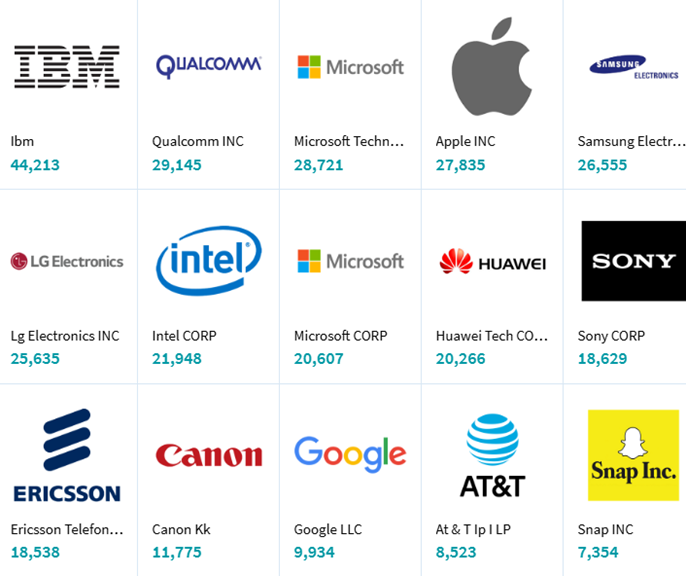
Controller-less Hand Tracking in VR Top Applicants (Source: https://www.lens.org/)

Patent Documents Over Time

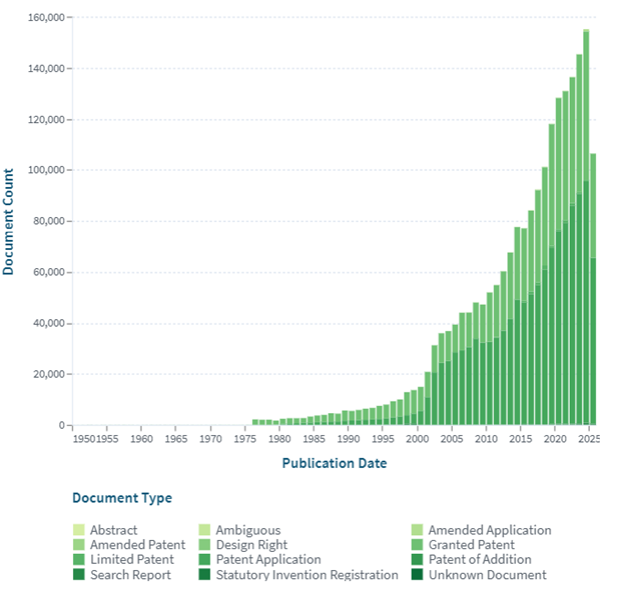
Controller-less Hand Tracking in VR Patent Documents Over Time (Source: https://www.lens.org/)

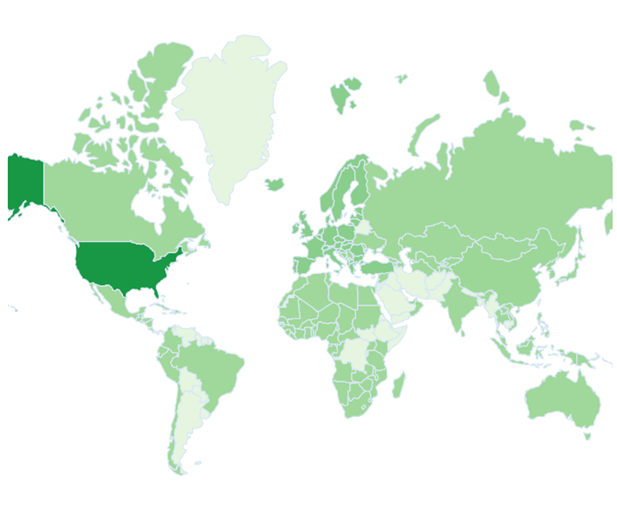
U.S. Leading the Patent Charge

Controller-less Hand Tracking in VR Patent documents by Jurisdiction  (Source: https://www.lens.org/)

Top CPC Classification Codes

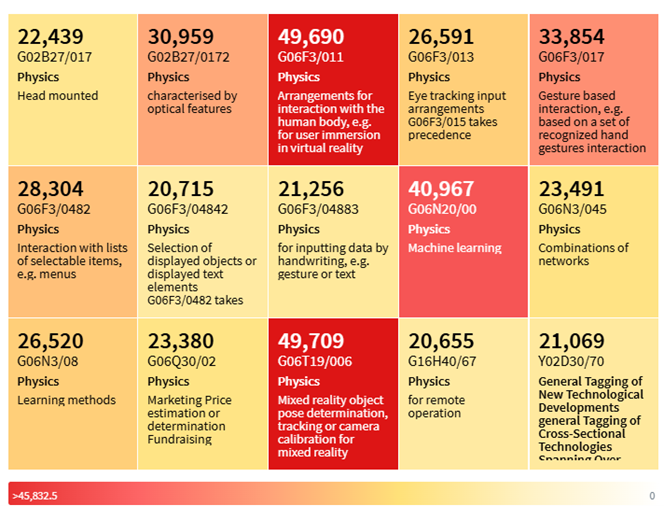
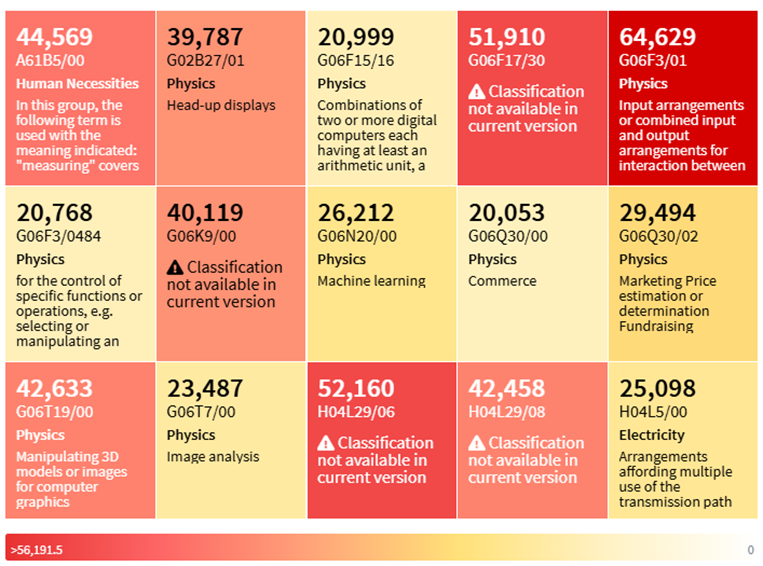
Controller-less Hand Tracking in VR Top CPC Classification Codes (Source: https://www.lens.org/)

Top IPCR Classification Codes

Controller-less Hand Tracking in VR Top IPCR Classification Codes (Source: https://www.lens.org/)

Market Landscape Beyond 2025

Hand tracking is becoming more competitive. Meta Quest is leading widespread adoption, improving its tracking system with each update and experimenting with EMG wristbands for extremely precise input. Controller-less input is central to Apple Vision Pro’s spatial computing experience.

While PlayStation VR still relies on controllers, Sony is likely to adopt hybrid input approaches as demand for natural interaction grows.

Companies such as HTC, Pico, and multiple startups are developing devices like smart rings and haptic gloves that add tactile feedback. These accessories aim to make interacting in virtual environments feel closer to manipulating real objects.

Market analysts expect controller-less hand tracking to become a major growth driver. The gaming market alone could reach around USD 100 billion by 2030, with strong adoption also predicted across retail, healthcare, and corporate training.

The Road Ahead

By the late 2020s, hand tracking may evolve into a multi-layered system combining:

  • Vision-based gesture tracking
  • EMG wristbands for micro-precision
  • Haptic accessories for tactile realism

This approach could bring VR interaction closer than ever to real-world touch.

Controller-less hand tracking is not just an upgrade; it represents the future of VR engagement. Whether Meta leads in scale, Apple in refinement, or Sony in gaming, the winners will be users who interact in virtual worlds as naturally as they do in the physical one.

Categories
Computer Science Electronics

Spotify Patent for Music Suggestions based on Nostalgia Metrics

Spotify is known to be tweaking around with its algorithms to better their song suggestions to the user for the longest. This time they are experimenting with the Nostalgia factor says the new patent.

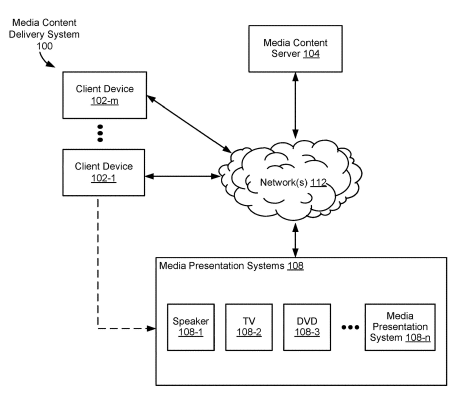
The patent application was filed a few months back in 2020. It was the month of September that the application was published by the USPTO. The application portrays a framework by which Spotify distinguishes a user’s demographic group and suggests melodies that would be ‘nostalgic’ to that listener, in light of the past listening history of the user.

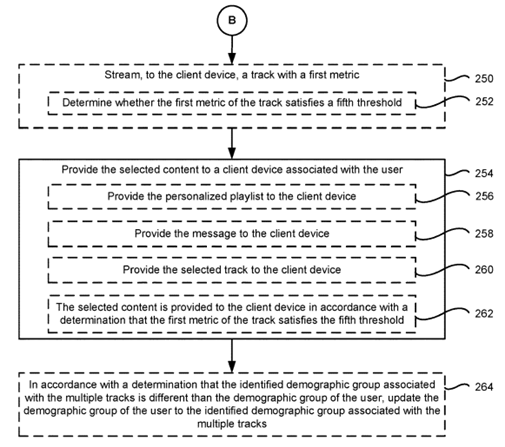
“A server system gets to a profile of a user of the media-offering support. The profile demonstrates a demographic group of the user. For each track of a majority of tracks, the server system decides a year related to the track,” according to the application.

The patent portrays a framework thusly: if a user is truly into any particular band during the ’80s, the calculation will suggest other famous melodies from 1985 and 1987. The trigger here is to suggest music dependent on the listening propensities for others inside the user’s demographic, explicitly from the exact or general period during those years.

The system chooses content for the user have put together in any event partially concerning a proclivity of individuals from the demographic group, when contrasted with individuals from other demographic, of music from the year related with the track. The framework gives the content to a gadget related to the user.

The patent indicates a distinction between age and non-age demographics. Users around a similar age keen on the melody make up one demographic, while users are intrigued by a similar tune yet not in a similar age section make up another. Other segment factors that may affect the sentimentality patent incorporate nation and sexual orientation.

The patent incorporates language for building a customized playlist around a particular year. On the off chance that you have affectionate recollections of the year you graduated, or the year you got hitched – Spotify can summon that late spring’s most blazing hits to hit your nostalgic nerve at that time. It’s a cunning and honestly a little bit frightening approach to keep users tuning in to music for an assortment of reasons.

Our go-to thing is music to make the best memories in our lives. Presently, Spotify wants to distinguish the behavior and take into account it with this nostalgic patent. By exploring your listening history, Spotify can recognize when music affected you most. Listen to a sad song multiple times in the most recent week? Spotify would know you likely encountered an awful separation as of late, and you’re remembering those times.

Patent Source: https://bit.ly/3dyI3Ut