
Intellect-Partners

Categories
Automotive Electronics

Ford’s Latest Patent Shows a New Way of Using Augmented Reality (AR) in Cars

Ford doesn’t have plans to stop offering more helpful tech in the market. Presently, they have thought about it as a superior method for utilizing Augmented Reality (AR) in vehicles. It could seem like a trick for now, however here’s the reason it could come up as truly cool and helpful.

If you drive a lot, you certainly had days when the road was definitely not a safe spot to be because the solar glare was extremely strong at sunrise or sunset. Add a wet road to this situation, and you’ll get a formula for the ideal disaster.

You can attempt to utilize glasses, sun visors, or simply squint your eyes, however, there are minutes when it is truly difficult to see the road properly. Ford wants to assist you with this by giving you improved augmented reality in a future vehicle of the Michigan-based producer.

While Mercedes-Benz made every one of the headlines with AR navigation presently that is now gradually advancing onto more luxury or premium vehicles, the innovation is commonly known since it was utilized in mobile games like Pokemon Go.

As indicated by a recently unveiled United States Patent and Trademark Office (USPTO) documenting, Ford has one more use for AR. The automaker plans to install this system in a car equipped with a head-up display (HUD). The organization refers to it as “User-centric Enhanced Pathway,” or UEP for short.

Ford’s new patented AR system will utilize the HUD, cameras, GPS, and radars to project on the windscreen the way that should be followed by the driver. It’s basically providing you with one more set of virtual eyes. Moreover, it will actually be able to change settings like brightness, color, and contrast all on its own to ensure the individual in the driver’s seat sees what data is being displayed to them.

The Augmented Reality framework will likewise know when it should activate on its own in light of information like the driver’s eye squint status, the speed, the area, or the weather conditions at a specific moment within the day.

This innovation isn’t restricted to vehicles or trucks, as Ford is hoping to introduce it even in vans or public transport like buses. You can observe much more specific insights regarding this new AR framework in the USPTO filing.

You should remember that patents aren’t really an assurance of production. The American carmaker simply needs to ensure its innovation is safeguarded by the law. Given the ongoing environment of things and what the future prognosis says about getting back to normal, it’s difficult to envision Ford betting everything with this at any point in the near future. For now, it’s great that they basically have it.
Categories
Computer Science Electronics

Apple patents for FaceID for masked faces and gestures in video conferencing

The U.S. Patent and Trademark Office (USPTO) has distributed
an aggregate of 56 recently conceded licenses for Apple, including one to
adjust the organization’s device biometrics according to current conditions.

Among the reports, which were spotted by Patently Apple, is
a patent depicting mask detection abilities for Face ID, and one conceivably
empowering people to utilize communication through sign language or gestures in
video conferencing.

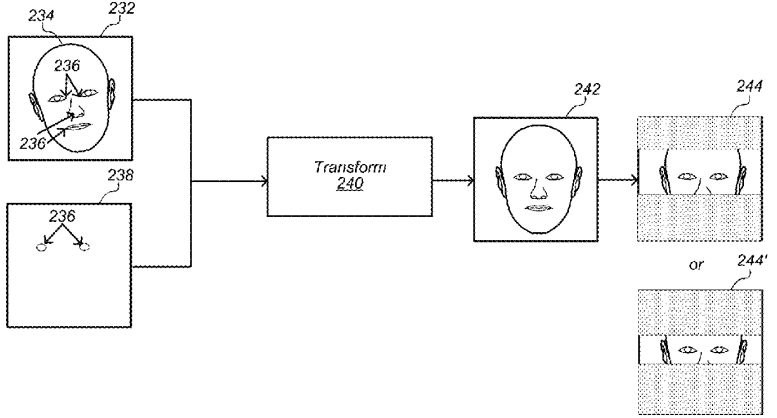
The main patent has been purportedly drafted by Apple to work with biometric user identification as numerous users keep on wearing face masks to restrict the spread of COVID-19.

Figure from US Patent No. 11,163,981 B2

The report portrays an automated ‘switch’ between a full-face
facial recognition authentication cycle and partial face facial recognition
verification — the innovation will endeavor to attempt the full face facial
recognition authentication process when certain facial features like the eyes,
nose, and mouth, are visible, and change to partial face recognition when it
registers a portion of these facial features as at least partially impeded.

As indicated by the patent’s text, Apple is training the
incomplete face facial recognition authentication process utilizing similar
pictures as the full-face facial acknowledgment one, however, Apple added that
a portion of the pictures might be cropped for use in preparing for the latter
process.

The subsequent biometrics-related patent Apple was allowed last week alludes to ‘techniques for visual prominence of participants in a video conference.’ The document referenced applications identified with circumstances where conference participants communicate utilizing sign language or visual props.

The device would create a sign of a member’s visual
prominence in a video meeting, encode a video stream of it, and afterward
communicate it along with the visual prominence indication to a receiving
device in the video conference.

Categories
Computer Science Electronics

LG Patent for Crystal Sound Display Tech

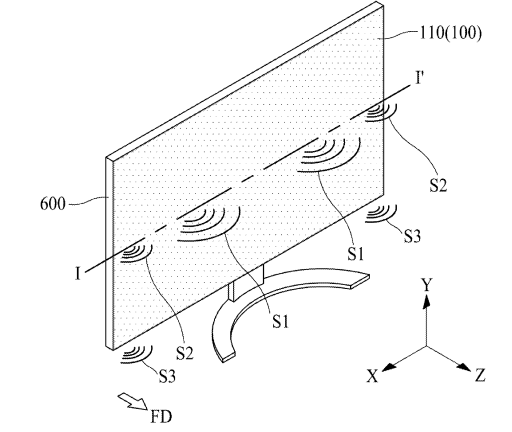
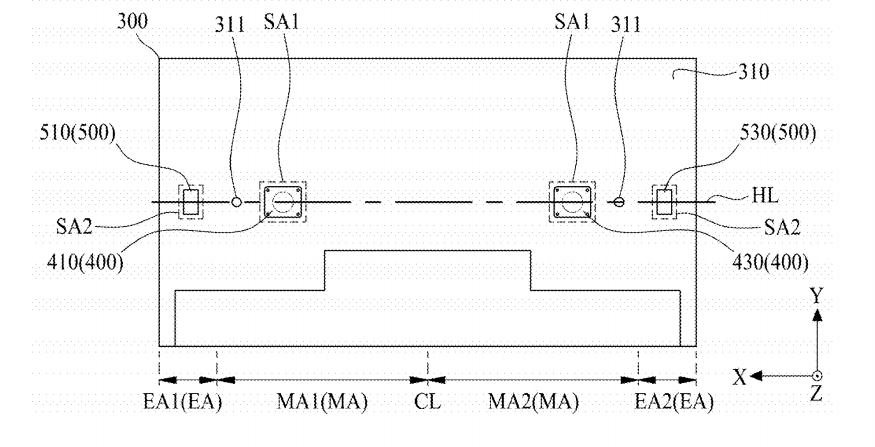
A new patent from LG has surfaced this recent week showing audio coming from computer display tech. The way this tech works is by generating a sound traveling to the front region of the display. The sound outputs including S1, S2, and, S3 based on a display vibration module. The S1 and S2 output are created based on the vibration to the front screen region whereas the S3 sound output generated to the side region of the display.

A similar patent has also been filed by Apple in the year 2015, saying the tech can be applied to their various line of devices including iPhone, iPad, or iMac monitor. Apple had that patent granted way back in 2017. While there’s no device that has come yet from Apple with this display tech, anticipations are Apple is going to include it in their redesigned iMac.

The LG patent has been published by the U.S. Patent and Trademark Office with the company stating that the invention is to provide a display apparatus module for providing improved sound quality and for increasing an immersion experience of a viewer. Another aspect of the invention is to provide a display apparatus that generates sound for traveling to a forward region in front of a display panel.

The display tech by LG is called “Crystal Sound Display” aiming at Desktops, Notebooks, and TVs. While the patent title just says “DISPLAY APPARATUS”. You can find the patent 20200213699 details right here.