Augmented Reality (AR)
Augmented Reality (AR) has developed as a transformational and compelling technology that blurs the boundaries between the digital and physical worlds in a world where technology is continually developing. The term “augmented reality” describes the creative blending of digital components with our physical surroundings to produce an immersive and interactive experience that improves our perception of reality. AR enhances our everyday experiences by superimposing computer-generated images, visuals, or information onto the real world we view and interact with, in contrast to Virtual Reality (VR), which immerses users in wholly computer-generated settings. Through the employment of advanced technology like computer vision, sensors, and potent processing powers, this fusion of digital and physical aspects is made possible.
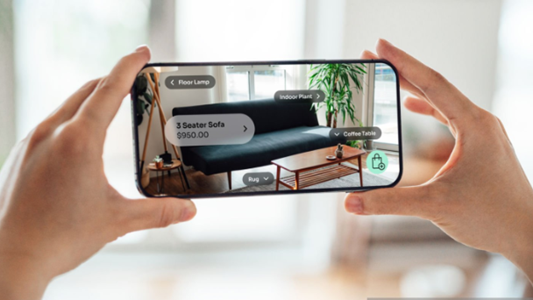
AR keeps redefining how we interact with our environment and obtain information in this quickly developing industry. We can use it to interact with difficult concepts, learn about items before making a purchase, and even help with medical operations. With its impact on society, culture, and daily life projected to increase rapidly in the future years, augmented reality’s potential seems limitless.
The way we see and interact with the world will surely change as augmented reality (AR) technology develops and becomes more widely available, stimulating new spheres of creativity and improving our comprehension of the places we live in. Technology’s fascinating new frontier, augmented reality, has the potential to transform many facets of our lives and influence how people interact with computers in the future.
Applications of Augmented Reality
A wide range of useful and cutting-edge applications for augmented reality (AR) effortlessly incorporate virtual components into the actual environment. With Pokémon GO, players may hunt virtual creatures in their actual surroundings, AR delivers engaging experiences in the entertainment and gaming industries. With the help of AR, education may make hard subjects more approachable for pupils by offering dynamic and entertaining learning content, such as anatomy representations or historical reenactments. By enabling customers to visually try on clothes or picture furniture in their homes before making a purchase, augmented reality (AR) in retail improves the buying experience.
Additionally, as it can superimpose maps and current information on the user’s field of view, augmented reality (AR) has useful uses in navigation and wayfinding. AR streamlines operations and lowers errors in the industrial sector by providing personnel with step-by-step visual guidance during maintenance and repair tasks. Medical personnel’s accuracy and safety are improved through AR-assisted procedures and medical visualization. AR continues to spur innovation across industries due to its adaptability and promise to improve many parts of our lives, creating new opportunities for user experiences, productivity, and communication.
Virtual Reality (VR)
Innovative technology known as virtual reality (VR) immerses viewers in computer-generated settings for a realistic and engaging experience. The use of customized headsets or head-mounted displays (HMDs) transports people to interesting and surprisingly lifelike virtual worlds. Advanced tracking technologies are used in VR to precisely replicate the user’s movements and gestures so they can interact with the virtual environment. This technology has a wide range of uses, including immersive gaming, simulated training scenarios for many industries, educational simulations, and therapeutic uses. VR technology has the potential to alter entertainment, education, training, and many other industries as it develops and becomes more widely available. It does this by opening up a whole new world of experiences that push the limits of conventional computer and human connection.
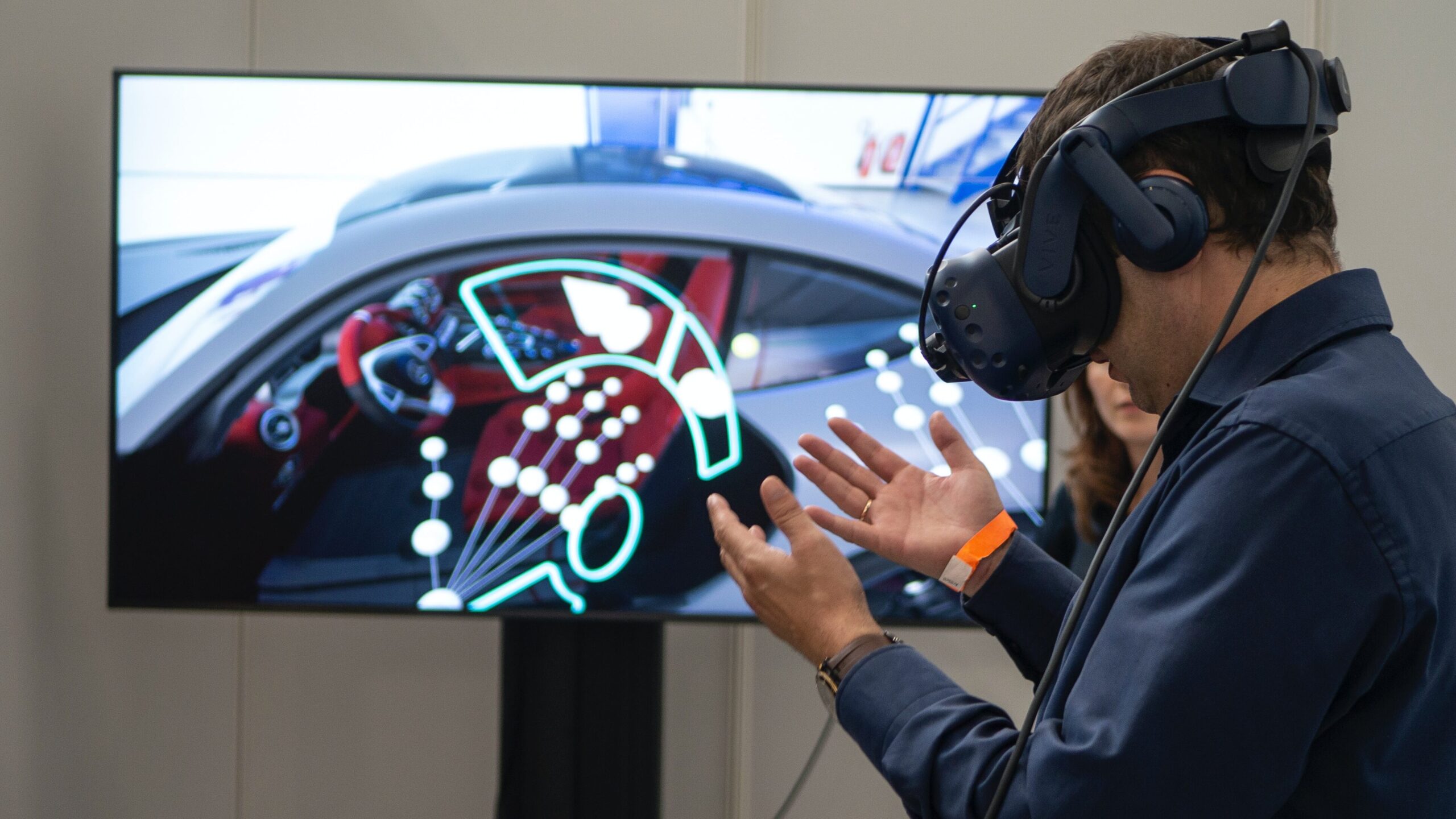
VR takes people to dynamic, lifelike landscapes using cutting-edge headsets and motion-tracking technologies, sparking their imaginations and offering chances for exploration, education, and enjoyment. VR has a wide range of applications, from gaming and education to medicine and architecture, among others. VR hardware’s potential to change industries and improve human experiences is limitless as it develops and becomes more widely available. Virtual Reality is at the vanguard of a revolutionary era in computing and human-computer interaction thanks to its capacity to open up new vistas of possibilities and transform how people interact with technology.
Applications of Virtual Reality
Virtual reality (VR) offers a wide range of uses in a variety of sectors and professions. In the world of video games, virtual reality offers gamers completely immersive experiences that immerse them in fanciful settings where they can interact with fictional characters and environments. By allowing for interactive and engaging simulations, virtual reality (VR) in education and training revolutionizes learning by allowing students to engage in historical events, scientific ideas, and professional settings.
Healthcare uses VR for patient therapy, medical teaching, and pain management, while professionals in architecture and design use it to show off 3D models and provide virtual tours of structures. The entertainment sector is also enriched by VR thanks to the additional storytelling opportunities and virtual concerts it provides. Social VR platforms enable meaningful connections by bringing people together in common virtual worlds. Other applications include virtual tourism, real estate, engineering simulations, military training, retail experiences, and artistic creations. As VR technology continues to evolve, its impact will expand, transforming industries and redefining the way we experience and interact with the world.
Top Market Players in AR-VR and Top patent holders
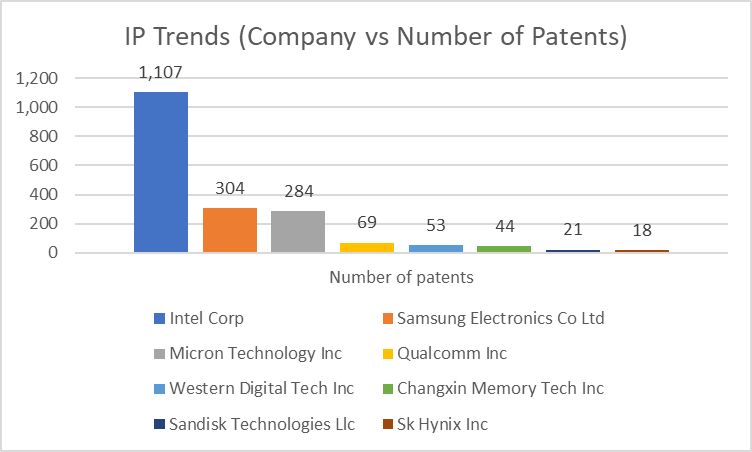
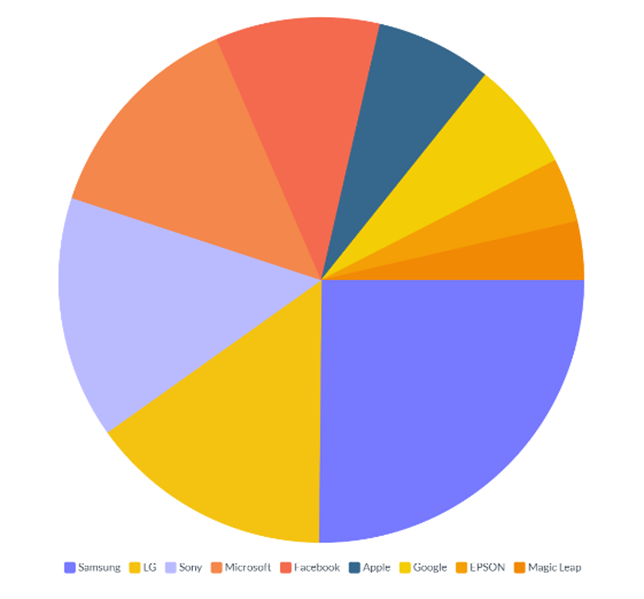
Several well-known corporations with a global presence lead the AR and VR industry, including Google, Microsoft, LG, Samsung Electronics, Sony, Apple Inc., etc. Through both organic and inorganic growth tactics, such as product launches and innovations, partnerships, contracts, expansions, and acquisitions, these businesses have enhanced their market positions. The following graph displays the businesses with the greatest number of global patents in the AR/VR industry:
Apple (Vision Pro)
A ground-breaking spatial computer that seamlessly combines digital material with the real environment while enabling users to remain present and socially engaged has been presented by Apple as Apple Vision Pro.
Vision Pro develops an unlimited canvas for apps that expands beyond the limitations of a conventional display and adds a completely three-dimensional user interface that is managed by the most instinctive and natural inputs — a user’s eyes, hands, and voice — that are currently available. Vision Pro’s vision, the first spatial operating system in the world, enables users to engage with digital information in a way that makes it seem like it is actually in their area. The ground-breaking Vision Pro design includes a dual-chip dual-display ultra-high-resolution display system with 23 million pixels spread over two monitors.
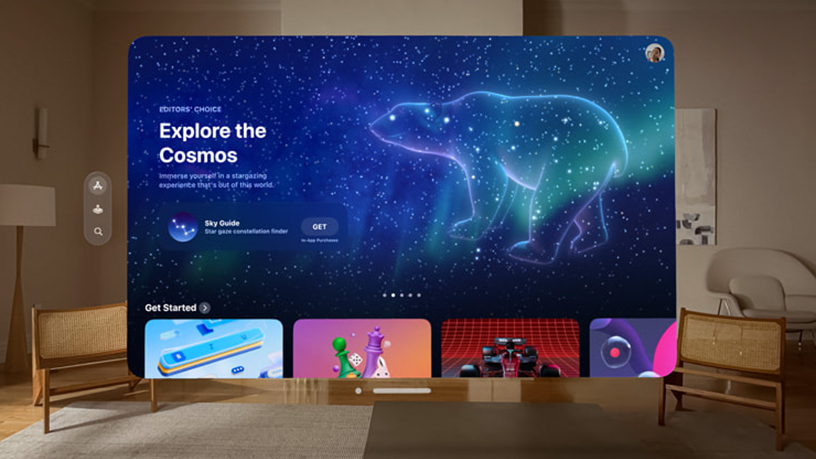
The brand-new Apple Vision Pro App Store is open to users and contains thousands of popular iPhone and iPad applications that work smoothly and automatically with the new input method for Vision Pro. Apple’s developer community may go much further and produce entirely new app experiences as well as modify existing ones for spatial computing by harnessing the potent and distinctive capabilities of Vision Pro and visionOS. The visionOS three-dimensional interface gives digital content the appearance and experience of being physically present in the user’s surroundings. It helps the user understand scale and distance by casting shadows and dynamically responding to ambient light.
Apple Vision Pro presents a whole new input system that is managed by a person’s eyes, hands, and voice to enable user navigation and interaction with spatial information. Apps may be browsed through by merely looking at them, selecting with a tap, scrolling with a wrist flick, or speaking commands.
Microsoft HoloLens
Microsoft HoloLens is a cutting-edge mixed-reality gadget created by Microsoft. HoloLens provides an immersive computing experience by combining augmented reality and virtual reality. It is worn like a headset and allows users to interact with 3D holographic pictures while remaining linked to reality. The gadget integrates gesture and voice control, allowing for hands-free and easy virtual content navigation. HoloLens uses powerful sensors and cameras for spatial mapping, ensuring that virtual items are precisely integrated into the user’s environment.
This technology is used in a variety of areas, including education, healthcare, and entertainment, and allows for visualization, training, and collaboration. Microsoft offers a holographic development platform to developers, encouraging creativity and the creation of unique apps. The second-generation HoloLens improves on its predecessor with improved ergonomics and a broader field of view. Microsoft HoloLens is a big step forward in mixed reality technology, providing users with a seamless combination of digital and physical worlds and unleashing immense possibilities for future applications.
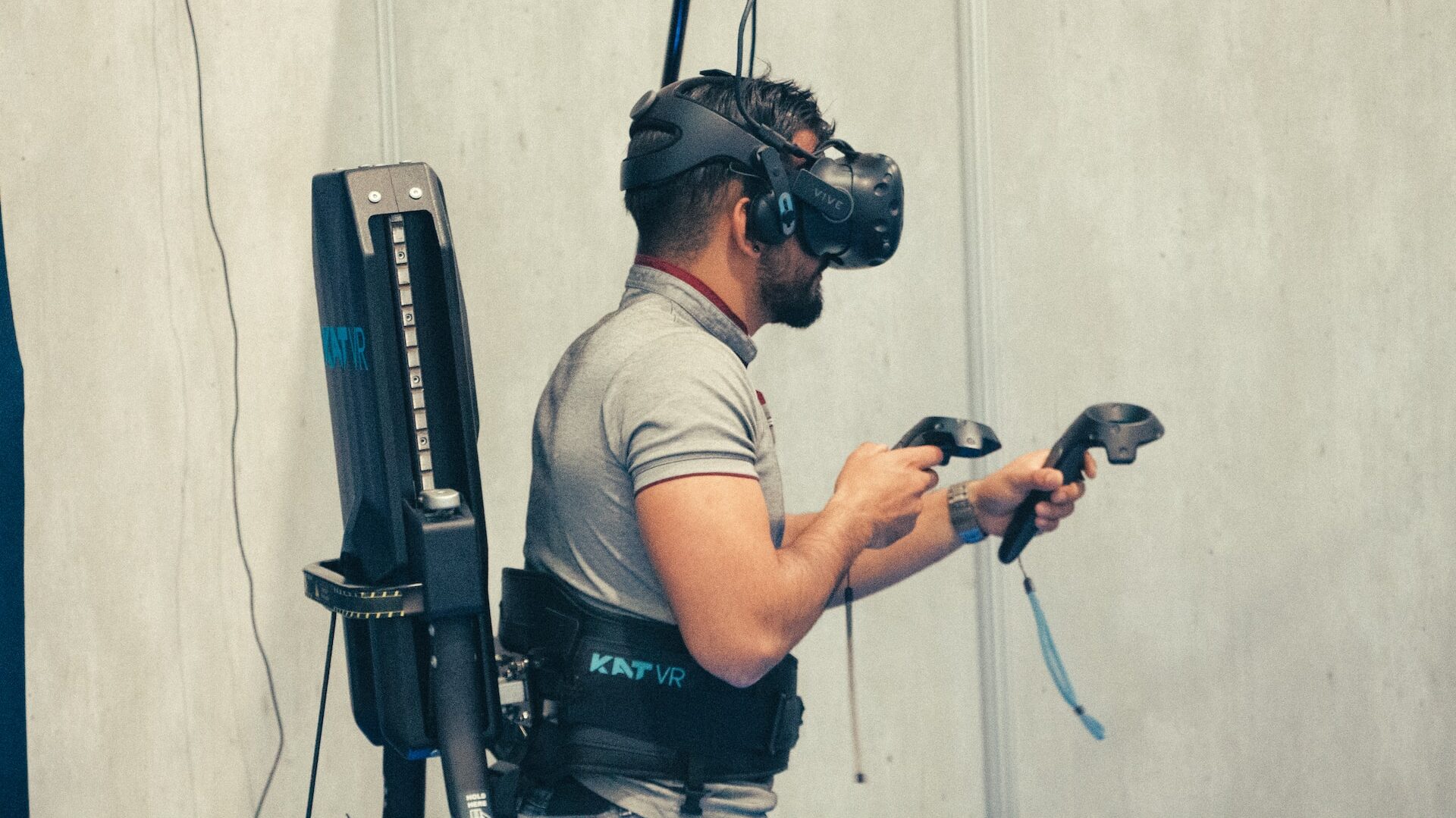
Microsoft HoloLens is a cutting-edge mixed-reality device that changes the way people interact with digital material. It combines the finest of augmented and virtual reality technology to provide a one-of-a-kind and immersive computing experience. Users may see and interact with holographic pictures that are perfectly blended into their real-world surroundings by wearing the headset.
This is made feasible through a network of sensors, cameras, and processors that work together to correctly map and interpret the physical environment. The technology enables easy and natural holographic interaction. Hand gestures and voice instructions can be used to handle and control virtual objects, allowing for hands-free and immersive engagement. This breakthrough offers up a slew of new opportunities in a variety of industries, making it a potent tool for education, design, training, remote cooperation, and entertainment
Microsoft’s dedication to cultivating a dynamic ecosystem resulted in the development of the HoloLens development platform. This platform enables developers to create their own mixed-reality apps, stimulating creativity and propelling the technology’s progress in a variety of sectors. Microsoft debuted HoloLens 2, the device’s second incarnation, in 2019. This version has substantial enhancements such as a more ergonomic design, a bigger field of view, and improved hand-tracking capabilities.
HoloLens 2 expands on its predecessor’s triumphs, fixing prior shortcomings and giving an even smoother and more exciting mixed reality experience. Microsoft HoloLens continues to push the frontiers of mixed reality with its innovative technology and transformational applications, defining the future of how we perceive, interact with, and integrate digital material into our lives.