Intellect-Partners

Categories
Computer Science

Intellectual Property and ChatGPT: Navigating the Ethical Landscape

As cutting-edge artificial intelligence chatbots become progressively modern, they are bringing up significant questions about IPR law and its application to these new advances. Specifically, there are worries about the ownership of content produced by artificial intelligence chatbots, and how to protect and manage the content made by AI.

One main point of interest is the degree to which artificial intelligence chatbots can be thought of as “creators” of original content for reasons of copyright regulation. As these frameworks become further developed, they can produce even better pictures, texts, and different types of content that are indistinguishable from content made by humans. This brings up issues about who should be thought of as the “creator” of the substance for copyright, and whether such content ought to be qualified to be given similar IP rights.

As a rule, copyrighted materials are made by human creators and are considered original content that is fixed in a substantial form. This implies that the work should be communicated in a physical or computerized form, like a book, a PC file, or a painting, to be safeguarded by intellectual property law. With regards to artificial intelligence chatbots, it is not clear whether the substance produced by these frameworks would be viewed as original and fixed in a substantial form, and consequently qualified for copyright protection law.
Cheap and cheerful: why ChatGPT is no trademark filer | Managing Intellectual  Property

Some might contend that artificial intelligence is simply a tool or instrument that is utilized by human creators for work, and subsequently, the human creator ought to be viewed as the original maker and proprietor of the work. Others might contend that computer-based intelligence itself ought to be viewed as the maker and proprietor of the work, provided its capacity to produce unique substance without any intervention by a human.

It is challenging to say for certain whether the substance produced by computer-based intelligence would be qualified for copyright law under existing regulations. Nonetheless, the rise of these advancements brings up significant questions and difficulties that should be addressed to guarantee that IP rights are safeguarded.

Another issue is the potential for IP infringement by artificial intelligence chatbots. As these frameworks become all the more broadly utilized, there is a gamble that they may coincidentally or purposefully produce content that encroaches on the Intellectual Property rights of others or that is duplicative of other artificial intelligence-created content. For instance, an AI chatbot that produces text or pictures in light of previous work without consent could be considered encroaching.

The development of cutting-edge artificial intelligence devices raises significant concerns related to IP that should be addressed to guarantee that these innovations are utilized ethically and that respect the rights of human creators. Technologists, attorneys, and policymakers should cautiously consider these issues and work together to foster fitting legal structures for the utilization of artificial intelligence in the production of original content.
Categories
Computer Science Electronics

Amazon patent for movie/series dubbing by Artificial Intelligence

Another patent by Amazon to utilize artificial intelligence (AI) to dub movies could replace voiceover actors. The innovation goliath has protected a framework by which computers can learn with the voices of Hollywood stars by observing their movies. Amazon’s PC frameworks could then naturally create foreign dialect variants with no requirement for voiceover actors.

The organization utilized the case of a movie called “The Last Samurai” as an example for utilization of the innovation in its patent documenting. By breaking down how the actor sounds in different movies, for example, “Mission Impossible” and “Downpour Man,” Amazon could reproduce his lines from the movie “The Last Samurai” in French or Polish while as yet sounding conspicuous.

Amazon could utilize the innovation to consequently convert over a large number of movies and TV programs with foreign languages into English to add up on their streaming platform Amazon Prime Video. Significant advances in making a real-sounding speech from acclaimed individuals could likewise prompt restored fears of “Deepfake” where innovation is utilized to make recordings that can show public figures making statements they never really said in actuality.

“Previous attempts to automatically generate a localized dub for videos have had limited success because of the lack of diversity in available voices, accents, and other factors like age, gender, or speaking mode, which can result in, for example, relying on an adult voice for dubbing a child character,” Amazon wrote in its patent.

A year ago, Amazon workers distributed an academic paper in which they portrayed preparing AI on 47 hours of discourse recording with the goal that it could consequently dub movies. They inferred that the framework required more work on perspectives on things such as “lip synchronization.” On the off chance that effective, the innovation could likewise be utilized to make unmistakably celebrated voices for other Amazon items, for example, its book recordings or Alexa.

In any case, the presence of a patent conceded to Amazon doesn’t ensure that the organization will begin delivering AI overdubs any time soon. Innovation organizations regularly utilize patent filings for showcasing or to keep their adversaries from building up specific ventures.

Categories
Computer Science Electronics

Spotify Patent for Music Suggestions based on Nostalgia Metrics

Spotify is known to be tweaking around with its algorithms to better their song suggestions to the user for the longest. This time they are experimenting with the Nostalgia factor says the new patent.

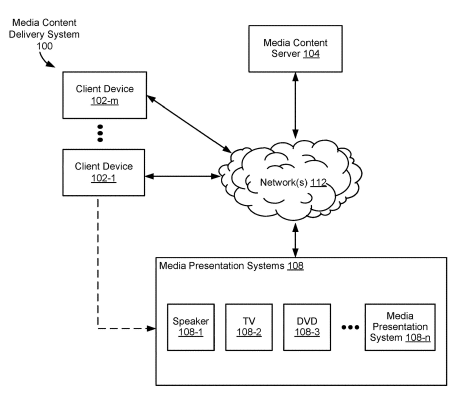
The patent application was filed a few months back in 2020. It was the month of September that the application was published by the USPTO. The application portrays a framework by which Spotify distinguishes a user’s demographic group and suggests melodies that would be ‘nostalgic’ to that listener, in light of the past listening history of the user.

“A server system gets to a profile of a user of the media-offering support. The profile demonstrates a demographic group of the user. For each track of a majority of tracks, the server system decides a year related to the track,” according to the application.

The patent portrays a framework thusly: if a user is truly into any particular band during the ’80s, the calculation will suggest other famous melodies from 1985 and 1987. The trigger here is to suggest music dependent on the listening propensities for others inside the user’s demographic, explicitly from the exact or general period during those years.

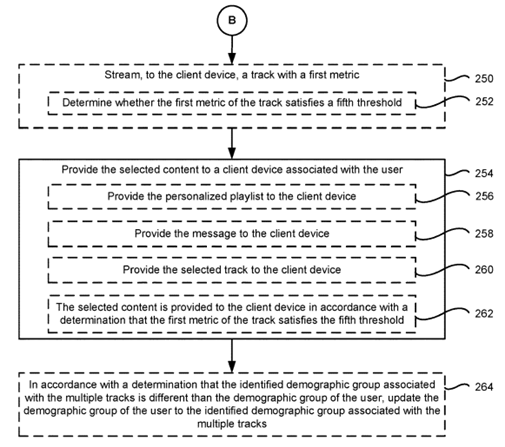
The system chooses content for the user have put together in any event partially concerning a proclivity of individuals from the demographic group, when contrasted with individuals from other demographic, of music from the year related with the track. The framework gives the content to a gadget related to the user.

The patent indicates a distinction between age and non-age demographics. Users around a similar age keen on the melody make up one demographic, while users are intrigued by a similar tune yet not in a similar age section make up another. Other segment factors that may affect the sentimentality patent incorporate nation and sexual orientation.

The patent incorporates language for building a customized playlist around a particular year. On the off chance that you have affectionate recollections of the year you graduated, or the year you got hitched – Spotify can summon that late spring’s most blazing hits to hit your nostalgic nerve at that time. It’s a cunning and honestly a little bit frightening approach to keep users tuning in to music for an assortment of reasons.

Our go-to thing is music to make the best memories in our lives. Presently, Spotify wants to distinguish the behavior and take into account it with this nostalgic patent. By exploring your listening history, Spotify can recognize when music affected you most. Listen to a sad song multiple times in the most recent week? Spotify would know you likely encountered an awful separation as of late, and you’re remembering those times.

Patent Source: https://bit.ly/3dyI3Ut