
Intellect-Partners

Categories
Electronics

Meta and EssilorLuxottica Face Massive Patent Lawsuit Over Ray-Ban Smart Glasses

The smart eyewear landscape has shifted from a race for innovation to a high-stakes legal battlefield. Solos Technology’s multi-billion dollar lawsuit against Meta Platforms and EssilorLuxottica (specifically targeting the Ray-Ban Meta portfolio) represents a critical juncture in the Intellectual Property (IP) world. This is not merely a dispute over design; it is an assault on the foundational logic that enables modern “always-on” AI wearables.

Foundational Sensor Fusion and Multimodal Logic

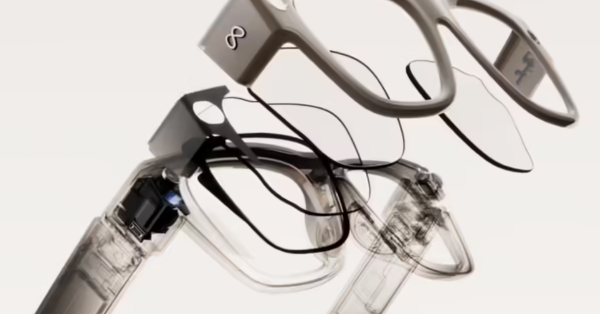
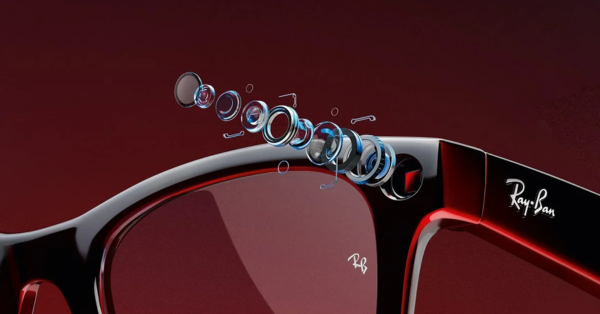
At the heart of the litigation is the concept of Multimodal Sensing and Sensor Fusion. While modern generative AI—like Meta AI—provides the “brain,” Solos claims to own the “nervous system.” Their patents cover the intricate frameworks that allow a device to simultaneously digest inputs from cameras, microphones, gyroscopes, and accelerometers to create a unified understanding of the user’s environment.

In a smart glasses context, this “fusion” is what prevents the AI from becoming overwhelmed by raw data. It allows the device to intelligently decide which sensor takes priority—for instance, using motion sensors to “wake up” the camera only when the user’s head is stable. Solos argues that Meta’s “Look and Ask” feature, which requires the glasses to process visual and vocal data in tandem, relies directly on these patented architectural frameworks.
The Architecture of Contextual Awareness

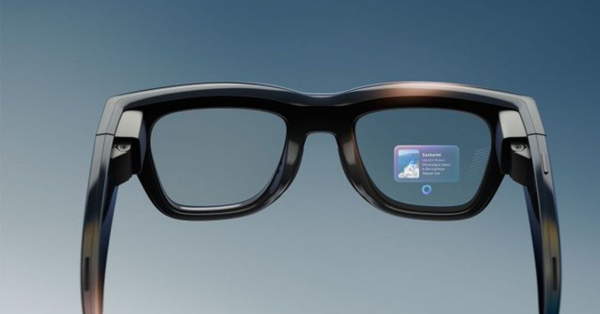
A significant portion of the suit targets Contextual and Activity Detection Systems. This technology is the bridge between a “passive” camera and an “active” assistant. Solos’ patents allegedly cover the methods by which a wearable identifies a user’s current state—whether they are walking, cycling, or standing still—and adjusts its power consumption and AI responsiveness accordingly.

By detecting the “context” of a user’s movement, smart glasses can optimize battery life and ensure that voice-activated integrations are ready exactly when needed. Solos asserts that these “foundational” frameworks were established in their portfolio years before Meta entered the market, making any modern iteration that relies on real-time activity detection a potential infringement of their intellectual property.
Audio Precision and Beamforming in Wearable Environments

Audio is often the primary interface for smart glasses, and Solos has focused heavily on Audio Processing and Beamforming. In a wearable form factor, microphones are positioned far from the mouth and are subject to extreme wind and ambient noise. Beamforming technology uses a mathematical array to “steer” the microphone’s sensitivity toward the user’s voice while suppressing external interference.

Solos claims that the crisp, voice-activated AI interactions that have made the Ray-Ban Meta Wayfarer a consumer success are powered by their proprietary audio algorithms. Without these specific methods of signal isolation, an AI assistant would be virtually unusable in outdoor or crowded environments—the very settings where Meta has marketed its glasses most aggressively.

The Argument for Willful Infringement

Perhaps the most strategically damaging aspect of the suit is the documented history of interaction between the companies. Solos alleges a “senior-level and increasingly detailed knowledge” of their technology by the defendants. By citing physical testing of Solos glasses by Oakley (an EssilorLuxottica brand) in 2019 and specific academic study of their frameworks by a Meta Product Manager in 2021, Solos is aiming for a finding of Willful Infringement.

In U.S. patent law, if a plaintiff can prove that a defendant knew of the patents and chose to infringe anyway, the court can award “treble damages”—tripling the already multi-billion dollar claim. This narrative of “direct knowledge” puts Meta and EssilorLuxottica in a difficult position, as it suggests that the similarities in their product architecture may not be a case of parallel evolution, but of calculated integration.
Market Implications and the “Injunction” Threat

The request for an injunction is the ultimate “nuclear option” in this litigation. With over two million units sold, the Ray-Ban Meta line is the first smart glasses product to achieve genuine mainstream traction. A court-ordered halt on sales would not only cost Meta billions in lost revenue but would also cede the burgeoning wearable AI market to competitors just as the “Metaverse” vision is beginning to materialize.

For IP professionals, this case highlights a looming reality: the pioneers of the 2010s “wearable boom” hold the keys to the AI-hardware integration of the 2020s. As we watch this case unfold, the outcome will likely dictate how tech giants license—or acquire—foundational technology in the years to come.


Categories
Computer Science

Google’s Quantum Leap: Multiverse Calculations or Marketing Buzz?

Is the future of computing truly quantum? And did Google’s latest chip really perform across multiple universes?

In a groundbreaking announcement, Google Quantum AI unveiled “Willow”, its new quantum chip that’s pushing boundaries—and possibly crossing into parallel universes. While the headlines are buzzy, let’s break down what’s really happening and what this means for the future of quantum tech, patent strategy, and commercialization.

Quantum Supremacy—Again?

According to Hartmut Neven, the founder of Google Quantum AI, the Willow chip completed a benchmark quantum computation in under five minutes—a task that would reportedly take a supercomputer 10 septillion years.

“Willow performed a standard benchmark computation in under five minutes that would take one of today’s fastest supercomputers 10 septillion (10²⁵) years.”

That’s longer than the age of the universe.

But here’s the catch: the task itself has no real-world application. It’s designed to demonstrate quantum supremacy, not utility.

What Did Willow Actually Do?

The computation in question was to generate a random distribution, a task that’s notoriously difficult for classical computers. However, this is the same calculation that Google used in its 2019 quantum supremacy claim—a claim that was contested by IBM and later replicated using classical systems.

So, while Willow’s error reduction using more qubits is impressive, its commercial relevance is still uncertain.

Quantum Mechanics, Patents & the Multiverse?

Tucked in Google’s announcement was a reference to the Many Worlds Interpretation of quantum mechanics. Neven suggested that the chip’s performance “lends credence to the notion that quantum computation occurs in many parallel universes.”

This is tied to David Deutsch’s theory of quantum parallelism, where computation occurs across branches of the multiverse, rather than collapsing into one outcome. While fascinating, this remains speculative—and it has no impact on how patents are filed or enforced today.

Still, these bold claims reflect a trend: quantum computing is evolving, and IP frameworks must evolve with it.

Real Challenges: Quantum ≠ Practical (Yet)

Despite the hype, quantum computing remains experimental:

  • Google’s global challenge offering $5 million to find a practical use case for quantum computing still stands.
  • Current quantum algorithms are narrow, and error rates remain a bottleneck.
  • The IP ecosystem around quantum tech is nascent, and patent clarity is crucial for future commercialization.

This is why companies and investors need to keep a close eye on not just quantum announcements, but also standardization efforts, licensing frameworks, and IP protection mechanisms.

How Do Quantum Computers Actually Work?

Let’s simplify:

  • Classical computers process bits (0s and 1s).
  • Quantum computers rely on qubits, which use superposition and entanglement.
  • They use interference patterns to solve complex problems, theoretically faster than any classical system.

However, the actual power lies in building error-resilient, scalable quantum chips—and protecting these innovations with well-structured patents.

Why This Matters for Innovators & IP Strategy
  • Quantum computing is expected to disrupt multiple industries: cybersecurity, pharma, materials science, and logistics.
  • As we inch closer to quantum advantage, companies must act now to evaluate, patent, and license their innovations.
  • At Intellect Partners, we help clients navigate the complex patent landscapes around quantum and emerging technologies.

Whether it’s freedom-to-operate analysis, claim charting, or licensing strategy, our team ensures your IP portfolio is aligned with tech frontiers.

Final Thoughts: Buzz vs Reality

While it’s fun to speculate about quantum computers tapping into alternate realities, what truly matters is building commercially useful, reliable, and scalable quantum systems—and securing them with strong IP protection.

Google’s Willow chip is a leap forward, but we’re still a long road away from widespread adoption. Until then, innovators and tech leaders must focus on building value—one patent at a time.

Interested in understanding how quantum tech intersects with IP?

Contact Intellect Partners for a consultation on IP strategies for quantum and other next-gen technologies.

Categories
Computer Science Electronics

Microsoft as a Partner For Netflix’s Ad-Supported Subscription Plan

Netflix Inc. recently said it has chosen Microsoft Corp as an innovation and sales accomplice for its arranged ad-supported membership offering, as the streaming goliath hopes to plug slowing customer development by carrying out a less expensive plan.

Shares of Netflix rose 2% to $178.06 on the news.

Netflix said in April that it would present a new, lower-priced form of its service in a bid to draw in additional customers. The declaration came as the spearheading membership service posted its first customer loss in over 10 years, and extended further losses to come.

Chief Operating Officer Greg Peters said in a blog post that Netflix picked Microsoft in view of its capacity to innovate, as well with respect to its strong concern for privacy.

“It’s very early days and we have much to work through. But our long-term goal is clear. More choice for consumers and a premium, better-than-linear TV brand experience for advertisers,” Peters said.

The product goliath got $10 billion in advertising revenue last year, selling advertisements on different services, for example, its Bing search engine and its business-centered social network, LinkedIn. Last month, Microsoft finished its procurement of AT&T Inc’s web-based ad platform, Xandr Inc., which permits advertisers to purchase ad space across a great many sites and target audiences.

The association declaration comes ahead of Netflix’s second-quarter profit report. The organization advised financial investors it could lose upwards of 2 million customers in the period, notwithstanding the arrival of such well-known series as “Stranger Things,” which even broke viewer records.

Netflix joins some of its opponents in offering ad-supported services, including Walt Disney Co’s Hulu, NBCUniversal’s Peacock, and Warner Brothers Discovery’s HBO Max.

Researcher Comscore Inc. said such ad-supported services are seeing a quicker pace of reception than membership ones, as inflation squeezes people’s wallets.

“The time is ripe for traditional subscription-based streaming services like Netflix to consider launching an ad-supported tier to enhance their growth trajectory,” Comscore’s James Muldrow said in a statement.