Intellect-Partners

Categories
Computer Science Electronics

Patent Dispute in the Supercomputing Arena: ParTec Sues Microsoft Over Azure AI Platform

The world of high-performance computing (HPC) is heating up, not just with processing power, but with a legal battle brewing between German HPC vendor ParTec and tech giant Microsoft. On June 10, 2024, ParTec filed a lawsuit in the U.S. District Court for the Eastern District of Texas, alleging that Microsoft’s Azure AI platform infringes on its patents related to a critical technology: dynamic modular system architecture (dMSA).

ParTec’s dMSA technology is a game-changer in supercomputing architecture. It revolves around tightly coupled modules housing a large number of interconnected processors or accelerators. This innovative design enables efficient handling of mixed workflows, seamlessly integrating HPC, AI, and big data analytics. According to the lawsuit, Microsoft’s Azure AI platform, touted as “one of the most powerful AI supercomputers in the world,” leverages technology covered by ParTec’s patents, granted between 2018 and 2024.

ParTec is seeking a multi-pronged resolution. The company is requesting an injunction to halt Microsoft’s use of the allegedly infringing technology within the Azure AI platform. Additionally, they are pursuing compensation for damages incurred due to the infringement and licensing fees for the use of their patented technology. The lawsuit also indicates ParTec’s preference for a jury trial.

Microsoft Azure
Microsoft Azure

Beyond the Lawsuit: Implications for the Tech Industry

This patent dispute transcends a single case. It underscores the growing significance of patent protection in the rapidly evolving landscape of supercomputing and AI development. Companies like ParTec are taking a proactive stance in enforcing their intellectual property rights, sending a clear message to tech giants like Microsoft. The onus lies on these larger players to ensure their products and services operate within the boundaries of existing patents.

This legal battle serves as a cautionary tale and a reminder to all industry participants. Staying ahead of the intellectual property curve is crucial. Companies must meticulously evaluate their technology against existing patents to avoid potential infringement lawsuits. Conversely, for those pioneering new advancements, securing robust patent protection is paramount to safeguarding their innovations and reaping the rewards of their research and development efforts.

The Takeaway: Protecting Innovation in a Competitive Landscape

The ongoing patent dispute between ParTec and Microsoft highlights the intricate world of intellectual property in the tech industry. As the boundaries of supercomputing and AI continue to be pushed, robust patent protection strategies will be instrumental for both established players and emerging innovators.

Categories
Electronics

YMTC X1-9050: A New Generation of 3D NAND Flash Memory

Yangtze Memory Technologies Co., Ltd (YMTC) has remained a leader in its field despite the rapid changes happening around it. Today, we will examine one of their notable products, the X1-9050.

YMTC X1-9050

What is the X1-9050?

The X1-9050 is the second generation of YMTC’s 3D NAND flash memory products. An important turning point for the company was reached in August 2019 when it was placed into small-scale mass production. One distinctive feature that makes this product stand out in the market is that it is the first from YMTC to be designed and processed using the Xtacking architecture.

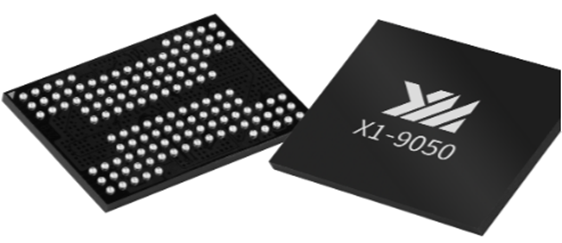
X1-9050 Layout

X1-9050 Layout (Source: https://www.ymtc.com/cn/technicalintroduction.html)

With its cutting-edge features and capabilities, the X1-9050 is a storage solution of the future. Its versatility in different settings is attributed to its distinctive characteristics. The X1-9050 can meet your needs whether you’re a professional handling massive volumes of data, a student needing dependable storage for assignments, or a gamer needing fast performance.

X1-9050 Key Features

Advanced Technology

The X1-9050 is a product of advanced technology. It’s built on the Xtacking architecture, which is YMTC’s patented 3D NAND stacking technology. The peripheral and memory cell arrays can now be manufactured independently thanks to this technology, which can greatly increase chip production efficiency.

Increased Speed

The X1-9050 comes with a 256 GB chip capacity, which makes it an excellent choice for those seeking large quantities of storage. It also offers an impressive I/O speed of upto800MT/s.

Future of Storage

The X1-9050 is a revolutionary storage solution that offers advanced technology and impressive features. As data generation continues to rise, it represents the future of digital storage. Supported by mainstream industry controllers, it can be widely used in the development of consumer, enterprise, and mobile storage products, showcasing the future of digital storage.

Other key differentiating features in X1-9050

The X1-9050 stands out for several reasons when selecting a 3D NAND flash memory product. Its blend of high capacity and speed is unquestionably a significant selling point. Yet, past that, the utilization of the Xtacking design offers extra advantages, adding to the item’s general presentation and unwavering quality.

YMTC X1-9050 v/s Acer Predator GM7

The X1-9050 uses the Xtacking architecture. This unique architecture allows for independent manufacturing of the peripheral and memory cell arrays, which can significantly enhance the efficiency of the chip production process. This is a feature that sets the X1-9050 apart from many of its competitors, including the Acer Predator GM7.

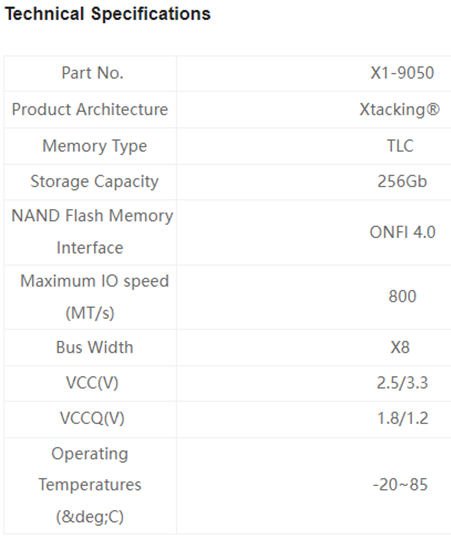
YMTC X1-9050 - Technical Specifications
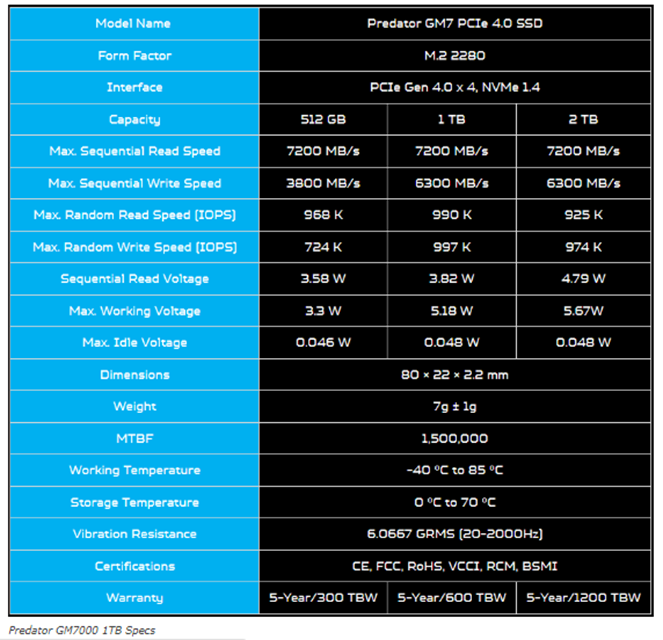
Acer Predator GM7 - Technical Specifications

YMTC X1-9050 v/s Acer Predator GM7: Specs comparison (Source: https://www.ymtc.com/en/products/4.html?cat=35 and https://www.servethehome.com/predator-gm7-1tb-pcie-gen4-nvme-ssd-review/)

The X1-9050 likewise offers noteworthy speed. With a chip limit of 256GB, the X1-9050 offers significant extra room. This high capacity makes it a strong decision for those needing huge capacity. While the Acer Hunter GM7 likewise offers significant capacity, the X1-9050’s ability is explicitly intended for 3D NAND flash memory, making it a more particular decision. With a greatest I/O speed that can reach up to 800MT/s, it likewise beats numerous rivals in its class.

Patent Landscape

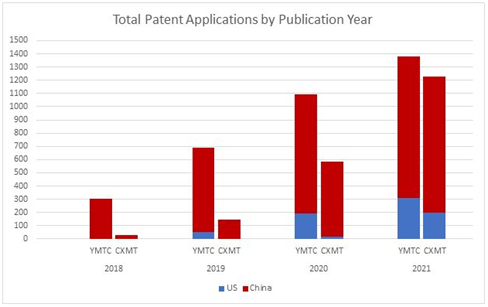
The Yangtze Memory Technologies Co., Ltd. (YMTC) X1-9050, a 2nd-generation 3D NAND flash memory product, has been making waves in the memory industry. The technology landscape surrounding this product is rich and diverse, with a significant increase in patent filings globally. The growth in patent filings for this technology has been remarkable. YMTC has made significant investments in research and development since its inception and has filed more than 4000 memory-related patents. In the years 2020 and beyond, the number of patent application filings increased by 3.97 percent. This development means fast headways in 3D NAND innovation and the rising interest of organizations in this space.

YMTC patent applications per year

YMTC patent applications per year (Source: https://www.semiconductor-digest.com/china-semiconductor-firms-aggressively-filing-patents-as-they-expand-operations/)

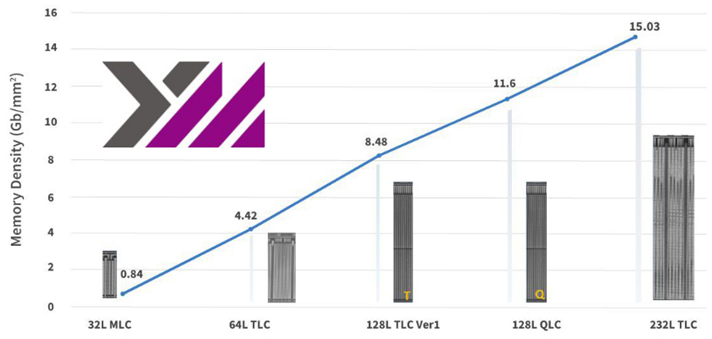
The organization behind the arrival of X1-9050, YMTC is viewed as the pillar behind all the 3D NAND innovations. YMTC has successfully developed 3D NAND SSD products with even higher density by combining their own process and design technology based on Xtacking hybrid bonding. The all-new 232L Xtacking 3.0 TLC is a foundational one and may also guide the development of similar technologies shortly. The Yangtze Memory Technologies Co., Ltd. (YMTC) X1-9050, a 2nd-generation 3D NAND flash memory product, has been making waves in the memory industry.

YMTC 3D NAND bit Density Trend

YMTC 3D NAND bit density trend (Source: https://www.techinsights.com/blog/ymtc-leading-pioneer-3d-nand)

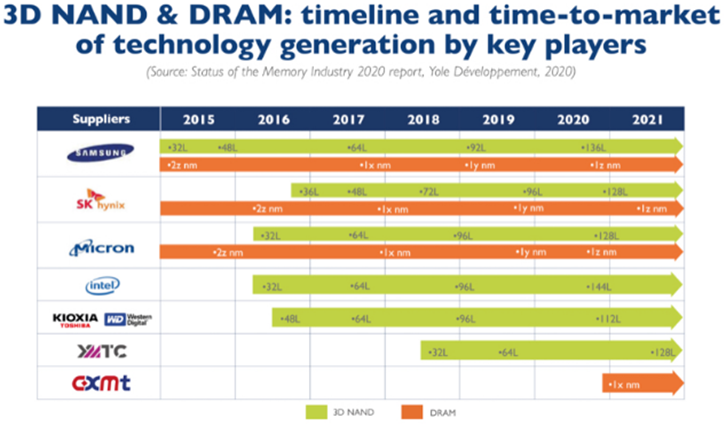
Several companies are actively filing patents in this area. YMTC, the creator of the X1-9050, is at the forefront. It has been frequently filing patents and obtaining most of its patent rights in less than 500 days. This could be due to strong innovation or China’s patent policy. In addition to YMTC, other companies like Micron Technology have also been involved in the patent landscape.

Key manufacturers of 3D NAND

Key manufacturers of 3D NAND (Source: https://www.storagenewsletter.com/2020/11/06/3d-nand-market-to-grow-to-81-billion-in-2025/)

Conclusion

In the rapidly advancing tech industry, the X1-9050 is a testament to YMTC’s commitment to innovation and quality. Whether you’re a consumer looking for reliable storage solutions, or a business seeking to enhance your tech offerings, the X1-9050 is a product worth considering.

Categories
Electronics

A Comprehensive Exploration of Unmanned Aerial Vehicles

Let’s get familiar with Drones:

Unmanned aerial vehicles (UAVs), commonly known as drones, are powered aerial vehicles that do not carry a human operator and can fly autonomously or be piloted remotely.

  • UAVs can be fully or partially autonomous and carry a lethal or nonlethal payload.
  • They are used in various sectors, including military, transportation, logistics, construction, environmental monitoring, and real estate photography.
  • UAVs can be remarkably efficient, offering substantially greater range and endurance than equivalent manned systems.
  • UAVs are descended from target drones and remotely piloted vehicles (RPVs) employed by the military.

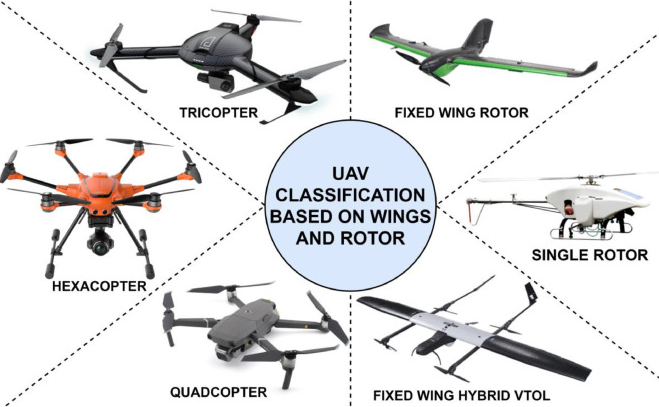
Classification of drones based on the number of wings:

Drones can be classified based on the number of wings they possess. Here are the main types of drones based on their number of wings:

  1. Single-rotor drones: These drones have a single main rotor for lift and are more energy-efficient than multi-rotor drones. They are suitable for long-endurance missions but may be less stable than multi-rotor drones.
  2. Multi-rotor drones: These are the most common type of drones, featuring multiple rotors to provide lift and stability. They are used for various purposes, such as aerial mapping and surveying, aerial surveillance and patrol, and search and rescue operations. They are also known as Quadcopters.
  3. Fixed-wing drones: Similar to traditional aircraft, fixed-wing drones rely on wings for lift rather than rotors. They are typically large, fuel-powered models used by the military and require a runway to operate. Fixed-wing drones are energy-efficient and cover longer ranges than rotary-wing drones.
UAV Classification Based on Wings and Rotor

Application Areas of Drones/quadcopters:

Quadcopter drones have a wide range of applications in various fields. Some of the major application areas of quadcopter drones include:

  • Aerial photography for journalism and film, express shipping and delivery.
  • Gathering information or supplying essentials for disaster management.
  • Thermal sensor drones for search and rescue operations.
  • Border control surveillance.

Dimensions of a Quadcopter Drone:

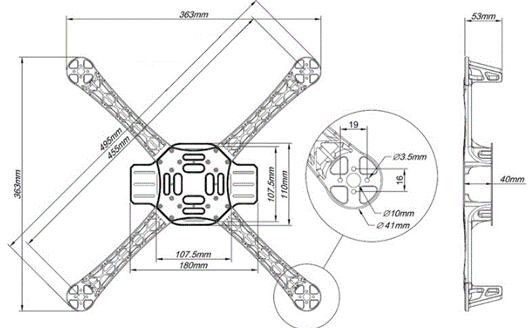
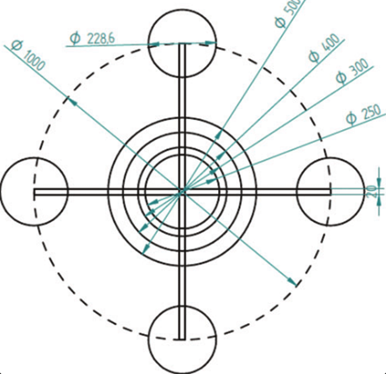
Quadcopter drones can have different dimensions depending on their size and purpose. The dimensions of a quadcopter drone can be measured in millimeters and can vary based on the size of the spherical body, cylindrical arms, and propellers. The size of the quadcopter drone can also be measured by its wheelbase, which is the diagonal distance between the motors and is typically measured in millimeters. The wheelbase of a quadcopter drone can range from less than 100mm to over 280mm, with thicker frames typically being more durable. The size of the quadcopter drone can also determine the size of the propellers and motors that can be used with it, with larger drones being able to accommodate larger and more powerful components.

Flight control dynamics of a Quadcopter
Flight control dynamics of a Quadcopter 2

Flight control dynamics of a Quadcopter:

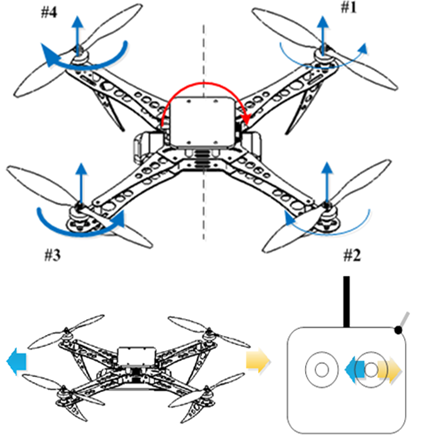
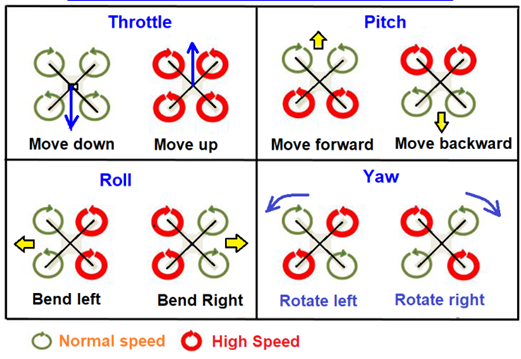
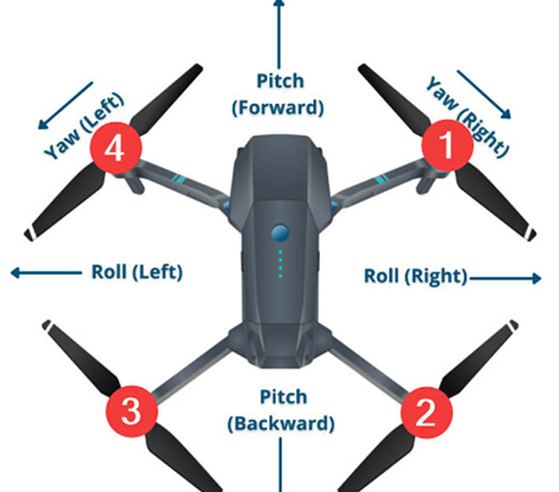
The flight control dynamics of a quadcopter can be explained through the movement of the drone in the forward, backward, upward, and downward directions based on the thrust applied to its wings. Here’s a brief explanation of how thrust affects the drone’s motion in these directions:

  1. Forward motion: The forward motion of a quadcopter is achieved by adjusting the rotor speeds and/or propeller tilting to increase the thrust in the forward direction. The propellers push air downward and forward, creating a forward thrust that allows the drone to move forward
  2. Backward motion: To move the quadcopter backward, the rotors can be adjusted to generate thrust in the opposite direction. This can be achieved by changing the rotor speeds or propeller tilting, depending on the specific design of the quadcopter
  3. Upward motion: The upward motion of a quadcopter is achieved by increasing the thrust generated by the propellers. This can be done by accelerating the rotors, increasing their speed, or adjusting the propeller tilting to generate more lift
  4. Downward motion: To move the quadcopter downward, the thrust generated by the propellers can be redirected downward. This can be achieved by adjusting the rotor speeds, propeller tilting, or adding downward-directed thrust components to the overall thrust vector.
Drone Movement Chart
Drone Movement Chart 2

Factors and Parameters Affecting Flight Control Dynamics of a Quadcopter:

In the context of quadcopter drones, thrust, yaw, pitch, and roll are essential concepts that help understand the flight dynamics and control of the drone.

  1. Thrust: Thrust is the force generated by the propellers that pushes the drone upward and forward. In a quadcopter, there are four propellers, each generating thrust in the direction of the positive z-axis in the body frame.
  2. Yaw: Yaw refers to the rotation of the drone about its axis, which is responsible for the drone’s orientation and heading in the horizontal plane.
  3. Pitch: Pitch refers to the angle between the drone’s body and its horizontal plane, which affects the drone’s altitude and angle of attack.
  4. Roll: Roll refers to the angle between the drone’s body and its vertical axis, which affects the drone’s side-to-side stability and balance.
  5. Torque: Torque is the rotating or twisting force exerted by the propellers on the drone’s body and the propellers themselves.
Drone Mechanism

In a quadcopter, the propellers exert a torque on the drone’s body in the direction opposite to their rotation. This torque can cause the drone to spin or change its orientation in response to the propeller’s force. It is essential to maintain a balance between the torque generated by the propellers to avoid uncontrolled spinning or instability in the drone’s flight. Roll control is crucial for maintaining stability during flight, especially when the drone is carrying a payload or operating in complex environments. Roll control is typically achieved by adjusting the rotor speeds and/or propeller tilting. Pitch is essential for the drone to maintain a stable flight path and avoid obstacles. Pitch control is achieved by adjusting the rotor speeds and/or propeller tilting. Yaw is essential for the drone to navigate and maintain its desired flight path or orientation. Differential thrust between the two pairs of counter-rotating motors provides yaw torque. The sum of the four thrusts results in the total thrust of the drone. Thrust is crucial for the drone to maintain altitude and speed in various flight conditions.
The architecture of a Basic Quadcopter:

The different types of elements comprised in a quadcopter include:

  1. Frame: The frame is the main structure of the quadcopter that holds all the other components together. It can be made of various materials such as aluminum, carbon fiber, plastic, glass fiber, or PCB fiber.
  2. Motors: The motors are responsible for generating the thrust needed for flight. A quadcopter has four motors, one for each rotor.
  3. Electronic Speed Controllers (ESCs): The ESCs control the speed of the motors and ensure that they are synchronized with each other.
  4. Propellers: The propellers are attached to the motors and generate the lift needed for flight. A quadcopter has four propellers, one for each rotor.
  5. Battery: The battery provides power to the motors and other electronic components of the quadcopter.
  6. Flight Controller: The flight controller is the brain of the quadcopter and controls its flight. It receives input from the pilot or autopilot system and adjusts the speed of the motors to maintain stability and control.
  7. Radio Transmitter/Receiver: The radio transmitter sends commands from the pilot to the quadcopter, while the receiver receives these commands and sends them to the flight controller.
  8. FPV Camera: An FPV (First Person View) camera allows the pilot to see what the quadcopter sees in real time.
  9. Video Transmitter (VTX): The VTX sends the video signal from the FPV camera to the pilot’s receiver.
  10. Antenna: The antenna is used to transmit and receive radio signals between the quadcopter and the pilot’s transmitter.
  11. Gimbal: A gimbal is a device that stabilizes the camera and reduces vibrations during flight.
  12. LEDs: LEDs can provide visual feedback on the status of the quadcopter, such as battery level or flight mode.

Majorly selling Quadcopter in the US region:

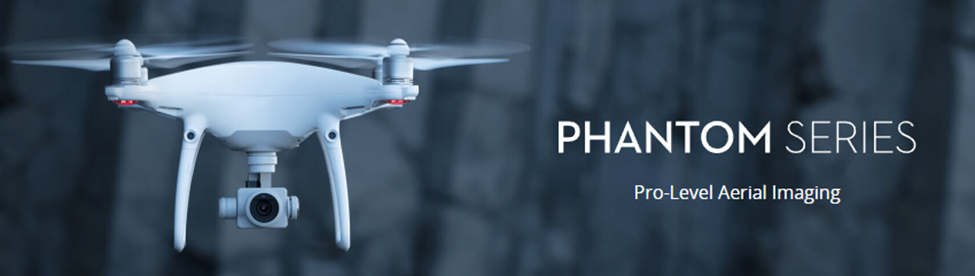
One famous quadcopter selling in the USA is the DJI Phantom series, which is a popular choice for both professional and amateur drone pilots. The Phantom series is known for its stability, ease of use, and high-quality camera systems, making it a top choice for capturing stunning aerial photos and videos.
The controller architecture for the DJI Phantom series typically includes a remote controller that connects to the drone via radio frequency. The remote controller is responsible for controlling the drone’s flight, adjusting its camera settings, and accessing various flight features. The controller’s design is ergonomic and user-friendly, providing a comfortable and immersive flying experience.

Phantom Series - Pro Level Aerial Imaging
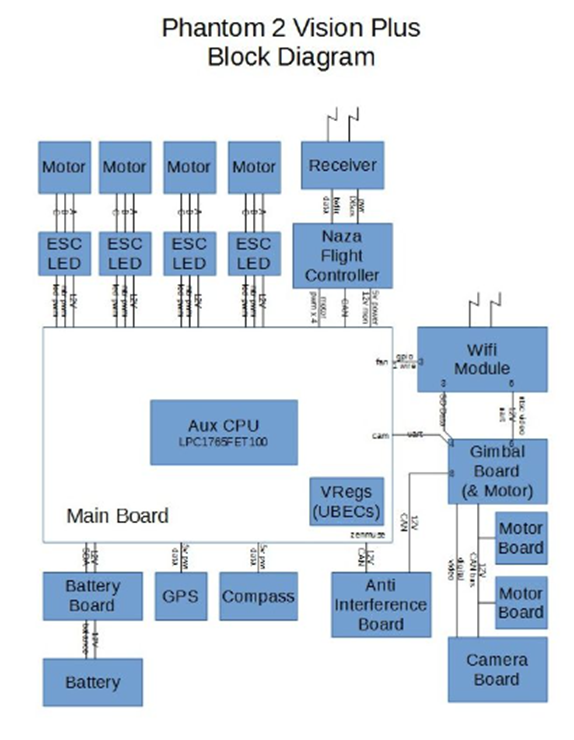
Phantom 2 Vision Plus - Block Diagram


Signal Flow in a Drone:

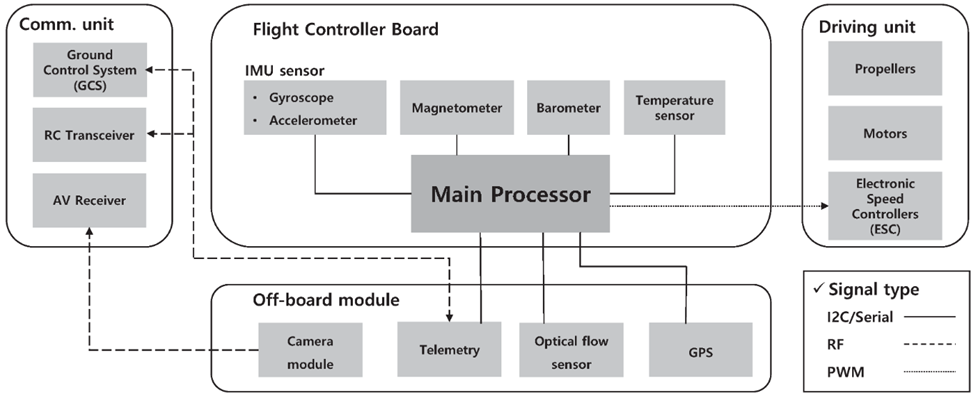
Signal Flow in a Drone


Granted invention related to working of Drone:

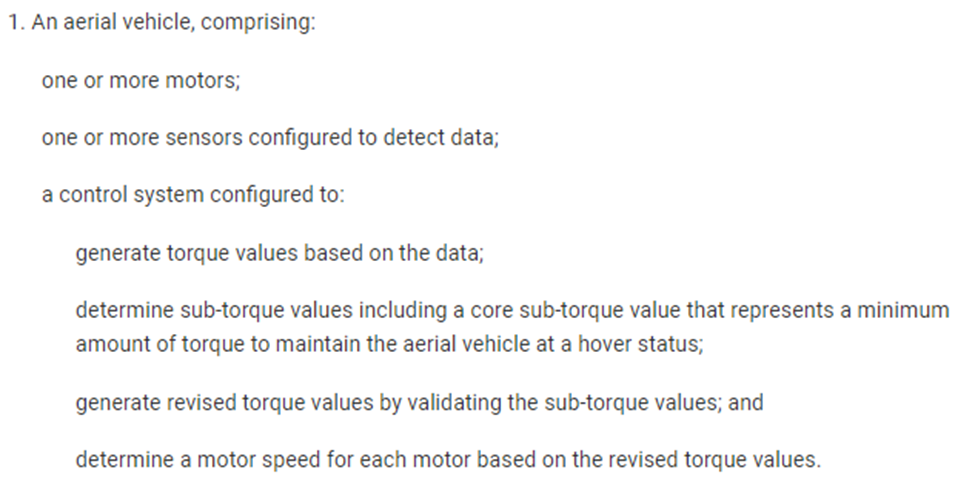
US11021248B2: Variable motor controller


The claim of the invention:

The claim of the invention