
Intellect-Partners

Categories
Computer Science Electronics

Unlocking the 6G Future: Harnessing the Potential of Reconfigurable Intelligent Surfaces (RIS)

INTRODUCTION

With each successive generation of communication technology, telecommunication’s primary focus undergoes a transformation. The 2G and 3G epochs were primarily centered on human-to-human communication through voice and text. The advent of 4G marked a pivotal shift toward the extensive consumption of data, while the 5G era prioritized connecting the Internet of Things (IoT) and industrial automation systems.

In the forthcoming 6G era, intelligent computation will drive efficiency and improved human experience. While there is still ongoing innovation in 5G, with the introduction of 5G-Advanced standards, companies have already embarked on research for 6G, with plans to make it commercially available by 2030.

CHARACTERISTICS FOR 6G TECHNOLOGY

According to Nokia Bell Labs, six technology areas are expected to characterize 6G networks. These areas move the industry from faster connectivity alone toward intelligent, secure, sensor-rich and highly automated communication systems.
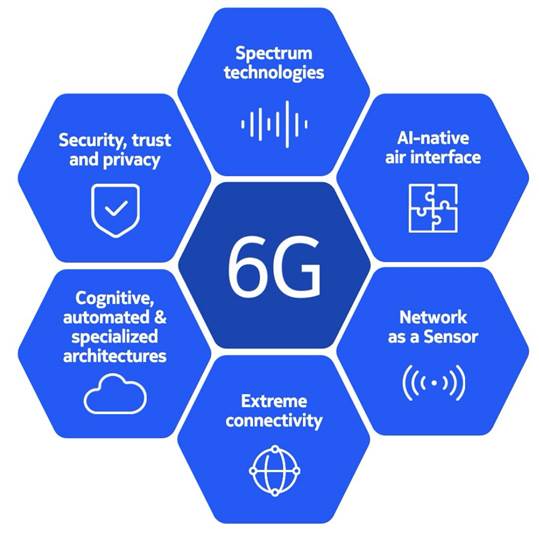
Figure 1: Six key technology areas expected to characterize 6G networks.

Artificial intelligence and machine learning – AI/ML techniques, especially deep learning, have rapidly advanced over the last decade and have already been deployed across domains involving image classification and computer vision, ranging from social networks to security. 5G will unleash the true potential of these technologies; with 5G-Advanced, AI/ML will be introduced into many parts of the network, across multiple layers and functions. From beam-forming optimization in the radio layer to scheduling at the cell site with self-optimizing networks, AI/ML can help achieve better performance at lower complexity.

Spectrum bands – Spectrum is a crucial element in providing radio connectivity. Every new mobile generation requires new pioneer spectrum to fully exploit the benefits of a new technology. Refarming existing mobile communication spectrum from legacy technology to the new generation will also become essential. New pioneer spectrum blocks for 6G are expected to include mid-bands of 7-20 GHz for urban outdoor cells enabling higher capacity through extreme MIMO, low bands of 460-694 MHz for extreme coverage, and sub-THz bands for peak data rates exceeding 100 Gbps.

A network that can sense – One of the most notable aspects of 6G would be its ability to sense the environment, people and objects. The network becomes a source of situational information, gathering signals that bounce off objects and determining type, shape, relative location, velocity and perhaps even material properties. This sensing mode can help create a mirror or digital twin of the physical world in combination with other sensing modalities, extending our senses to every point the network touches. Combining this information with AI/ML will provide new insights from the physical world and make the network more cognitive.

Extreme connectivity – The Ultra-Reliable Low-Latency Communication (URLLC) service that began with 5G will be refined and improved in 6G to address extreme connectivity requirements, including sub-millisecond latency. Network reliability could be amplified through simultaneous transmission, multiple wireless hops, device-to-device connections and AI/ML. Enhanced mobility combined with lower latency and improved reliability will support real-time video communications, holographic experiences and digital twin models updated in real time through the deployment of video sensors.

New network architectures – 5G is the first system designed to operate in enterprise and industrial environments, replacing wired connectivity. As demand and strain on the network increase, industries will require more advanced architectures that support greater flexibility and specialization. 5G is introducing service-based architecture in the core and cloud-native deployments that will be extended to parts of the RAN, with networks deployed in heterogeneous cloud environments involving private, public and hybrid clouds. As the core becomes more distributed and higher layers of the RAN become more centralized, there will be opportunities to reduce cost by converging functions. New network and service orchestration solutions exploiting AI/ML advances will result in an unprecedented level of network automation and lower operating costs.

Security and trust – Networks of all types are increasingly becoming targets of cyber-attacks. The dynamic nature of these threats makes sturdy security mechanisms imperative. 6G networks will be designed to protect against threats such as jamming. Privacy issues will also need to be considered when new mixed-reality worlds combine digital representations of real and virtual objects.

RECONFIGURABLE INTELLIGENT SURFACES (RIS)

A Reconfigurable Intelligent Surface (RIS) is a flat panel with small passive elements, approximately in the range of 1 cm2, each capable of independently adjusting the phase and potentially the amplitude of incident electromagnetic waves. Through precise control of these elements, reradiated waves can be directed toward specific directions with the help of an RIS controller. This enables alternative links within a cell and facilitates communication in non-line-of-sight scenarios, supporting extreme connectivity, AI/ML-based signal augmentation, innovative network architecture and optimized bandwidth utilization.

RIS can be fashioned as self-configuring elements within wireless network infrastructure, fine-tuning electromagnetic attributes in response to shifting traffic demands and propagation characteristics. RIS is conceptually appealing and offers practical implementation advantages because it does not require energy-hungry radio-frequency (RF) chains. The absence of RF chains makes RIS an energy-efficient and cost-effective solution compared with massive MIMO technology, which requires an RF chain for each antenna element and therefore increases hardware cost, complexity and power consumption.

Because RIS is highly passive and requires minimal power for operation, it can be an eco-friendly and cost-effective solution deployable on surfaces such as walls, ceilings, billboards and other infrastructure. However, RIS design still requires careful consideration of coverage range, surface size and the number of elements needed.
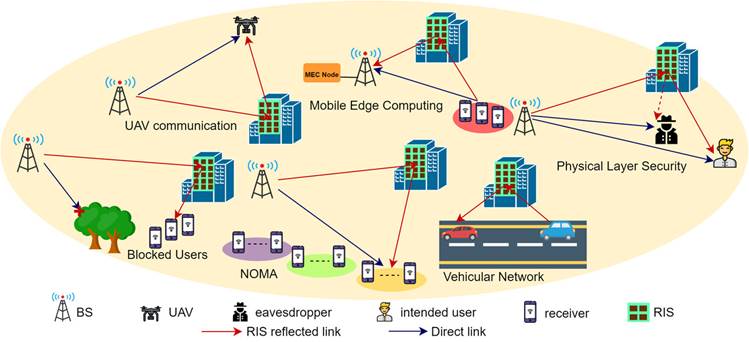
Figure 2: Representative RIS-assisted network scenarios, including blocked users, UAV communication, mobile edge computing, vehicular networks, NOMA and physical-layer security.

Source: IET Communications RIS article, as shown in the source image.

PATENT ACTIVITY AND COMPETITIVE LANDSCAPE

RIS technology is gaining traction among researchers in 5G-Advanced and 6G. After the standardization of 5G in 2019, patenting activity in RIS technology accelerated because RIS promises gains in spectral and energy efficiency without the expense of massive cell densification, while also unlocking numerous future telecommunication use cases.
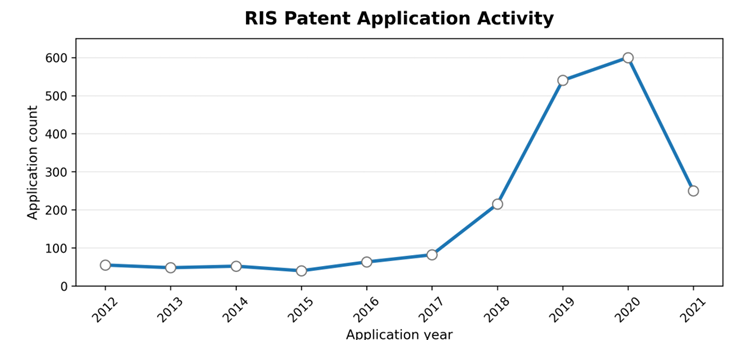
Figure 3: RIS patent application activity by application year.

Source note: Patent analysis using Orbit Intelligence; values reconstructed from the provided screenshot.

The patent landscape view indicates that the top owners of IP related to RIS technology include Qualcomm, Huawei and Samsung. Several Chinese universities are also actively researching in this area, and China constitutes a substantial share of the global RIS patent landscape.
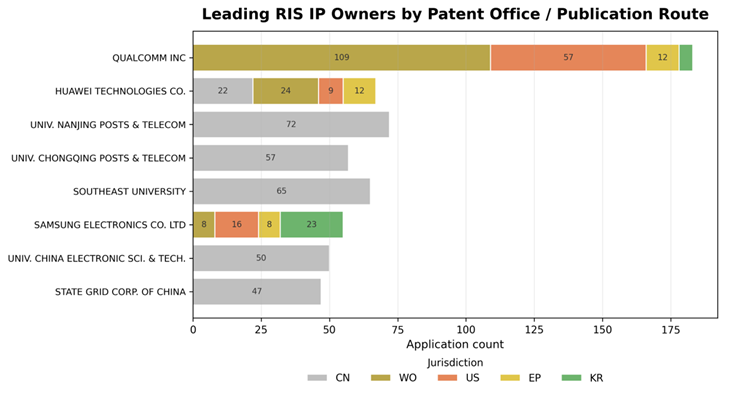
Figure 4: Leading RIS IP owners visible in the source landscape view by patent office or publication route.

Source note: Patent analysis using Orbit Intelligence; data reconstructed from the provided screenshot.

CONCLUSION

6G is expected to extend mobile networks beyond connectivity by embedding intelligence, sensing, automation, security and extreme performance into the network fabric. RIS is highly aligned with this direction: by shaping the wireless propagation environment itself, RIS can create alternative links, improve non-line-of-sight coverage, reduce energy consumption and support new architectures for dense, intelligent and adaptive wireless systems.

As patenting activity and research investment increase, RIS is likely to remain a key enabling technology in the transition from 5G-Advanced toward commercial 6G systems.

REFERENCES

Categories
Computer Science

Cloud Seeding: Patents, Progress, and the Future of Weather Control

In a time when climate changes are becoming more unpredictable and water shortages are affecting many people, science is looking up at the sky for answers. One technique that has been both celebrated as a great scientific achievement and questioned as humans tampering with nature is called cloud seeding. But what is cloud seeding, how does it function, and why is it seen as both promising and controversial?

What is Cloud Seeding?

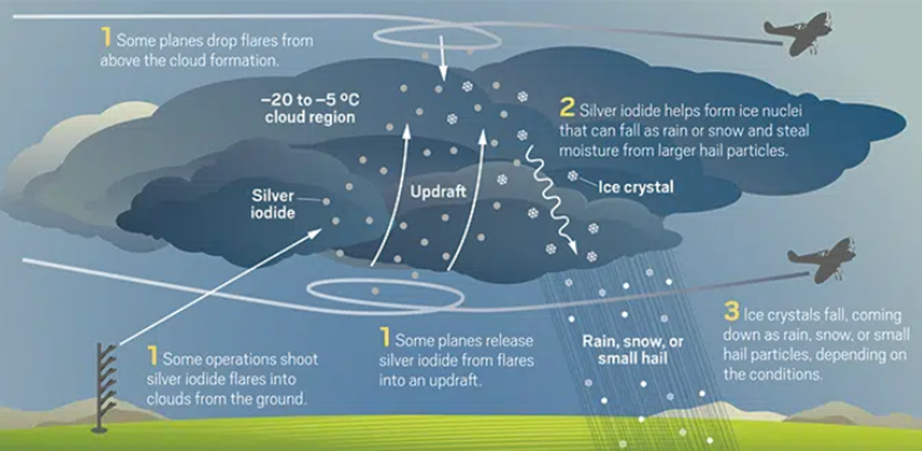
Cloud seeding is a way to change the weather by putting certain materials into the air. These materials help create tiny particles that water vapor can stick to, which then form raindrops or snowflakes. In simple words, cloud seeding is like adding seeds to a cloud to help it produce rain.

Source: https://earth.org/unleashing-the-power-of-cloud-seeding-navigating-potential-and-pitfalls/

How Does It Work? How Does It Work?

Clouds are composed of tiny water droplets or ice crystals that float in the atmosphere. These droplets remain suspended because they are too small to fall. For rainfall to occur, these droplets need to combine into larger droplets or ice crystals that are heavy enough to overcome air resistance and fall to the ground.

Cloud seeding accelerates this natural process by:

  1. Injecting particles (such as silver iodide, potassium iodide, or dry ice) into the atmosphere.
  2. These particles provide surfaces on which moisture in the cloud can condense or freeze.
  3. As water droplets or ice crystals grow larger, they fall under gravity, producing rain or snow.

Depending on the atmospheric conditions, cloud seeding can aim for:

  • Cold cloud seeding: Uses ice-nucleating agents (e.g., silver iodide) to stimulate ice crystal growth.
  • Warm cloud seeding: Uses hygroscopic particles (e.g., sodium chloride) to encourage droplet coalescence.

Cloud seeding can be done by aircraft, rockets, or ground-based generators that disperse the seeding material into suitable clouds.

A Brief History of Cloud Seeding

Altering the weather is not a new idea. People of ancient cultures performed rituals and dances in order to influence divine will to create rain. Yet it was not until the 20th century that scientists began their serious project of altering the weather.

1940s – The Beginning

Cloud seeding had its official start in 1946, when Vincent Schaefer, researching at the General Electric Research Laboratory in New York, discovered that introducing dry ice into the supercooled cloud could generate snow. Coupled with Bernard Vonnegut’s discovery that silver iodide could cause a similar reaction, this work started modern cloud seeding.

1950s–1970s – Military and Research Use
  • The U.S. military experimented with weather modification during the Vietnam War under Project Popeye, using cloud seeding to extend the monsoon season and hinder enemy supply routes.
  • In the same period, Project Stormfury attempted to weaken hurricanes by seeding their outer bands, though with limited success.
1980s–2000s – Expansion and Commercialization
  • Countries like China, Russia, India, Australia, and the United Arab Emirates (UAE) began experimenting with or adopting cloud seeding as part of drought mitigation strategies.
  • China famously used cloud seeding to clear pollution and ensure dry weather during the 2008 Beijing Olympics.
Recent Developments
  • The UAE has invested heavily in advanced cloud seeding technologies, including unmanned aerial vehicles (UAVs).
  • In 2021, researchers explored using electric drones to shoot charged particles into clouds to enhance rain formation—a more eco-friendly alternative to chemical seeding.
Patent Landscape and Graphical Exploration

Top Applicants

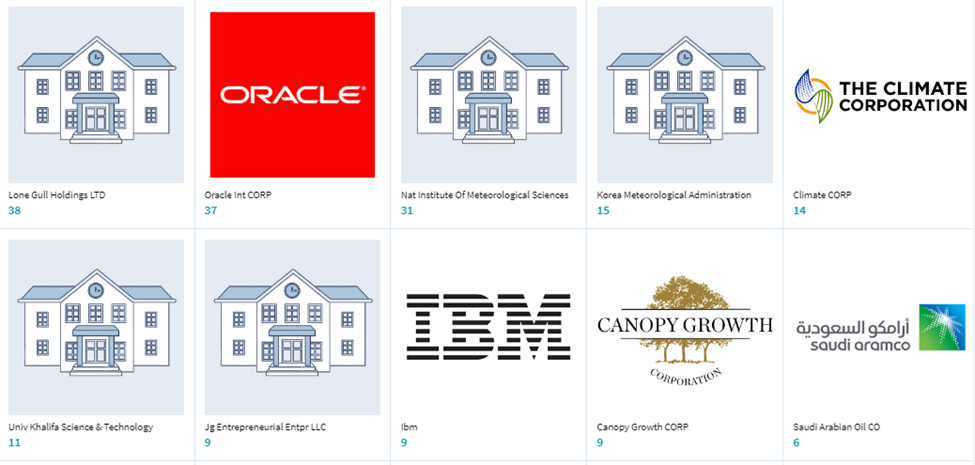
Cloud Seeding Top Applicants (Source: https://www.lens.org/)

Patent Documents Over Time

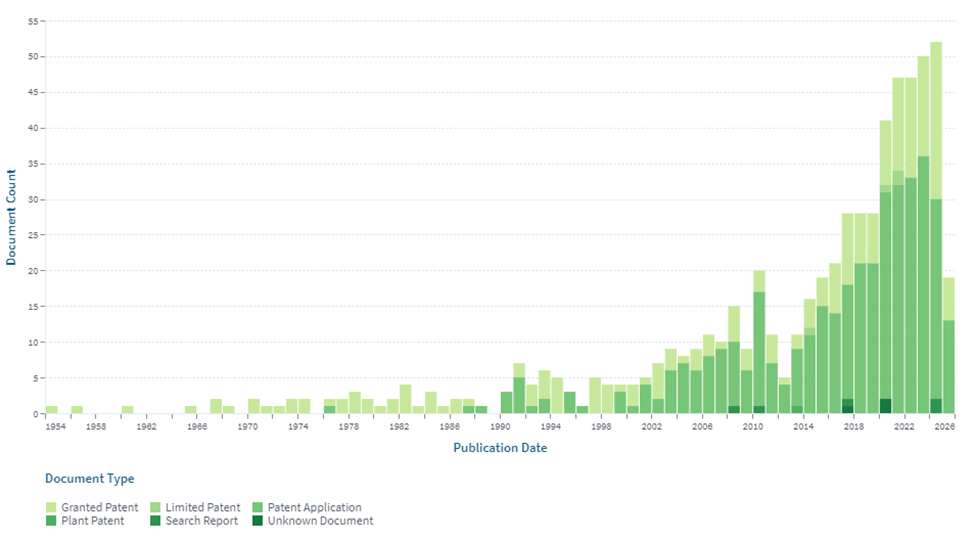
Cloud seeding Patent Documents Over Time (Source: https://www.lens.org/)

U.S. Leading the Patent Charge

Cloud Seeding Patent documents by Jurisdiction  (Source: https://www.lens.org/)

Top CPC Classification Codes

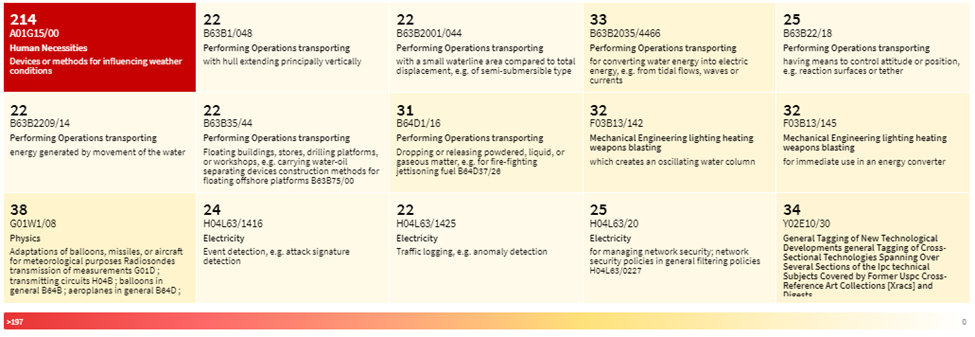
Cloud seeding Top CPC Classification Codes (Source: https://www.lens.org/)

Top IPCR Classification Codes

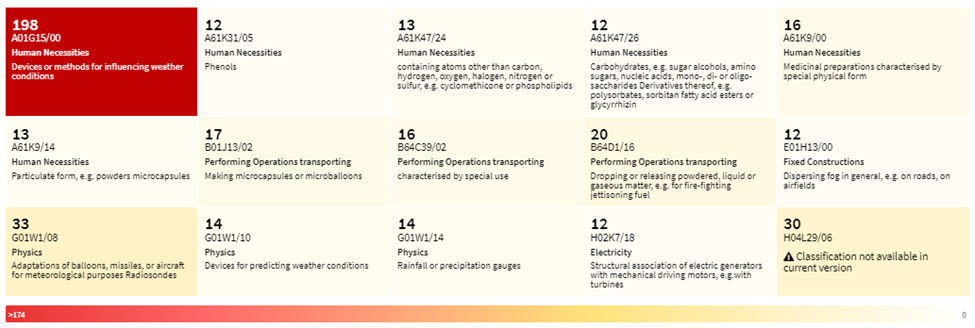
Cloud Seeding Top IPCR Classification Codes (Source: https://www.lens.org/)

CLOUD SEEDING MARKET TRENDS

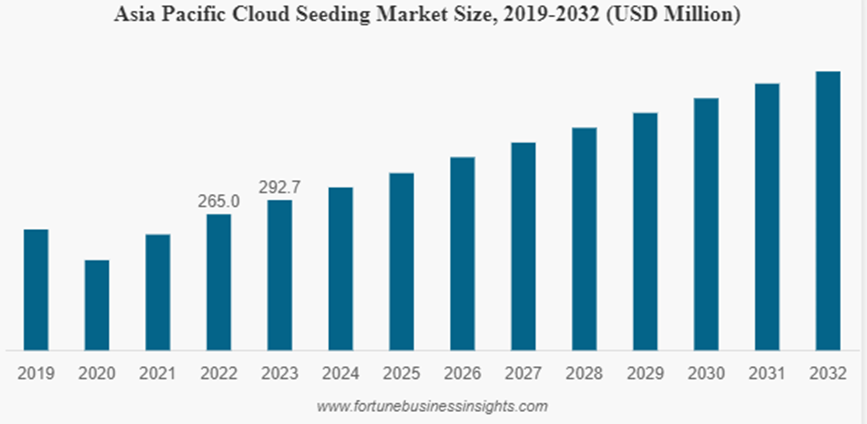
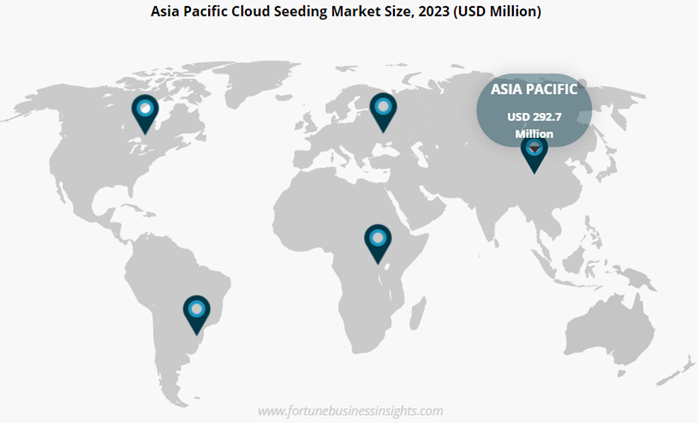
The size of the global Cloud Seeding market is USD 375.6 million in 2023 and is anticipated to grow from USD 406.4 million in 2024 to USD 684.2 million by 2032, with a CAGR of 6.7% during the forecast period. In 2023, Asia Pacific had a 77.93% cloud seeding market share.

In the market, many trends will develop in the area of technological advancement and new product innovations. Leading companies in the market will develop new technologies to make the process of artificial rain as cheap and environmentally friendly as possible. This involves focusing on advanced seeding agents and minimizing the process’s upfront and operations costs. For example, An UAE-backed study proposes that the use of drones could improve the effectiveness of artificial rain. The study shows that the use of drones could identify specific spots in the clouds for seeding, using an unmanned aircraft system (UAS) to enhance the ability to stimulate more rainfall.

This identification process facilitates a more targeted weather modification method. Normally, NCM (the National Centre of Meteorology of the UAE) uses piloted planes to create artificial rain. However, drones are seen as a consideration to optimize the efficacy of the program.

CLOUD SEEDING MARKET GROWTH FACTORS

Climate change has increased the frequency of extreme weather events, hurricanes, prolonged droughts, extreme heat, and changing precipitation patterns. Various governments and industries are looking for solutions to manage and work through water resources and climate change related anomalies. With a growing need for reliable water sources water all around the world, interests in artificial rain have increased; this is just one of the many solutions to consider.

Below is a list of climate anomalies in the U.S. for the fiscal year 2022 according to NOAA (The National Oceanic and Atmospheric Administration): The annual precipitation for U.S. was 28.35 inches, which was 1.59 inches below average and was classified in the driest third of the historic record. In 2022, there were 18 separate billion-dollar weather and climate disasters, which was the third most for disasters and the third richest year, (43 years). Between April and June, the Hermits Peak Fire, created a new record for New Mexico for the largest wildfire comprising over 341,000 acres. In 2022, in the U.S. approximately 66,000 fires that burned about 7.5 million acres, which is close to the annual average.

Source: https://www.fortunebusinessinsights.com/cloud-seeding-market-104073

Categories
Electronics

YMTC X1-9050: A New Generation of 3D NAND Flash Memory

Yangtze Memory Technologies Co., Ltd (YMTC) has remained a leader in its field despite the rapid changes happening around it. Today, we will examine one of their notable products, the X1-9050.

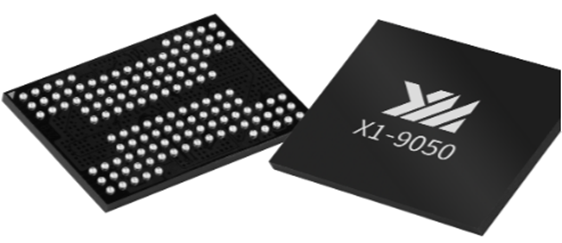
YMTC X1-9050

What is the X1-9050?

The X1-9050 is the second generation of YMTC’s 3D NAND flash memory products. An important turning point for the company was reached in August 2019 when it was placed into small-scale mass production. One distinctive feature that makes this product stand out in the market is that it is the first from YMTC to be designed and processed using the Xtacking architecture.

X1-9050 Layout

X1-9050 Layout (Source: https://www.ymtc.com/cn/technicalintroduction.html)

With its cutting-edge features and capabilities, the X1-9050 is a storage solution of the future. Its versatility in different settings is attributed to its distinctive characteristics. The X1-9050 can meet your needs whether you’re a professional handling massive volumes of data, a student needing dependable storage for assignments, or a gamer needing fast performance.

X1-9050 Key Features

Advanced Technology

The X1-9050 is a product of advanced technology. It’s built on the Xtacking architecture, which is YMTC’s patented 3D NAND stacking technology. The peripheral and memory cell arrays can now be manufactured independently thanks to this technology, which can greatly increase chip production efficiency.

Increased Speed

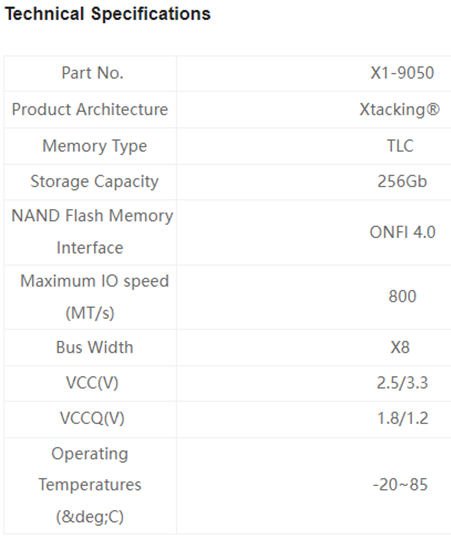
The X1-9050 comes with a 256 GB chip capacity, which makes it an excellent choice for those seeking large quantities of storage. It also offers an impressive I/O speed of upto800MT/s.

Future of Storage

The X1-9050 is a revolutionary storage solution that offers advanced technology and impressive features. As data generation continues to rise, it represents the future of digital storage. Supported by mainstream industry controllers, it can be widely used in the development of consumer, enterprise, and mobile storage products, showcasing the future of digital storage.

Other key differentiating features in X1-9050

The X1-9050 stands out for several reasons when selecting a 3D NAND flash memory product. Its blend of high capacity and speed is unquestionably a significant selling point. Yet, past that, the utilization of the Xtacking design offers extra advantages, adding to the item’s general presentation and unwavering quality.

YMTC X1-9050 v/s Acer Predator GM7

The X1-9050 uses the Xtacking architecture. This unique architecture allows for independent manufacturing of the peripheral and memory cell arrays, which can significantly enhance the efficiency of the chip production process. This is a feature that sets the X1-9050 apart from many of its competitors, including the Acer Predator GM7.

YMTC X1-9050 - Technical Specifications
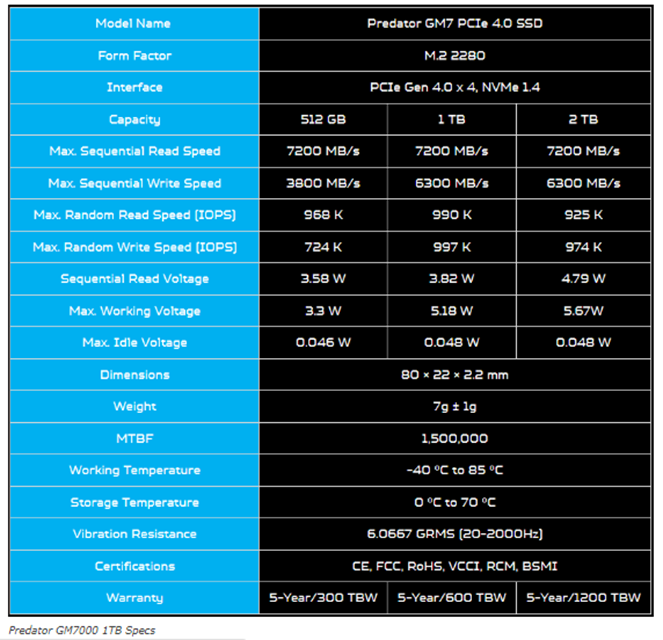
Acer Predator GM7 - Technical Specifications

YMTC X1-9050 v/s Acer Predator GM7: Specs comparison (Source: https://www.ymtc.com/en/products/4.html?cat=35 and https://www.servethehome.com/predator-gm7-1tb-pcie-gen4-nvme-ssd-review/)

The X1-9050 likewise offers noteworthy speed. With a chip limit of 256GB, the X1-9050 offers significant extra room. This high capacity makes it a strong decision for those needing huge capacity. While the Acer Hunter GM7 likewise offers significant capacity, the X1-9050’s ability is explicitly intended for 3D NAND flash memory, making it a more particular decision. With a greatest I/O speed that can reach up to 800MT/s, it likewise beats numerous rivals in its class.

Patent Landscape

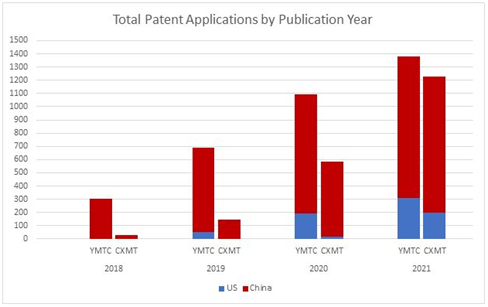
The Yangtze Memory Technologies Co., Ltd. (YMTC) X1-9050, a 2nd-generation 3D NAND flash memory product, has been making waves in the memory industry. The technology landscape surrounding this product is rich and diverse, with a significant increase in patent filings globally. The growth in patent filings for this technology has been remarkable. YMTC has made significant investments in research and development since its inception and has filed more than 4000 memory-related patents. In the years 2020 and beyond, the number of patent application filings increased by 3.97 percent. This development means fast headways in 3D NAND innovation and the rising interest of organizations in this space.

YMTC patent applications per year

YMTC patent applications per year (Source: https://www.semiconductor-digest.com/china-semiconductor-firms-aggressively-filing-patents-as-they-expand-operations/)

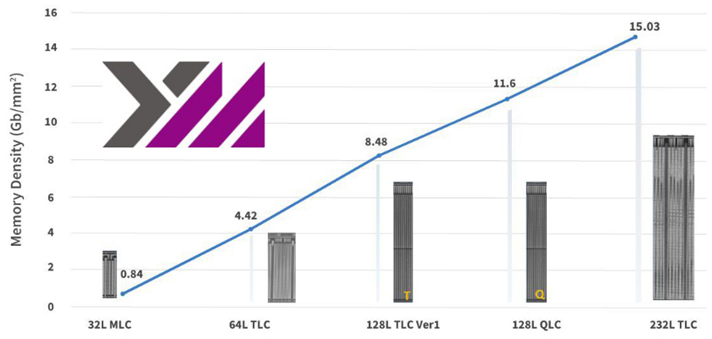
The organization behind the arrival of X1-9050, YMTC is viewed as the pillar behind all the 3D NAND innovations. YMTC has successfully developed 3D NAND SSD products with even higher density by combining their own process and design technology based on Xtacking hybrid bonding. The all-new 232L Xtacking 3.0 TLC is a foundational one and may also guide the development of similar technologies shortly. The Yangtze Memory Technologies Co., Ltd. (YMTC) X1-9050, a 2nd-generation 3D NAND flash memory product, has been making waves in the memory industry.

YMTC 3D NAND bit Density Trend

YMTC 3D NAND bit density trend (Source: https://www.techinsights.com/blog/ymtc-leading-pioneer-3d-nand)

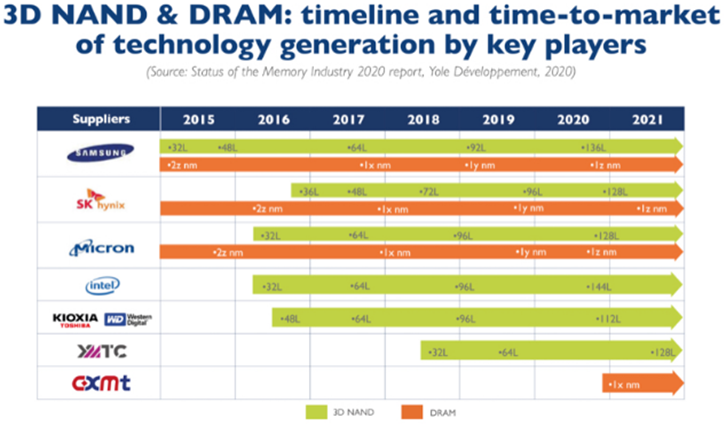
Several companies are actively filing patents in this area. YMTC, the creator of the X1-9050, is at the forefront. It has been frequently filing patents and obtaining most of its patent rights in less than 500 days. This could be due to strong innovation or China’s patent policy. In addition to YMTC, other companies like Micron Technology have also been involved in the patent landscape.

Key manufacturers of 3D NAND

Key manufacturers of 3D NAND (Source: https://www.storagenewsletter.com/2020/11/06/3d-nand-market-to-grow-to-81-billion-in-2025/)

Conclusion

In the rapidly advancing tech industry, the X1-9050 is a testament to YMTC’s commitment to innovation and quality. Whether you’re a consumer looking for reliable storage solutions, or a business seeking to enhance your tech offerings, the X1-9050 is a product worth considering.