Intellect-Partners

Categories
Computer Science Electronics

Patent Dispute in the Supercomputing Arena: ParTec Sues Microsoft Over Azure AI Platform

The world of high-performance computing (HPC) is heating up, not just with processing power, but with a legal battle brewing between German HPC vendor ParTec and tech giant Microsoft. On June 10, 2024, ParTec filed a lawsuit in the U.S. District Court for the Eastern District of Texas, alleging that Microsoft’s Azure AI platform infringes on its patents related to a critical technology: dynamic modular system architecture (dMSA).

ParTec’s dMSA technology is a game-changer in supercomputing architecture. It revolves around tightly coupled modules housing a large number of interconnected processors or accelerators. This innovative design enables efficient handling of mixed workflows, seamlessly integrating HPC, AI, and big data analytics. According to the lawsuit, Microsoft’s Azure AI platform, touted as “one of the most powerful AI supercomputers in the world,” leverages technology covered by ParTec’s patents, granted between 2018 and 2024.

ParTec is seeking a multi-pronged resolution. The company is requesting an injunction to halt Microsoft’s use of the allegedly infringing technology within the Azure AI platform. Additionally, they are pursuing compensation for damages incurred due to the infringement and licensing fees for the use of their patented technology. The lawsuit also indicates ParTec’s preference for a jury trial.

Microsoft Azure
Microsoft Azure

Beyond the Lawsuit: Implications for the Tech Industry

This patent dispute transcends a single case. It underscores the growing significance of patent protection in the rapidly evolving landscape of supercomputing and AI development. Companies like ParTec are taking a proactive stance in enforcing their intellectual property rights, sending a clear message to tech giants like Microsoft. The onus lies on these larger players to ensure their products and services operate within the boundaries of existing patents.

This legal battle serves as a cautionary tale and a reminder to all industry participants. Staying ahead of the intellectual property curve is crucial. Companies must meticulously evaluate their technology against existing patents to avoid potential infringement lawsuits. Conversely, for those pioneering new advancements, securing robust patent protection is paramount to safeguarding their innovations and reaping the rewards of their research and development efforts.

The Takeaway: Protecting Innovation in a Competitive Landscape

The ongoing patent dispute between ParTec and Microsoft highlights the intricate world of intellectual property in the tech industry. As the boundaries of supercomputing and AI continue to be pushed, robust patent protection strategies will be instrumental for both established players and emerging innovators.

Categories
Automotive

LiFi (Light Fidelity) Technology: Applications and Future Perspectives

LiFi (light fidelity)

LiFi, short for Light Fidelity, is a wireless communication technology that utilizes visible light to transmit data. It is based on the principle of using light-emitting diodes (LEDs) to send data through rapid variations in light intensity that are invisible to the human eye. Developed as a potential alternative or complement to traditional wireless communication technologies like WiFi, LiFi offers several advantages, including higher data transfer rates, increased security, and reduced electromagnetic interference.

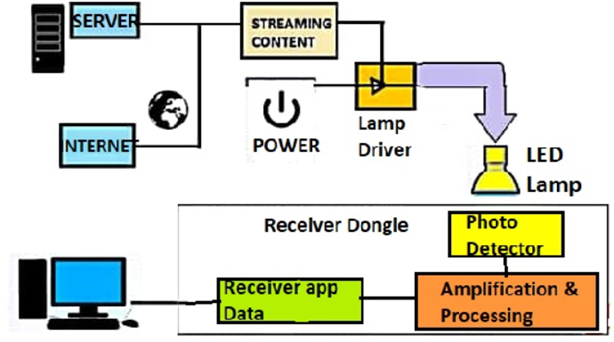
LiFi Backend Architecture

LiFi Architecture (source: semanticscholar)

LiFi (Light Fidelity) architecture is designed to enable wireless communication using visible light as the medium for data transmission. The architecture involves several components and processes to ensure efficient and reliable communication.

Applications of LiFi (light fidelity)

LiFi (Light Fidelity) has a range of applications across different sectors due to its unique advantages, including high data transfer rates, increased security, and reduced electromagnetic interference. Here’s a brief overview of some key applications of LiFi:

  1. Internet Access:

LiFi can be used to provide high-speed internet access in homes, offices, and public spaces. LED bulbs equipped with LiFi technology can serve as data access points, delivering internet connectivity through visible light.

  1. Indoor Navigation:

LiFi’s data transmission precision allows for indoor navigation and positioning applications. It can be employed in environments like museums, shopping malls, and airports to provide accurate location-based services.

  1. Healthcare:

In healthcare settings, LiFi can contribute to secure and high-speed data transmission between medical devices. This is particularly important for applications where the reliability and speed of data exchange are critical, such as in operating rooms or patient monitoring systems.

  1. Aviation and Automotive:

LiFi technology can enhance in-flight entertainment and communication systems in aviation. In automotive settings, LiFi can contribute to vehicle-to-vehicle (V2V) communication and entertainment within the vehicle.

  1. Smart Cities:

LiFi supports the development of smart cities by providing high-speed and reliable connectivity in urban environments. It can be integrated into streetlights, traffic signals, and other infrastructure to create a connected cityscape.

  1. Underwater Communication:

LiFi’s application is not limited to above-ground environments. It can be employed for underwater communication, where traditional wireless technologies face challenges due to the absorption of radio frequencies in water.

  1. Secure Environments:

LiFi’s inherent security benefits make it suitable for environments where data security is crucial. Since visible light does not penetrate walls, LiFi signals are confined to specific areas, reducing the risk of unauthorized access.

  1. Education and Offices:

LiFi can enhance connectivity in educational institutions and office spaces. It offers a high-speed and secure network for students, teachers, and employees, supporting various applications from online learning to collaborative work.

  1. Retail Environments:

LiFi can be applied in retail for location-based services, personalized shopping experiences, and inventory management. It enables retailers to engage with customers through interactive displays and smart lighting.

  1. Traffic Management:

LiFi can contribute to intelligent traffic management systems by communicating between vehicles and traffic infrastructure. This can enhance road safety, traffic flow, and overall transportation efficiency. These applications demonstrate the versatility of LiFi technology and its potential to revolutionize the way we access information, communicate, and navigate our surroundings.

Future Perspectives of LiFi (Light Fidelity)

The future perspectives of LiFi (Light Fidelity) hold promising possibilities across various industries, driven by ongoing research, technological advancements, and the unique advantages offered by this wireless communication technology. Here are several key aspects that highlight the future potential of LiFi:

  1. Integration with 5G:

Complementary Technology: LiFi can complement 5G networks, especially in areas with high data density. The combination of LiFi and 5G could offer a seamless and robust communication infrastructure, providing users with enhanced connectivity and higher data rates.

  1. Vehicular Communication:

LiFi in the Automotive Industry: LiFi’s potential in the automotive industry could involve in-car communication, entertainment systems, and vehicle-to-vehicle (V2V) communication. LiFi may contribute to creating a more connected and efficient driving experience.

  1. Integration with Smart Lighting:

Dual Functionality: As LiFi can be implemented through LED bulbs, it can be seamlessly integrated with smart lighting systems. This dual functionality enhances the efficiency of lighting infrastructure by providing both illumination and data communication.

  1. Research and Development:

Ongoing Advancements: Continuous research and development in LiFi technology are likely to lead to improvements in data transfer rates, range, and overall performance. Innovations in modulation techniques and system architectures may further broaden the applications of LiFi.

  1. Global Expansion and Standardization:

Widespread Adoption: LiFi technology may see increased adoption globally as standardization efforts progress. Establishing industry standards can promote interoperability and encourage the development of a diverse ecosystem of LiFi-enabled devices.

  1. Energy Efficiency:

Green Technology: LiFi’s reliance on LED bulbs, which are energy-efficient, aligns with the growing emphasis on green and sustainable technologies. The energy efficiency of LiFi could contribute to reducing the overall environmental impact of communication technologies.

  1. Challenges and Solutions:

Overcoming Limitations: Future perspectives of LiFi also involve addressing current challenges, such as signal range limitations and potential interference. Research and development efforts will likely focus on overcoming these limitations to make LiFi more versatile and practical.

Patent Landscape

The intellectual property landscape for LiFi technology is dynamic and advancing. Organizations in the wireless communication industry are continuously creating and licensing developments connected with LiFi and related advancements. Licensing agreements and cross-licensing arrangements assume a vital part in permitting organizations to get to and use these IP resources.

Patent Filling Trends:

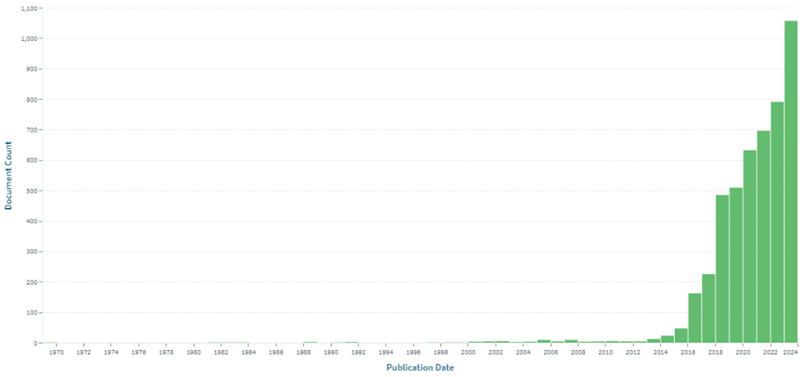
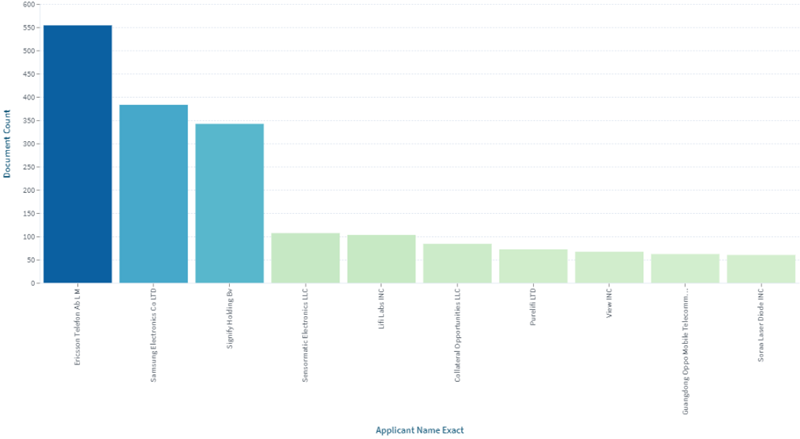
LiFi gained significant attention and research interest during this time. Researchers and companies started exploring the potential of LiFi for high-speed, wireless communication using visible light. The initial patent filings during this period likely focused on fundamental aspects of LiFi technology, such as modulation techniques, transceiver designs, and basic communication protocols. Ericsson holds a maximum number of patents followed by Samsung and Signify.

Patent Document Count for LiFi Applications
Patent Filings Count for LiFi Applications

Patent filings ( Source: Lens.org)

The United States has a strong tradition of investing heavily in research and development across various industries. Companies research institutions, and government agencies in the U.S. may contribute significantly to LiFi research, leading to a higher number of patent filings followed by China and Europe.

Conclusion

In conclusion, while LiFi is still in the early stages of commercial deployment, its unique attributes position it as a compelling technology for the future of wireless communication. Ongoing research, standardization initiatives, and advancements in hardware and software are expected to further enhance LiFi’s capabilities and broaden its range of applications in the coming years.

Categories
Computer Science

Demystifying Kubernetes: A Comprehensive Guide to Container Orchestration

What is Kubernetes?

Kubernetes (K8s) is an open-source platform that facilitates the execution of containerized applications in a virtual environment via Application Program Interfaces (APIs). Containerized applications are programs that are executed in containers. Containers are the virtual entities that hold the primary code for the execution of an application, its dependencies of that application and the configuration files of that application. Containerized applications are widely adapted because they facilitate the execution of multiple applications in a single host by isolating them from the core Operating System. This makes Kubernetes a go-to for users/developers to test, assess, and deploy their applications.

Kubernetes Architecture

Kubernetes employs a Master-Slave architecture. Kubernetes Cluster is divided into two separate planes:

i. Control Plane: Also known as the Master Node, the Control plane can be interpreted as the brains of Kubernetes. It is the policy maker that applications executed in Kubernetes clusters have to follow. It consists of:

a. API server: The API server is the entity that authenticates and authorizes a developer and allows interaction between the developer and Kubernetes Cluster. The API server configures and manipulates entities in the data plane via Kubernetes Controller-Manager, Kubernetes Scheduler, and Key-Value Store (Etcd).
b. Kubernetes Controller-Manager: It is the entity in the Control Plane that is responsible for keeping the system in a desired state, as per the instructions obtained from the API server. It constantly monitors the containers, Pods, and Nodes and tweaks them to bring them to the desired state.
c. Kubernetes Scheduler: It is the entity in the Control plane responsible for deploying applications in Worker Nodes received through the API server. It schedules the applications as per their requirements of resources, like memory, identifies suitable Pods, and places them in suitable Worker Nodes in the Kubernetes Clusters.
d. Key-Value Store (Etcd): It is a storage that can be placed within the control plane or independent of it. Key-value Store, as the name suggests, stores all the data of the Kubernetes Cluster, i.e., it provides a restore point to the whole of the Kubernetes Cluster.

ii. Data Plane: The Data Plane is a cluster of Kubernetes Worker Nodes that executes the policies made by the Control plane for the smooth operation of applications within the Kubernetes Cluster. Worker nodes are the machines that run containerized applications and provide the necessary resources for the applications to run smoothly. Each Worker Node consists of:
a. Kubelet: Kubelet is the entity within the Worker Node that is responsible for connecting that node with the API server in the Control Plane and reporting the status of Pods and containers within the node. This facilitates the resources assigned to that node to become a part of the Kubernetes Cluster. It is also responsible for the execution of works received from the API server to keep the node in a desired state by making the necessary changes as per API server instructions.
b. Kube-proxy: It is responsible for routing traffic from the users through the Internet to the correct applications within a node by creating/altering traffic routing policies for that node.
c. Pods:  Pods are the entities in the Worker Node that have containers within them. Although it is possible to host multiple application instances in a Pod, running one application instance in one Pod is recommended. Pods are capable of horizontal scaling, i.e., they are created according to the application instance needs. If assigned node resources are available, Pods can utilize more resources than assigned to them- if needed. Pods, along with containers, are capable of running on multiple machines. The resources of the Pods are shared among the containers it hosts.

HBM Layout: Deploying an Application in Kubernetes

HBM Layout (Source: Medium)

Deploying an Application in Kubernetes:

i. The developer should have a Service account. This account is needed to authenticate and authorize a developer. Also, this service account is used for authentication against the API server when the application needs access to protected resources.

Kubernetes Service Account Requirement

Service Account Requirement (Source: Medium)

ii. Create a new Node or select an existing node according to the application requirement (memory, RAM, etc).

iii. The intended application should be packed in a Docker image or similar container format. A Docker image is a software package that has all the necessary programs, dependencies, runtimes, libraries, and configuration files for an application to run smoothly.

iv. The developer should define Kubernetes Manifest as a YAML or JASON file. The Kubernetes Manifest defines the desired state for the application to be deployed. It consists of:
a. Configmaps: As the name suggests, Configmaps have configuration data of the application to be deployed. It has supporting configurations, like environment variables for the intended application. The total size of this data is less than 1MB.
b. Secrets: Kubernetes secrets are similar to Configmaps, but hold secure information. They hold supporting files, like passwords, for the application that is to be deployed.
c. Deployments: Deployments define the procedure of creating and updating application instances for the application to be deployed.
d. Kubernetes Service: It is the entity that assigns an IP address or hostname to the application that is to be deployed. When the assigned name is matched to a user’s search string, the application is presented to the user through the internet via Kube Proxy.

v. The developer places the Docker image through the Kubernetes API server. The API server pulls the Docker image to create the containers in the Pods, to deploy the intended application.

vi. Once the intended application is deployed in the pods, the developer can monitor, update, change, and edit the application as per the requirement through Kubectl from the developers’ service account through the API server in the control panel.

Kubernetes Deployment Flow

Deployment Flow (Source: Polarsquad)