

Intellect-Partners

Categories
Computer Science

Understanding UFS WriteBooster: The Power Behind Enhanced Memory Performance

SIGNIFICANCE OF WRITEBOOSTER IN UFS

A flash storage specification for digital cameras, cell phones, and other consumer electronics is called Universal Flash Storage (UFS). The 8-lane parallel and half-duplex LVDS interface of eMMCs cannot scale to larger bandwidths as well as the full-duplex serial LVDS interface implemented by UFS. The UFS standard was updated to version 3.1 by JEDEC in January 2020, adding features including Write Booster, Deep Sleep, Performance Throttling Notification, and Host Performance Booster. The significance of WriteBooster mode in UFS and its application to enhancing memory performance will be covered in this essay.

What is WriteBooster mode?

This feature enables UFS storage devices to use a portion of the flash as a pseudo-SLC cache to increase writing performance. This feature enhances the write performance of UFS storage devices, making them faster and more effective, while creating a reserve memory in the flash storage that is easily and frequently accessible. It uses very little space (only 1 bit of data in each cell). Additionally, WriteBooster is a more affordable option that offers comparable performance advantages.
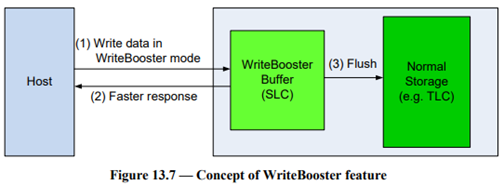
Operation process of WriteBooster mode

The WriteBooster mode in UFS devices operates as follows:

Pseudo SLC Cache

When using WriteBooster mode, flash storage is created with a reserve memory that serves as a pseudo-SLC cache. In the flash storage, this cache is designed to serve as a frequently accessible reserve memory. Just 1 bit of data is stored in each cell, taking up extremely little space while improving write performance.

Write Acceleration

Data is first written to the WriteBooster mode-created pseudo-SLC cache before being written to the UFS storage device. As opposed to writing directly to the flash memory, writing to this cache is quicker. The device can swiftly complete write operations and move on to other activities thanks to the cache’s function as a buffer.

Background Flushing

In the background, the information kept in the pseudo-SLC cache is periodically flushed to the flash memory. By doing this, you may retain the device’s rapid write rates for following operations while also making sure the data is permanently recorded in the flash memory.

Benefits for Performance

WriteBooster mode enhances the write performance of UFS devices by utilizing the pseudo-SLC cache. As a result, write speeds increase, which can speed up application launch, cache loading, browsing performance, and encoding times. Additionally, the feature enhances the responsiveness and general performance of the system.   

NOTE: It’s important to keep in mind that the exact UFS device and how it’s implemented may affect whether WriteBooster mode can be enabled or disabled. Disabling WriteBooster mode would result in write operations proceeding as normal writes, without utilizing the pseudo-SLC cache.  

Benefits of WriteBooster mode

There are a number of advantages to WriteBooster mode being used with UFS:

Faster Write Speeds

Using a pseudo-SLC cache, WriteBooster mode on UFS devices increases write speeds. Because of the cache, write operations can be completed more quickly, which decreases the amount of time the device needs to be active. The device can reach low-power modes as a result more quickly, increasing power efficiency.

Better Memory Management

By using a piece of the flash as a fictitious SLC cache, WriteBooster mode in UFS improves memory management. Because of the cache, write operations can be completed more quickly, which decreases the amount of time the device needs to be active. The device can reach low-power modes as a result more quickly, increasing power efficiency.

Affordable Alternative

WriteBooster mode in UFS offers comparable performance advantages to pSLC Write Buffer at a lesser price. As a result, it offers a viable option for enhancing memory performance in UFS devices.

Impact of WriteBooster mode on UFS’s power usage

The following ways that WriteBooster mode in UFS affects power usage:

Power Efficiency

By streamlining the writing process, UFS’ Write Booster mode helps to increase power efficiency. The device can write data more quickly and cut down on the time needed for write operations by using a pseudo-SLC cache. As a result, write operations consume less power since the device can perform them more rapidly and effectively.

Deep Sleep Mode

In addition to WriteBooster mode, UFS 3.1 also introduces the Deep Sleep feature. By using voltage regulators for storage and other purposes in addition to power reduction, deep sleep mode reduces energy usage. This improves overall power efficiency by enabling the device to use less power when it is idle or in low-power modes.   

Effective Memory Management

Using a piece of the flash as a fictitious SLC cache, WriteBooster mode in UFS improves memory management. Because of the cache, write operations can be completed more quickly, which decreases the amount of time the device needs to be active. The device can reach low-power modes as a result more quickly, increasing power efficiency.

Overall, WriteBooster mode in UFS reduces power usage through write process optimization, the use of a pseudo-SLC cache, and the addition of features like Deep Sleep mode. Through these improvements, devices can write operations more quickly and use less power whether they are idle or in low-power states.

Intellectual property trends for WriteBooster mode in UFS

WriteBooster mode in UFS is witnessing rapid growth in patent filing trends across the globe. Over the past few years, the number of patent applications almost doubled every two years.    

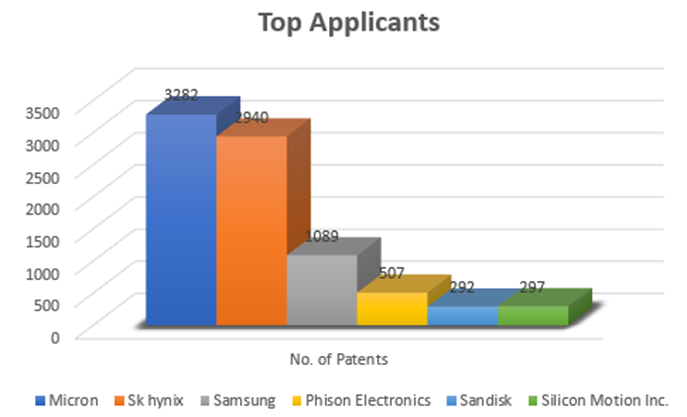
MICRON is a dominant player in the market with ~3282 patents. So far, it has 2 times more patents than Samsung.

Other key players who have filed for patents in UFS technology with SLC NAND are Sk Hynix, Sandisk, Western Digital etc.  
Following are the trends of publication and their legal status over time:
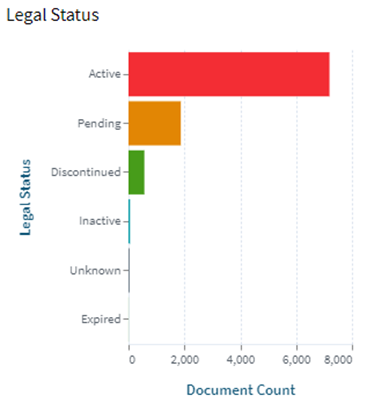
trends of publication and their legal status over time

These Top 10 companies own around 60% of total patents related to UFS. The below diagram shows these companies have built strong IPMoats in US jurisdiction.  

Conclusion

In conclusion, WriteBooster mode is a crucial component of UFS that boosts write speeds to enhance memory performance. Faster write rates, a pseudo-SLC cache that is easily and repeatedly accessible reserve memory in the flash storage, and a cost-effective solution that offers comparable performance benefits as pSLC Write Buffer are only a few advantages of the implementation of WriteBooster mode in UFS. The significance of UFS’ WriteBooster mode will only increase as mobile devices become more potent and feature-rich. Although Write Booster mode’s effectiveness on UFS devices may vary depending on the specific device, the function is intended to increase write speeds and memory performance, which leads to quicker app startup times, quicker file transfers, and greater system responsiveness.  

Categories
Computer Science Electronics

Walt Disney World faces patent infringement lawsuit over Genie, Genie Plus

A California organization has recorded a claim in Florida against The Walt Disney Organization and Walt Disney Parks and Resort alleging patent encroachment over Disney’s Genie and Genie+ services, which can make a customized itinerary for visitors visiting their amusement parks.

The claim was documented on Dec. 2, 2022, in the US. District Court, Middle District of Florida’s Fort Myers Division, on behalf of Agile Journeys, claims Disney’s Genie+ service infringes on one of its licenses – ‘983 Patent, known as “Method and Apparatus for Providing Visitors with a Personalized Itinerary and Managed Access to Attractions.”

As indicated by the claim, the patent’s inventors – William Gibbens Redmann and Michael Anthony Eaton, who both supposedly worked for Disney – looked to build “a system and method for creating a personalized itinerary for visitors to a facility, such as a zoo, theme park, historic area, or shopping district.”

The claim guarantees that Disney knew about the patent, infringed on it, and included a portion of the innovation for its Genie and Genie+ services, which has allegedly harmed Agile Journeys, LLC.

The claim doesn’t specify a particular damages amount, however, looks for a judgment that Disney encroached on the ‘983 patent, that Disney pays for “past and future damages,” and that Disney pays for enhanced damages, royalties, and attorney fees.

The most recent claim has been documented against The Walt Disney Organization A claim was documented in California against Disneyland Resort on behalf of some yearly pass holders alleging its Coronavirus period reservation system restricted their capacity to visit the amusement parks despite their passes not having lockout dates. A similar claim was documented against Walt Disney World Hotel.

Categories
Others

The Process Of Declaring A Standard Essential Patent (SEP)

Standards and SEPs, what are they?

A standard is a set of technological advances, norms, or protocols utilized in like manner by different manufacturers or service providers while designing specified methods or products. Standards are fundamental for the worldwide reception of innovations and processes. For instance, different telecom advances, for example, Bluetooth and Wi-Fi capabilities comparatively on phones made by various organizations. The organizations, groups, or bodies that define and set standards are known as Standard Setting Associations (SSOs). The Alliance for Telecommunications Industry Solutions (ATIS) in the US, the European Telecommunications Standards Institute (ETSI) in Europe and The Association of Radio Industries and Businesses (ARIB) in Japan are some examples of SSOs working in the telecom sector.

While explaining a standard, a few innovations or processes might exist that some innovator has proactively patented, and without utilizing these patents, executing the standard is incomprehensible. Those patents crucial for executing a standard and have been acknowledged by the concerned SSO are known as Standard Essential Patents (SEPs). The role of SEPs is most critical in the field of telecommunications because with each new age, for example, 3G, 4G, and 5G, there are various standards defined by SSOs like ETSI. It is inordinately impossible to manufacture a telecommunication framework connected with the concerned standard without utilizing the advancements defined by SEPs.

Presently, organizations that make products that are per a standard need to have a permit of the relevant SEPs from the proprietors of the SEPs. The proprietors of the SEPs invest money, time, and different resources while inventing and defining their patented advances, and they ought to get reasonable royalties for their endeavors. Consequently, the SEPs are for the most part licensed on FRAND (Fair Reasonable, and Non-Discriminatory) terms. FRAND terms are an agreement between the SEPs holders and SSOs to give a SEP license to the standard implementers based on fair and reasonable conditions for both of the parties. FRAND is a voluntary agreement, and there is no implementing body to uphold the FRAND terms. If there is any conflict between the two parties on FRAND, the dispute can be put under the watchful eye of the concerned court, where the jury or judge will determine the issue.

Patent Designation as SEP

A patent is pronounced crucial for implementing a standard, ordinarily by the SSOs. While creating and defining a standard, the individuals from the SSO check for the potential patents which might be expected for the implementation of the standard as well as the patent proprietors pronounce to the concerned SSO that their protected innovation is fundamental to implementing the standard. After getting the rundown of such patents, the concerned SSO individuals check whether the unveiled patented innovation is utilized in the standard and further, assuming asked by the SSO’s higher authorities, an effort is made by the SSO members to track down alternative innovation solutions to find whether executing the standard without utilizing the corresponding patent. On the off chance that there is no other alternative, the patent is announced as essential for the specific standard, and the higher authorities of the SSO are informed about it.

License Granting According to the FRAND Terms

For the most part, in the wake of perceiving a patent to be fundamental for the standard implementation, the patent proprietor is requested by the concerned SSO, for example, ETSI to give an irreversible undertaking in a particular timeframe regarding its agreement to grant the license based on FRAND terms, however, the patent proprietor will undoubtedly give the license based on FRAND terms. If the patent proprietor doesn’t show interest in granting a license based on FRAND conditions, subsequent requests are made by the higher authorities of the SSO, for example, the Director-General on account of ETSI to get the license.

In any case, if the patent proprietor refuses to provide the license based on FRAND terms, the SSO decides whether the development of the concerned part of the standard ought to proceed or not. Notwithstanding, much of the time, the patent proprietors are the organizations that are members of the concerned SSO and play a part in developing the standard. These organizations ordinarily consent to give the license to their patented innovation based on FRAND terms. In many cases, the member organizations purposefully embed their patented innovations into various parts of the standard to profit from the FRAND terms’ royalties, which is an unethical activity.

Declaration of SEP

The SSOs by and large provide platforms on which the patent proprietors can declare assuming that they observe that a specific standard is utilizing their patented innovation. The patent holders need to give all the information concerning their patents utilized in the standard and the part of the standard that utilizes the concerning innovation. For instance, ETSI gives an “IPR Information and Licensing Declaration” platform. The declarants can open a submitter account on this platform and proclaim that their patented innovation is fundamental for executing a specific standard. The declarants can choose the specific part of the standard that is utilizing their innovation.

How to Find Declared SEPs

The proclaimed SEPs are generally revealed publicly by the concerned SSO. The information in regards to SEPs related to a specific standard/innovation and/or the SEPs connected with a specific assignee can be tracked down on the site of the concerned SSO.

For instance, ETSI gives an “ETSI IPR Online Database” as displayed in Fig. 3. The SEPs connected with a specific project, standard, as well as a declaring organization can be found by filling in the suitable details in the web-based data set of ETSI.

Conclusion

Standards play a significant part, particularly in telecom, to keep up with consistency in the work process of different advancements. With the approach of the new-gen, different new standards should be characterized. Frequently, these standards involve patented advances, without which implementing the standard is unthinkable. These patents are pronounced as SEPs by the SSOs. The proprietors of these patented innovations had invested a lot of effort while inventing these advances; consequently, they ought to be compensated reasonably. The most common way of setting standards, proclaiming SEPs, getting SEP licenses based on FRAND terms, and giving public info in regards to SEPs connected with standards is by and large controlled and implemented by SSOs.