Intellect-Partners

Categories
Computer Science

Inside LPDDR5: Driving Forces of 5G and AI Revolution

Understanding LPDDR5: Powering the 5G and AI Revolution:

In the ever-evolving landscape of innovation, the combination of 5G and artificial intelligence (AI) has emerged as a transformative force, reshaping enterprises and empowering developments that were previously unimaginable. Vital to this combination is the role of LPDDR5 (Low Power Double Data Rate 5) memory, a state-of-the-art memory innovation that assumes an essential part in supporting the high-performance demands of 5G and artificial intelligence applications. This blog entry dives into the meaning of LPDDR5 in these spaces, investigates its future patterns, and analyzes the most recent improvements in its intellectual property (IP).

LPDDR5 Overview

LPDDR5 is the fifth generation of low-power, high-performance memory planned essentially for smartphones. It is a development of its ancestor, LPDDR4x, with critical enhancements as far as information rate, power effectiveness, and generally execution. LPDDR5 offers quicker information move rates, lower power utilization, and larger memory capacities compared to its predecessors, settling on it an ideal decision for applications requesting high data transfer capacity and low latency.

Role in 5G

The rollout of 5G networks has introduced another time of availability, empowering lightning-quick information move rates and super low inactivity. To completely tackle the capability of 5G, memory devices should be equipped with memory advances fit for taking care of the expanded data loads and rapid communication among memory devices and edge servers. LPDDR5, with its upgraded information rates and further developed energy proficiency, addresses these requests by giving the important memory data transfer capacity and responsiveness for 5G-empowered gadgets.

Enabling AI Applications

Artificial intelligence applications, including AI and neural networks, require enormous measures of data processing and storage capabilities. LPDDR5’s high information move rates and bigger memory limits add to accelerating AI tasks by giving the fundamental memory resources to putting away and controlling information during preparation and inference processes. This is critical for AI-driven functionalities-driven functionalities in gadgets, for example, smartphones, smart cameras, and IoT gadgets.

Future Trends in LPDDR5 Technology

Data Rate Advancements

The journey for higher data rates proceeds, as innovation organizations endeavor to push the limits of memory execution. LPDDR5 is supposed to see further iterations that proposition considerably quicker information move rates, empowering consistent 5G network and improved AI performance.

Energy Efficiency

While LPDDR5 as of now offers amazing energy, effectiveness contrasted with its predecessors, progressing research and development efforts aim to diminish power utilization considerably further. This is especially significant for broadening the battery duration of gadgets, particularly with regards to power-hungry 5G and AI workloads.

Integration with On-Device AI

As AI capabilities are coordinated straightforwardly into devices, LPDDR5 will assume a critical part in supporting on-gadget artificial intelligence errands. This includes not just giving the memory resources to AI operations but also improving memory access examples to upgrade general artificial intelligence execution.

LPDDR5 IP Developments and Legal Considerations  

WCK Clocking in LPDDR5

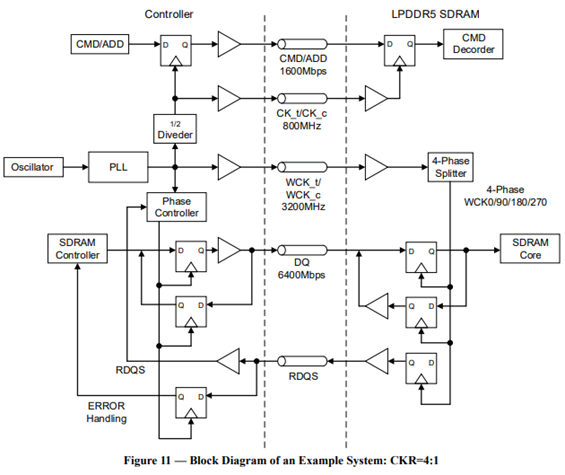
LPDDR5 uses a DDR data interface. The data interface uses two differential forwarded clocks (WCK_t/WCK_c) that are source synchronous to the DQs. DDR means that the data is registered at every rising edge of WCK_t and rising edge of WCK_c. WCK_t and WCK_c operate at twice or quadruple the frequency of the command/address clock (CK_t/CK_c).

Low Power Double Data Rate
(LPDDR) 5/5X
https://www.jedec.org/sites/default/files/docs/JESD209-5C.pdf

IP Landscape of LPDDR5

The intellectual property landscape for LPDDR5 innovation is dynamic and advancing. Organizations in the semiconductor industry are continuously creating and licensing developments connected with LPDDR5 memory configuration, fabricating processes, and related advancements. Licensing agreements and cross-licensing arrangements assume a vital part in permitting organizations to get to and use these IP resources.

Patent Challenges and Litigations  

With the rising competitive nature of the innovation business, patent disputes and litigations can emerge. Organizations should be cautious in surveying the potential infringement risks related to LPDDR5-related technologies and ought to participate in due diligence before creating items to stay away from legal complications.

Licensing Strategies  

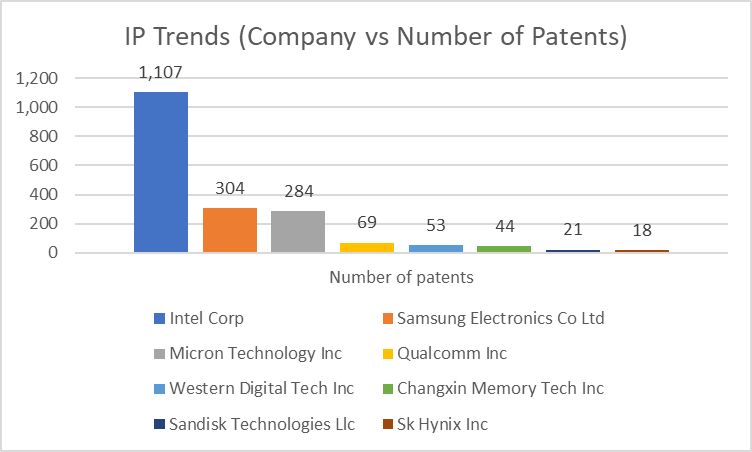
Licensing LPDDR5-related IP is a typical methodology for organizations to get to the innovation without wasting time. Licensing arrangements frame the terms under which an organization can utilize licensed innovations, and they might include royalty payments or other monetary considerations. Developing a sound licensing procedure is fundamental to guarantee that organizations can use LPDDR5 innovation while regarding IP rights. Intel Corp. holds a maximum number of patents followed by Samsung and Micron.

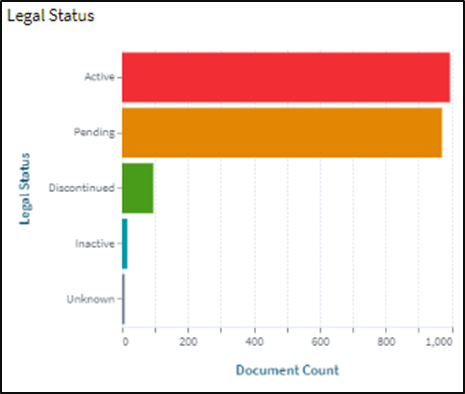
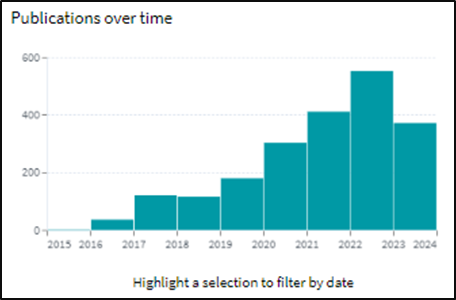
Patent legal status over time

Conclusion

The integration of 5G and AI is revolutionizing businesses and changing the manner in which we connect with technology. LPDDR5 memory technology remains as a basic empowering influence of this change, giving the high-performance memory capabilities expected to help the requests of 5G network and AI applications. As LPDDR5 innovation keeps on developing, with headways in information rates and energy productivity, it will be interesting to observe how it shapes the future of mobile devices, IoT, and other AI-driven advancements. Organizations should likewise explore the complex landscape of LPDDR5-related intellectual property, going with informed choices to cultivate advancement while mitigating legal risks. The journey ahead guarantees invigorating improvements at the crossing point of LPDDR5, 5G, and artificial intelligence, with profound implications for innovation and society alike.

Categories
Others

The Process Of Declaring A Standard Essential Patent (SEP)

Standards and SEPs, what are they?

A standard is a set of technological advances, norms, or protocols utilized in like manner by different manufacturers or service providers while designing specified methods or products. Standards are fundamental for the worldwide reception of innovations and processes. For instance, different telecom advances, for example, Bluetooth and Wi-Fi capabilities comparatively on phones made by various organizations. The organizations, groups, or bodies that define and set standards are known as Standard Setting Associations (SSOs). The Alliance for Telecommunications Industry Solutions (ATIS) in the US, the European Telecommunications Standards Institute (ETSI) in Europe and The Association of Radio Industries and Businesses (ARIB) in Japan are some examples of SSOs working in the telecom sector.

While explaining a standard, a few innovations or processes might exist that some innovator has proactively patented, and without utilizing these patents, executing the standard is incomprehensible. Those patents crucial for executing a standard and have been acknowledged by the concerned SSO are known as Standard Essential Patents (SEPs). The role of SEPs is most critical in the field of telecommunications because with each new age, for example, 3G, 4G, and 5G, there are various standards defined by SSOs like ETSI. It is inordinately impossible to manufacture a telecommunication framework connected with the concerned standard without utilizing the advancements defined by SEPs.

Presently, organizations that make products that are per a standard need to have a permit of the relevant SEPs from the proprietors of the SEPs. The proprietors of the SEPs invest money, time, and different resources while inventing and defining their patented advances, and they ought to get reasonable royalties for their endeavors. Consequently, the SEPs are for the most part licensed on FRAND (Fair Reasonable, and Non-Discriminatory) terms. FRAND terms are an agreement between the SEPs holders and SSOs to give a SEP license to the standard implementers based on fair and reasonable conditions for both of the parties. FRAND is a voluntary agreement, and there is no implementing body to uphold the FRAND terms. If there is any conflict between the two parties on FRAND, the dispute can be put under the watchful eye of the concerned court, where the jury or judge will determine the issue.

Patent Designation as SEP

A patent is pronounced crucial for implementing a standard, ordinarily by the SSOs. While creating and defining a standard, the individuals from the SSO check for the potential patents which might be expected for the implementation of the standard as well as the patent proprietors pronounce to the concerned SSO that their protected innovation is fundamental to implementing the standard. After getting the rundown of such patents, the concerned SSO individuals check whether the unveiled patented innovation is utilized in the standard and further, assuming asked by the SSO’s higher authorities, an effort is made by the SSO members to track down alternative innovation solutions to find whether executing the standard without utilizing the corresponding patent. On the off chance that there is no other alternative, the patent is announced as essential for the specific standard, and the higher authorities of the SSO are informed about it.

License Granting According to the FRAND Terms

For the most part, in the wake of perceiving a patent to be fundamental for the standard implementation, the patent proprietor is requested by the concerned SSO, for example, ETSI to give an irreversible undertaking in a particular timeframe regarding its agreement to grant the license based on FRAND terms, however, the patent proprietor will undoubtedly give the license based on FRAND terms. If the patent proprietor doesn’t show interest in granting a license based on FRAND conditions, subsequent requests are made by the higher authorities of the SSO, for example, the Director-General on account of ETSI to get the license.

In any case, if the patent proprietor refuses to provide the license based on FRAND terms, the SSO decides whether the development of the concerned part of the standard ought to proceed or not. Notwithstanding, much of the time, the patent proprietors are the organizations that are members of the concerned SSO and play a part in developing the standard. These organizations ordinarily consent to give the license to their patented innovation based on FRAND terms. In many cases, the member organizations purposefully embed their patented innovations into various parts of the standard to profit from the FRAND terms’ royalties, which is an unethical activity.

Declaration of SEP

The SSOs by and large provide platforms on which the patent proprietors can declare assuming that they observe that a specific standard is utilizing their patented innovation. The patent holders need to give all the information concerning their patents utilized in the standard and the part of the standard that utilizes the concerning innovation. For instance, ETSI gives an “IPR Information and Licensing Declaration” platform. The declarants can open a submitter account on this platform and proclaim that their patented innovation is fundamental for executing a specific standard. The declarants can choose the specific part of the standard that is utilizing their innovation.

How to Find Declared SEPs

The proclaimed SEPs are generally revealed publicly by the concerned SSO. The information in regards to SEPs related to a specific standard/innovation and/or the SEPs connected with a specific assignee can be tracked down on the site of the concerned SSO.

For instance, ETSI gives an “ETSI IPR Online Database” as displayed in Fig. 3. The SEPs connected with a specific project, standard, as well as a declaring organization can be found by filling in the suitable details in the web-based data set of ETSI.

Conclusion

Standards play a significant part, particularly in telecom, to keep up with consistency in the work process of different advancements. With the approach of the new-gen, different new standards should be characterized. Frequently, these standards involve patented advances, without which implementing the standard is unthinkable. These patents are pronounced as SEPs by the SSOs. The proprietors of these patented innovations had invested a lot of effort while inventing these advances; consequently, they ought to be compensated reasonably. The most common way of setting standards, proclaiming SEPs, getting SEP licenses based on FRAND terms, and giving public info in regards to SEPs connected with standards is by and large controlled and implemented by SSOs.

Categories
Computer Science Electronics

India’s ‘Digital Vaccine’ platform that prevents real issues through Metaverse gets patent

Indian biomedical tech business person and founder behind
Friends Learn, Bhargav Sri Prakash has been granted the world’s first patent by
US experts for a ‘digital vaccine,’ a platform that prevents medical problems
in real life through a metaverse.

Digital vaccines use applications by means of phones,
tablets, and other comparative gadgets to teach positive responses from people
through neurocognitive training. The title of the patent is “systems and
methods used for digital project”. It includes the utilization of artificial
intelligence and a gamified metaverse platform.

In straightforward terms, a digital vaccine utilizes
artificial intelligence to make a person’s copy for a game in the metaverse. In
the virtual world, the individual is made to keep away from unhealthy habits
and because of this neuro-cognitive training, the virtual way of behaving is
converted into real-life implementation. So the individual’s way of
lifestyle-related sicknesses was treated with a digital vaccine.

The point of the platform is to tap into the dependence of
mankind on the metamorphosing virtual landscape, to stimulate specific
physiological changes in the body. The stage works by making an ‘avatar’ of an
individual in a virtual reality circumstance and taking the symbol through
‘games. The metaverse experience will prompt the cerebrum to stimulate specific
physiological changes in the body.

According to certain reports, this platform, which is a
component of Carnegie Mellon University’s digital vaccine project, might
possibly prevent a wide range of sicknesses going from Covid-19 and flu to
diabetes, cardiovascular illnesses, hypertension, and certain malignant growths,
and, even cognitive diseases.

Cognitive behavior therapy applications have been utilized
to treat a few mental disorders including depression, schizophrenia, and so
forth all over the globe. Another Indian startup FutureCure Health has gotten
six Indian licenses and two US licenses for different medical gadgets for
treating Vertigo and Dizziness patients by deploying cognitive behavior
therapy.

The said digital vaccines are being deployed in colleges
across the globe and have been carried out for licenses in India, Europe,
China, Australia, Canada, and New Zealand.